Google’s June 2026 Spam Update has officially finished rolling out, but the effects are still being felt across the SEO community.
This week’s roundup focuses on the aftermath of the spam update, including reported ranking volatility, traffic drops, and the challenge of figuring out whether a site was affected by spam systems, broader quality signals, or overlapping SERP changes.
We’re also covering other search visibility risks this week: fake DMCA takedowns being used as a negative SEO tactic, Liz Reid’s comments on AI Search and publisher strategy, and a Google Business Profile issue where reviews are going missing for many businesses.
Google has completed the rollout of its June 2026 spam update, ending a short but noticeable ranking update that ran for about two days.
According to the Google Search Status Dashboard, the update began on June 24, 2026 at 9:00 AM Pacific Time and ended on June 26, 2026 at 10:00 AM Pacific Time. Google marked the rollout complete on June 26 and said the update applied globally and to all languages.
This was the second confirmed Google spam update of 2026, following the March 2026 spam update.
What Google Confirmed
Google’s official statement was brief.
When the update started, Google said:
“Released the June 2026 spam update, which applies globally and to all languages. The rollout may take a few days to complete.”
On June 26, Google updated the dashboard to say:
“The rollout was complete as of June 26, 2026.”
Google did not publish a separate blog post explaining what specific spam tactics were targeted. It was as a normal spam update and Google did not announce any new spam policies which means site owners should evaluate changes against Google’s existing spam policies.
What Spam Updates Are Designed to Do
Google’s spam updates are improvements to its automated spam detection systems.
Google says its systems are constantly working to detect search spam, and when it makes notable improvements to those systems, it may announce a spam update. Google also says SpamBrain, its AI-based spam-prevention system, is used to help detect spam and new types of abuse.
Sites affected by a spam update should review Google’s spam policies. Google says sites that violate its policies may rank lower or may not appear in results at all. Recovery can take time because Google’s automated systems need to learn over a period of months that the site is complying with its spam policies.
What This Update Appears to Have Affected
Google has not said what percentage of queries or searches were affected.
Search Engine Roundtable reported that the update felt more widespread than a typical spam update and may have started showing signs before the official announcement. The site also reported that Google would not disclose the percentage of queries or searches affected.
According to the report, this update did not specifically target link spam or site reputation abuse. Instead, it appears to have focused on other violations of Google’s spam policies.
That distinction matters.
A spam update can target many forms of abuse, including scaled content abuse, cloaking, doorway pages, scraped content, hidden text, sneaky redirects, hacked spam, auto-generated content created mainly to manipulate rankings, and other practices that violate Google’s spam policies.
But because Google did not provide a detailed target list for this specific update, SEOs should avoid assuming that every traffic movement was caused by one specific spam tactic.
Reported Effects From SEO Tools and Community Chatter
The confirmed rollout window was short, but the SEO community reported noticeable movement.
Some site owners reported drops. In forum chatter, WebmasterWorld, users described traffic swings, sudden losses, and unstable Google traffic during the rollout. One user reported a large global traffic drop, while others described traffic jumping back and forth. Some claimed declines of 10% to 15%, while another reported a much larger drop.
On Reddit, one site owner said their average position dropped from around 6.5 before the update to around 35 after the rollout. In the same discussion, another user said their site saw about 50% more impressions after the update, showing that not all reported effects were negative.
Other Reddit discussions described the update as global, short, and focused on enforcement of existing spam rules rather than a new policy launch. One SEO news thread also noted that the update did not appear to target link spam or site reputation abuse specifically.
These reports should be treated as anecdotal, not official confirmation. They are useful for understanding what site owners are seeing, but they do not prove exactly what Google’s systems targeted.
Some Site Owners Saw Drops Without Obvious Spam
As with many Google updates, some site owners who reported losses said they did not believe their sites were spammy.
That is common during spam updates and core updates. A site may be affected directly by a spam system, but it may also see indirect movement because competitors were demoted, SERP layouts changed, AI Overviews appeared, Discover traffic shifted, or other ranking systems interacted with the update window.
This is why diagnosis matters.
A drop during the June 24 to June 26 window does not automatically mean a site was penalized for spam. But it does mean the site owner should review whether any pages, sections, templates, user-generated areas, or content production systems may be creating risk.
What Site Owners Should Check
If traffic or rankings dropped during the rollout, the first step is to confirm the timing.
Compare Search Console and analytics data before, during, and after the update window. Look for whether the decline was:
If only one section dropped, the issue may be isolated. If the entire site dropped, the problem may be broader, or the site may have been affected by wider SERP volatility.
Avoid Panic Changes
The rollout is complete, but that does not mean every movement has fully settled.
Site owners should avoid making large, rushed changes without evidence. Deleting pages, rewriting large sections, changing internal links, or removing content without diagnosis can make the problem harder to understand.
Instead, site owners should first identify which pages lost impressions, clicks, or rankings. Then compare those pages against Google’s spam policies and quality expectations.
If there is a real spam issue, the fix should be meaningful. Cosmetic edits are unlikely to help if the underlying problem is scaled low-value content, doorway pages, cloaking, scraped material, or other manipulative practices.
Recovery May Take Time
Google’s spam update documentation says that if a site improves after violating spam policies, recovery may happen only after Google’s automated systems learn over time that the site is now compliant. That process can take months.
That means site owners should not expect an immediate rebound after cleanup.
For legitimate sites that were not violating policies, the best approach is to keep monitoring data, avoid overreacting, and look for whether rankings stabilize after the rollout period.
Key Takeaways
Fraudulent DMCA takedown requests are causing legitimate pages to disappear from Google Search, raising new concerns about how easily the copyright removal process can be abused.
Barry Schwartz reported on Search Engine Roundtable that real content from legitimate publishers has been removed from Google Search after apparently fake copyright complaints. The issue has affected multiple well-known SEO and publishing sites, including Press Gazette, Search Engine Land, and Moz. In some cases, content was removed even though the complaint appeared to be inaccurate or unsupported.
The problem is not simply that DMCA takedowns exist. Google has long provided a legal process for copyright owners to request that allegedly infringing URLs be removed from Search. The issue is that bad actors appear to be using that process as a weapon against competitors, publishers, and reporters.
In March, Search Engine Land said Google removed one of its articles from search results after a copyright complaint that it described as false. The article covered Clickout Media and alleged AI-driven gambling content. According to Search Engine Land, the complaint claimed the article copied content “word for word” and used proprietary images, even though the article contained no images. The article was later restored.
Press Gazette also reported that its investigation into Clickout Media was removed from Google after what it described as a bogus copyright complaint. According to Press Gazette, the removed article had examined how acquired news websites were allegedly being used to publish gambling-related content and benefit from their existing authority in Google Search.
Google’s own transparency documentation says it responds to “clear and specific notices of alleged copyright infringement.” If a notice is valid and complete, Google may delist the URL from Search. Site owners can submit a counter notification if they believe the removal was a mistake, but that process can take time.
This creates a serious risk for publishers and site owners. A page can lose search visibility not because of an algorithm update, technical issue, or content quality problem, but because someone filed a false legal complaint. For sites that rely heavily on organic traffic, even a short removal can mean lost rankings, revenue, leads, and trust.
Google has already acknowledged DMCA abuse as a problem in the past. In 2023, Google sued alleged scammers it accused of using fraudulent copyright notices to remove competitors from search results. According to reports on the lawsuit, Google said the defendants used dozens of accounts and targeted more than 117,000 third-party URLs, with hundreds of thousands more likely fraudulent URLs also involved.
For SEOs, the takeaway is that DMCA monitoring now belongs on the risk checklist. Site owners should watch Google Search Console messages, monitor sudden URL-level drops, check whether missing pages appear in Google, and review Lumen Database entries when removals appear suspicious. If a legitimate page is removed because of a false claim, the publisher may need to file a counter notice quickly.
This is also a reminder that negative SEO is no longer limited to spammy links, content scraping, or fake reviews. Legal abuse can now affect visibility too. And while Google does have a counter-notice process, the damage can happen before the appeal is resolved.
The larger concern is trust. Google Search depends on surfacing reliable information, but if fraudulent takedown requests can temporarily erase legitimate reporting, the system becomes vulnerable to manipulation. Publishers need better alerts, faster review paths, and stronger verification around copyright claims that target news, editorial, and original content.
For now, site owners should treat unexpected deindexing as more than a technical SEO issue. Sometimes, the problem may not be the page at all. It may be a fake complaint.
Google Search is changing faster than many publishers expected, and in a recent episode of the AI Inside podcast, Liz Reid, VP and Head of Google Search, gave one of the clearer looks at how Google sees that shift.
The episode, titled “Liz Reid on What Publishers Get Wrong About AI,” featured Reid in conversation with Jason Howell and Jeff Jarvis about AI Overviews, AI Mode, personalization, preferred sources, publisher traffic, and how user behavior is changing inside Google Search.
Users Are Searching Differently
One of the biggest points Reid made is that users are adapting to AI search faster than Google expected.
Instead of typing short keyword-style searches, more users are asking longer, more natural questions. Reid said people are even using “I” in their queries, such as explaining what they are trying to do and asking Google to help them figure it out.
That matters because Google’s search product is no longer just about matching keywords to pages. Reid described the older search model as one where users had to translate their needs into “keywordese” so the computer could understand them. In the AI search model, Google wants the system to do more of that translation for the user.
Personalization Could Help Niche Publishers
This shift also changes how publishers may be discovered.
Reid argued that personalization could help smaller publishers and niche creators reach the right audience. Her point was that when searches become more specific and personalized, Google can better match users with specialized sources, local publishers, reviewers, or merchants that may not have surfaced as easily for broad keyword queries.
For example, a user interested in eco-friendly brands may not always specify that preference in every search. But if Google can infer that preference through personalization, smaller merchants or reviewers focused on that topic could become more visible to that specific user.
Preferred Sources May Become More Important
Reid also pointed to Preferred Sources as one of the tools Google is using to strengthen the relationship between publishers and their audiences.
Google’s help documentation says users can manage source preferences to customize their Top Stories, AI Mode, and AI Overviews experience, allowing Google to highlight content from sources users value most.
This is important for publishers because it shifts part of the search visibility conversation from:
“How do we rank for everyone?”
to:
“How do we become a trusted source for the people most likely to care?”
Publishers Still Need Content Worth Clicking
Reid’s message to publishers was direct: make content people actually want to read.
She pushed back against the idea that AI Overviews replace every kind of publisher content. If the user only wanted a simple fact, such as a sports score or time zone, that click may have always been fragile.
But if a publisher provides original reporting, unique expertise, local knowledge, analysis, or a perspective users cannot get everywhere else, Reid said users still have a reason to click.
She also warned that publishers need to keep innovating with user expectations. Some users now prefer video, social content, interactive experiences, or richer formats. If a publisher’s video traffic is growing while text traffic is falling, Reid suggested that may reflect user preference rather than only an AI search problem.
Google Needs To Access The Content
Another key point was access.
Reid said publishers that want to appear in AI search experiences need to make sure Google can access their content. If content is blocked, hidden, or difficult to discover, Google cannot use it effectively in AI Overviews or AI Mode.
This remains a sensitive issue because many publishers are concerned that AI search gives users answers without enough clicks.
Metrics Are Still A Work In Progress
Reid acknowledged that Google is still early in figuring out the right metrics for publishers.
She mentioned AI impressions, but also suggested publishers should use their own analytics to understand whether AI-driven visitors are valuable.
Her view is that not all clicks are equal. Reid said AI experiences may reduce some “bounce clicks,” where users click a result, realize it is not what they wanted, and immediately return.
Google’s argument is that when AI Overviews provide more context before the click, users may click with stronger intent and spend more time on the site.
That still leaves a measurement gap. Impressions alone do not tell publishers whether AI visibility is producing subscribers, leads, revenue, or repeat readers.
Search Is Becoming More Action-Oriented
The conversation also touched on AI agents and whether “search” is still the right word for what Google is building.
Reid did not offer a new verb, but she described Search as expanding from finding information to helping users complete information-driven tasks.
Booking a reservation, checking availability, comparing options, or taking action may all become part of the same search journey.
What This Means For SEOs And Publishers
For SEOs and publishers, the takeaway is clear: Google wants content that is accessible, useful, original, and trusted by a specific audience.
The old playbook of creating generic content for broad keyword visibility is becoming weaker. AI search rewards content that helps answer deeper, more specific, more personal questions.
It also creates new reasons for publishers to build direct audience loyalty, encourage users to select them as preferred sources, and create content that is worth visiting beyond the summary.
Key Takeaways
Many business owners are reporting that reviews have suddenly disappeared from their Google Business Profiles, with some listings losing hundreds or even thousands of reviews overnight.
Complaints have been increasing in the Google Business Profile forums over the past few days. In some cases, businesses say their review count dropped dramatically. One business reportedly went from about 4,651 reviews to only 63 within roughly 24 hours.
What Happened
The issue appears to be affecting Google Business Profile listings where reviews either disappeared, stopped showing publicly, or stopped contributing to the visible review count and rating.
Some business owners say their listings were recently hit by suspicious or fake reviews. After those reviews were reported or flagged, many legitimate reviews also disappeared or became hidden.
According to Search Engine Roundtable, Amy Toman posted that Google is aware of the missing reviews issue and is working to resolve it. Google also gave Search Engine Roundtable a statement saying that when its systems detect suspicious reviews, it may remove reviews or temporarily pause reviews on a profile to prevent further abuse. Google said it is investigating and will restore reviews that were incorrectly remove.
Businesses Are Reporting Major Review Losses
The complaints are not limited to small review count changes.
Some reports mention:
One Reddit user said their Google Business Profile lost more than 1,200 reviews overnight and began showing 0 reviews and a 0.0 rating, even though the profile was still verified and not suspended.
Google’s Normal Review Policy
Google’s official guidance says reviews may be missing or delayed for several reasons.
These include:
Google also says reviews removed for policy violations will not be restored. However, this current situation appears different because Google has said it is investigating and may restore reviews that were incorrectly removed.
Why This Matters For Local SEO
Reviews are a major trust signal for local businesses.
When reviews disappear, the impact can be immediate:
For service businesses, restaurants, medical offices, home services, and local retailers, Google reviews often influence whether a customer calls, books, or chooses a competitor.
What Businesses Should Do
If a business is affected, the first step is to document everything.
Businesses should:
Businesses should avoid trying to “replace” missing reviews with a sudden wave of new review requests. A large spike in new reviews could look suspicious and may create more filtering issues.
Key Takeaways
This week’s stories show how many different ways search visibility can be disrupted.
The June 2026 Spam Update is the biggest story, especially for site owners seeing ranking swings or traffic drops. But visibility risks are also showing up outside traditional algorithm updates, from fake DMCA takedowns to missing Google Business Profile reviews.
At the same time, Liz Reid’s comments on AI Search make it clear that publishers and SEOs need to think beyond old ranking tactics. Search is becoming more personalized, more AI-driven, and more dependent on trust, originality, and audience fit.
For SEOs, the priority is to monitor changes carefully, avoid jumping to conclusions too quickly, and keep building content and business signals that can survive across traditional Search, local results, and AI-powered experiences.
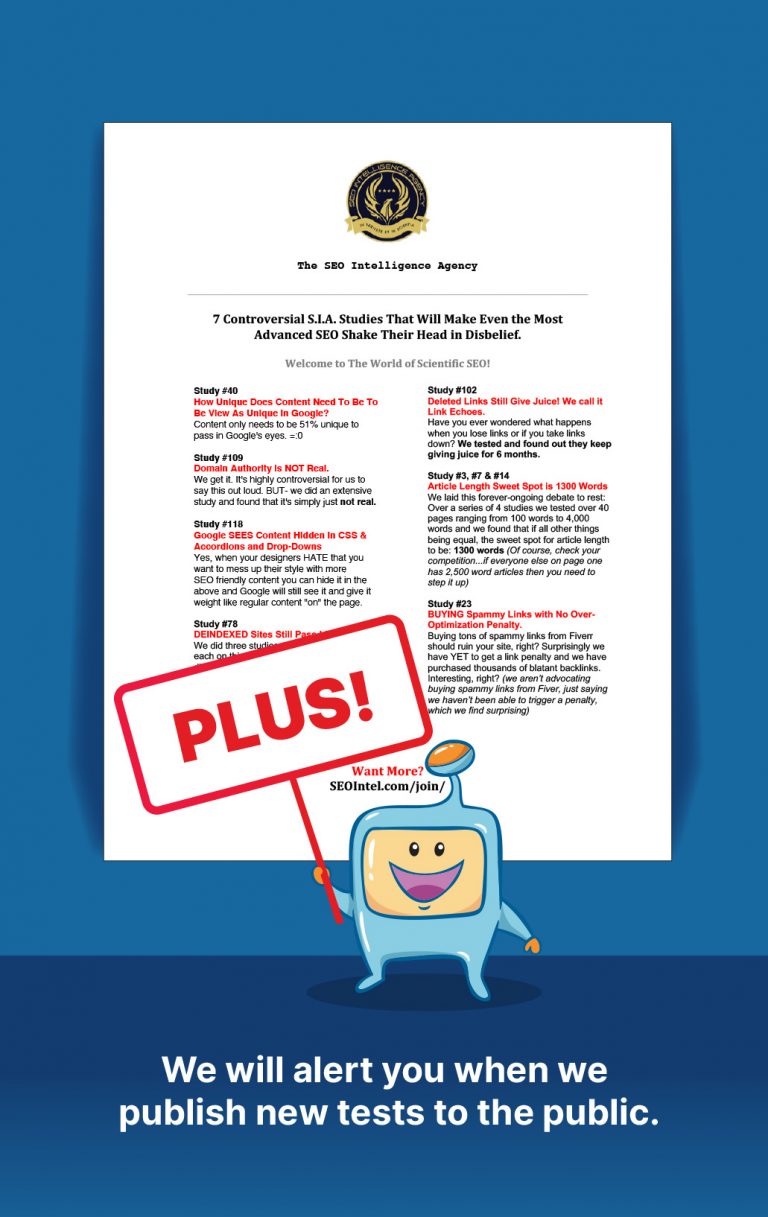
Get Our Most 7 Controversial S.I.A. Studies That Will Make Even the Most Advanced SEO Shake Their Head in Disbelief.
Plus we will alert you when we publish new tests to the public.
Obtenga nuestros 7 estudios S.I.A. más controvertidos que harán que incluso el SEO más avanzado sacuda la cabeza con incredulidad.
Además, le avisaremos cuando publiquemos nuevas pruebas al público.
Obtenez nos 7 études S.I.A. les plus controversées qui feront trembler la tête même les SEO les plus avancés d’incrédulité.
De plus, nous vous alerterons lorsque nous publierons de nouveaux tests au public.
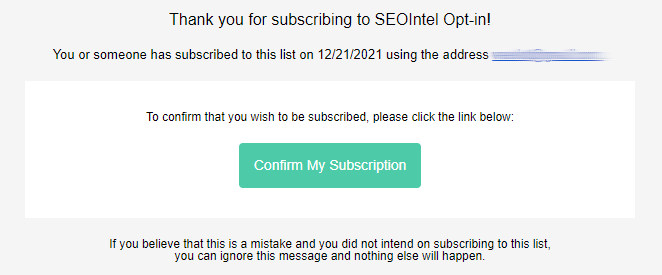
Before you can receive free updates, link building strategies or SEO tips you need to confirm your email right now.
(It’s easy)
Just go to your inbox, open the confirmation email from the SIA, and click the link.
And that’s it!
PS: If you don’t see a confirmation email, please check your spam/junk or promotions folders. Sometimes the confirmation message ends up there by mistake.