This week’s roundup is led by Google’s June 2026 spam update, a global ranking update that may cause movement across Search while Google’s systems work to detect and reduce spam. For site owners and SEOs, this is the main update to watch, especially for sites that may rely on thin content, scaled content, manipulative links, doorway pages, site reputation abuse, or other tactics that go against Google’s spam policies.
Alongside the spam update, Google’s AI reporting is also expanding. More site owners are starting to see AI performance reports in Search Console, giving them a clearer view of how their content appears in AI Overviews, AI Mode, and other generative AI features. A separate Google patent also points to how AI systems may increasingly depend on entity understanding, suggesting that brands may need to be clearer and more consistent about who they are, what they do, and why they should be trusted.
Finally, new Pew Research data shows that AI adoption is growing, but public trust remains a major challenge. Together, these updates show how Search is being reshaped by spam enforcement, AI visibility, entity understanding, and user skepticism around AI.
Google has released the June 2026 spam update, another ranking update aimed at improving Google’s systems for detecting and reducing search spam.
According to the Google Search Status Dashboard, the update began on June 24, 2026 at 9:00 AM Pacific Time. Google posted the announcement at 9:03 AM PDT, stating that the June 2026 spam update applies globally and to all languages. The rollout may take a few days to complete.
This means SEOs and site owners may see ranking movement while the update rolls out, especially if Google’s systems reassess pages or sites that violate its spam policies.
What Google Announced
Google’s official status page lists the June 2026 spam update as an incident affecting ranking.
The key details are:
Google did not provide details about specific spam tactics being targeted in this update. The status page only says that the update applies globally and to all languages, and that the rollout may take a few days to complete.
What Is a Spam Update?
Google’s spam updates are improvements to its automated systems for detecting search spam.
Google says its systems are always working to detect search spam, but it occasionally makes notable improvements to how those systems work. When it does, Google refers to those changes as spam updates and shares them on its ranking updates list.
Google also points to SpamBrain, its AI-based spam-prevention system, as an example of how it works to identify spam and adapt to new types of abuse.
In practical terms, a spam update is not the same as a broad core update. A core update reassesses overall content quality and relevance across many types of sites. A spam update is more focused on detecting and reducing the visibility of sites or pages that violate Google’s spam policies.
Who Could Be Affected?
Spam updates are most likely to affect sites using manipulative or abusive tactics that go against Google’s spam policies.
These may include tactics designed to artificially improve rankings, mislead users, or abuse Google’s search systems. While Google has not said which specific spam policies this June 2026 update focuses on, industry coverage noted that this is a normal spam update and not specifically a link spam update or a site reputation abuse update.
That distinction matters.
If this were a link spam update, the main focus would be spammy links and the ranking value those links may have passed. If it were specifically a site reputation abuse update, the focus would be on third-party content hosted on trusted sites to exploit ranking signals. For this rollout, Google has only described it broadly as a spam update.
What Site Owners Should Watch
Because the update affects ranking, site owners may see movement in Search Console, analytics, rank tracking tools, and traffic patterns over the next few days.
However, it is important not to overreact while the rollout is still active.
During ranking updates, traffic and visibility can fluctuate. Some pages may move up or down as Google’s systems recalculate signals. It is usually better to wait until the rollout is complete before making major conclusions.
For now, site owners should monitor:
If a site sees a sharp decline during or after the update, the next step should be a careful review of Google’s spam policies.
Google’s Recovery Advice
Google says sites that see a change after a spam update should review its spam policies to make sure they are complying. Sites that violate those policies may rank lower or may not appear in search results at all. Making changes can help a site improve if Google’s automated systems later determine, over a period of months, that the site is complying with the policies.
That last point is important.
Recovery from a spam update may not happen immediately after a site makes changes. If a site was affected because Google’s automated systems detected spam issues, improvement may take time as Google recrawls, reprocesses, and reassesses the site.
This is different from fixing a simple technical issue and seeing a quick recovery. Spam-related improvements often require both cleanup and patience.
What If This Was Related to Links?
Google’s spam update documentation also notes that link spam updates can behave differently.
In the case of a link spam update, removing or disavowing spammy links may not restore previous ranking benefits. That is because if Google removes the effect those spammy links had, any ranking benefit they previously generated is lost and cannot be regained.
Google has not described the June 2026 spam update as a link spam update. Still, this is a useful reminder for site owners who rely heavily on manipulative links or questionable link-building tactics.
If rankings were supported by signals Google later discounts or neutralizes, the lost ranking value may not simply return after cleanup.
Why This Update Matters
This update comes after a busy period for Google ranking changes in 2026.
The June 2026 spam update follows the May 2026 Core Update, the March 2026 Core Update, the March 2026 spam update, and the February 2026 Discover update.
That means SEOs are dealing with several layers of search volatility this year. Some ranking changes may be related to broad core systems, while others may be tied to spam detection, Discover changes, or other search systems.
For site owners, this makes diagnosis more important.
A decline after a core update may require a review of content quality, relevance, and user satisfaction. A decline after a spam update should trigger a closer look at whether the site may be violating Google’s spam policies.
Avoid Panic Changes
If rankings move during the rollout, the first response should not be to rewrite pages, remove content, or make large sitewide changes immediately.
Instead, site owners should first identify whether the movement is:
The goal is to understand whether there is a real policy or quality issue before making changes.
What SEOs Should Do Now
For most sites that follow Google’s guidelines, the best approach is to monitor the rollout and avoid unnecessary changes.
For sites that may have used risky tactics, this is the time to review and clean up.
That may include checking for:
If problems are found, the fix should not be cosmetic. Google’s spam systems are designed to detect patterns of abuse, so recovery requires meaningful cleanup.
The Bigger Picture
The June 2026 spam update is a reminder that Google is still actively refining its spam detection systems.
As AI-generated content, scaled publishing, parasite SEO, expired domain tactics, and automated link manipulation continue to evolve, Google’s spam systems need to keep adapting. Spam updates are one way Google improves those systems.
For legitimate sites, this update should not be a reason to panic. But it is a reason to keep quality controls strong.
Sites that rely on helpful content, transparent practices, clean technical implementation, and legitimate promotion are less likely to be negatively affected by spam updates. Sites that rely on shortcuts may be more exposed.
Key Takeaways
Google is expanding access to its new Search Console AI performance reports, giving more site owners a dedicated way to see how their content appears in Google’s generative AI features.
The reports were first announced on June 3, 2026, when Google introduced dedicated Search Console views for generative AI visibility in Search and Discover. These reports show impressions from features such as AI Overviews, AI Mode, and generative AI features in Discover. Google said at launch that the reports would roll out first to a subset of websites so it could test the feature and gather feedback before making it more widely available.
Now, access appears to be expanding beyond the initial limited group. More users are starting to see the reports, including users outside the United Kingdom. Google’s John Mueller also confirmed that the reports are being rolled out incrementally while Google reviews feedback along the way.
What the AI Performance Reports Show
The new reports are designed to help site owners understand visibility inside Google’s generative AI features.
According to Google’s original announcement, the reports include:
Google said the data is still included in the overall performance report, but the new dedicated view separates generative AI visibility so site owners can better understand how their pages appear in AI-powered Search experiences.
This is important because AI visibility has been difficult to isolate. Before these reports, site owners could see overall Search performance, but they could not easily separate impressions from AI Overviews, AI Mode, or generative AI features in Discover.
Access Is Expanding, But Still Not Universal
The rollout is still limited.
Google’s help documentation says the Generative AI performance report is rolling out to a subset of website owners for testing before being expanded further. The help page also says some site owners may not see the report because their property does not yet have access or because the site has not received enough impressions in generative AI features.
That means not every Search Console property will show the report immediately.
More SEOs are now seeing the report and that access is no longer restricted only to sites in the UK. Some users have reported seeing the report for sites in the United States, India, Switzerland, and other locations.
For site owners who do not see it yet, the likely explanation is simple: the rollout is still in progress.
No Click Data Yet
One of the biggest limitations is that the report still does not include click data.
The report includes impressions, pages, countries, devices, and dates, but not clicks. Google’s own announcement also said it is continuing to work with website owners to understand which additional insights and data would be useful, including the possibility of adding more metrics over time.
This matters because impressions only answer part of the question.
The reports can show whether a site appeared in generative AI features, but they do not show whether users clicked through from those features. For SEOs and publishers, that leaves a major gap.
A page may appear in an AI Overview or AI Mode response, but without click data, it is harder to measure traffic impact, engagement, leads, or revenue from that visibility.
Still, impression data is a meaningful first step. It gives site owners a clearer view of whether their content is being surfaced inside AI-powered Search at all.
What Counts as an Impression?
Google’s help documentation explains that impressions are counted when links to a site are shown to a user in a generative AI feature on Google Search. The default report view shows impression data for supported features.
The report currently includes impressions for:
Google also says the list may be updated over time as Google Search develops. For Discover, Google provides a separate generative AI performance report for Discover.
Google’s documentation also clarifies that Search Console does not include data from Search Labs experiments because those experiments are still in active development.
This distinction is useful. If a site appears in an experimental AI feature inside Search Labs, that data may not appear in the report.
Why This Matters for SEO
The expanded rollout matters because AI visibility is becoming a separate measurement layer in SEO.
Traditional SEO reporting has focused on rankings, impressions, clicks, click-through rate, and average position. But AI-powered Search changes that picture.
A site may appear:
These appearances may influence users even when they do not lead to a click. That means SEOs need new ways to understand visibility, not just traffic.
The AI performance reports help answer questions such as:
That kind of data can help site owners understand whether their content is being selected for AI-powered surfaces.
How SEOs Can Use the Report
For site owners who now have access, the report should be used as a visibility diagnostic tool.
A good first step is to review which pages are receiving generative AI impressions. Then compare those pages against traditional Search performance.
Look for patterns such as:
This can help SEOs identify which content Google is surfacing in AI experiences and whether certain formats, topics, or page types are more likely to appear.
However, because the report does not include click data, it should not be treated as a complete performance report. It is better understood as an AI visibility report.
What Publishers Should Watch
For publishers, this report may become especially important.
AI Overviews and AI Mode can summarize information directly in Google’s results. Publishers have been concerned that AI-generated responses may reduce clicks, even when their content contributes to the answer.
The new reports do not fully solve that concern, but they do provide more transparency.
If a publisher sees that certain pages are appearing often in AI features, they can begin comparing that visibility with traffic changes, branded search demand, referral trends, engagement, and conversions. This may help publishers better understand whether AI visibility is helping, replacing, or weakening traditional organic traffic.
It also gives publishers more evidence when evaluating broader questions about AI Search, content value, and audience strategy.
Why the Rollout Is Important
When Google first announced the reports, access was limited to a subset of site owners. SERoundtable reported at the time that the feature was initially available to a small subset of UK site owners and did not include click data.
The fact that more users are now seeing the reports suggests that Google is moving beyond the earliest testing phase. However, it is still not a full public rollout.
This gradual approach makes sense because AI performance reporting is new territory. Google is likely testing how site owners use the data, what feedback they provide, and which additional metrics might be useful.
The Bigger Picture
The expansion of AI performance reports is another sign that AI Search is becoming a formal part of SEO reporting.
For years, site owners measured Google visibility mainly through traditional Search Console performance data. Now, Google is beginning to separate generative AI visibility into its own reporting area.
That reflects a broader shift in Search.
Google Search is no longer only about blue links and rankings. It now includes AI-generated answers, AI Mode, AI Overviews, Discover AI features, and other surfaces that can influence how users find and evaluate information.
For SEOs, this means reporting needs to evolve. Rankings and clicks still matter, but they are no longer the full picture. AI impressions, source visibility, brand recognition, and zero-click influence may become increasingly important.
Key Takeaways
A Google patent is raising an important question for SEO: what happens when search systems do not just evaluate pages, but also try to understand the entity behind those pages?
The patent, titled “Data extraction using LLMs,” describes a system that uses large language models to collect information from websites and other public sources, interpret that information, and generate a “deep, holistic characterization” of an entity. In this context, an entity can include a person, company, business, place, object, or concept.
For SEOs, the important part is not that this patent confirms a new ranking factor. Patents do not prove that a system is currently being used in Google Search. However, they can show how Google is thinking about information extraction, entity understanding, and AI-generated summaries.
What the Patent Describes
At a high level, the patent describes a system that receives information identifying a domain and an entity associated with that domain. It then gathers multiple webpages from that domain and uses an AI system with an LLM to extract content from those pages.
The key difference is that the system does not simply copy or summarize text word-for-word.
Google’s patent says the system generates a characterization of the entity based on the extracted content, and that this characterization is an interpretation of the content rather than a verbatim duplication.
That matters because it suggests a move from simple content extraction toward entity interpretation.
Instead of only asking, “What does this page say?” the system may be designed to ask, “What does this website tell us about the business, brand, person, product, or organization behind it?”
From Pages to Entities
Traditional SEO has often focused on optimizing individual pages.
A service page targets a service keyword. A category page targets a product category. A blog post targets an informational query. A location page targets a geographic market.
Those page-level goals still matter. But the patent suggests that AI systems may also need to understand the broader entity behind those pages.
Search Engine Land’s analysis describes this as a shift from documents to entities. The article notes that before an AI system can recommend a business, compare products, describe a brand, or suggest a service provider, it needs to understand the entity behind the content.
That is especially relevant as Google expands AI Overviews, AI Mode, Gemini, Ask Maps, and other recommendation-driven search experiences.
In traditional search, a user may choose from a list of links. In AI search, the system may summarize options, compare entities, or recommend a smaller set of answers. That makes entity understanding more important.
The Patent Uses Multiple Sources
One of the most important parts of the patent is that the system is not limited to a company’s own website.
Google’s patent says the AI system may use additional sources such as online maps data, job listing data, business information, or other third-party data to provide context for generating the entity characterization.
This is significant for SEO because it means a brand’s website may be only one part of the picture.
If an AI system is trying to understand a business, it may look at information from:
The practical takeaway is that consistency matters. If a company describes itself one way on its website, another way in business profiles, and a completely different way in third-party listings, AI systems may have a harder time building a clear understanding of the entity.
AI May Build a “Characterization” of a Brand
The patent repeatedly refers to generating a characterization of an entity.
This characterization can include information about the entity’s business model, brand intent, products and services, events or promotions, and relationships between different elements of the entity. It may also capture relationships between one entity and other entities.
That is an important idea.
In a traditional SEO mindset, content is often treated as a ranking asset. In an entity-first AI search environment, content may also function as evidence.
A case study is not just a page that can rank. It helps prove experience.
A service page is not just a keyword target. It helps define what the business does.
An About page is not just brand copy. It helps explain identity, history, values, and expertise.
Reviews are not just reputation signals. They help describe how customers experience the business.
Job postings are not just recruiting assets. They may reveal business focus, growth areas, and operational priorities.
If AI systems synthesize information from many sources, then every public-facing asset can help shape how the entity is understood.
This Does Not Mean the Patent Is a Ranking Factor
It is important to be careful here.
A patent is not the same as an official ranking system announcement. Google files many patents, and not every patented method becomes a live product. Even when a patented idea is used, the final implementation may differ from what is described in the filing.
This distinction, explaining that patents do not tell us exactly how Google will use a technology, but they can reveal how Google is thinking about a problem.
So the right interpretation is not:
“Google has a new ranking factor called entity characterization.”
The better interpretation is:
“Google is exploring ways for AI systems to extract, interpret, and synthesize information about entities from websites and public sources.”
That is still important for SEO, especially as AI-powered search experiences become more common.
Why This Matters for AI Search
AI search depends on understanding, not just retrieval.
If a user asks for the best product, service provider, company, restaurant, expert, or solution, the AI system needs more than a list of pages. It needs to understand what each entity is, what it offers, where it operates, who it serves, what it is known for, and whether it is relevant to the user’s need.
The patent describes AI systems that can interpret content from a set of webpages to create a characterization of an online entity, including its business model, brand intent, products, services, promotions, and relationships.
That kind of entity understanding may become increasingly useful in experiences where users expect summarized answers, recommendations, comparisons, and next-step guidance.
In other words, visibility may depend not only on whether Google can crawl a page, but whether Google can confidently understand the entity behind the page.
What This Could Mean for SEO Strategy
The most practical SEO takeaway is that brands should make themselves easier to understand.
That does not mean creating special AI files, stuffing pages with entity names, or trying to manipulate LLMs. It means building a clear, consistent, and well-supported digital presence.
Brands should make sure their website clearly explains:
This should be reinforced across other public sources, including business profiles, social accounts, directories, media coverage, reviews, and structured business information.
The goal is not to repeat the exact same sentence everywhere. The goal is to make sure the overall picture is consistent.
Webpages Become Evidence
One of the most useful ways to think about this is that webpages may become evidence for entity understanding.
For example:
A homepage can establish the brand’s main identity and positioning.
An About page can explain history, mission, leadership, and credibility.
Service pages can define what the business actually offers.
Case studies can demonstrate experience and results.
Product pages can clarify features, use cases, and target audiences.
Reviews and testimonials can support reputation and customer sentiment.
Author pages can strengthen expert identity.
Location pages can confirm geographic relevance.
News, PR, and third-party mentions can validate public recognition.
Together, these assets help create a more complete picture of the entity.
Consistency Across Sources Becomes More Important
Because the patent describes using multiple sources, consistency becomes a strategic issue.
If a business is described as a local service provider on one platform, a national SaaS company on another, and a generic marketing agency elsewhere, AI systems may receive conflicting signals.
That does not mean every platform must use identical wording. But the core facts should align.
Important details to keep consistent include:
This matters for traditional SEO, local SEO, reputation management, and AI search visibility.
Reputation and Third-Party Signals May Matter More
The patent’s mention of third-party data is especially important.
If AI systems use public information outside a company’s own website, then reputation signals may help shape the entity profile.
That includes reviews, maps data, business listings, job postings, media mentions, and other public references.
For brands, this means SEO can no longer be limited to what happens on the website.
A weak or inconsistent off-site presence may make it harder for AI systems to understand and trust the brand. A stronger public footprint may help reinforce what the company wants to be known for.
This does not mean chasing low-quality mentions or trying to manufacture fake authority. It means earning and maintaining credible, consistent references across the web.
What SEOs Should Not Do
The wrong response to this kind of patent would be to look for shortcuts.
SEOs should avoid treating entity optimization as another checklist or hack. The answer is not to stuff pages with brand attributes, create artificial mentions, or generate thin content around every possible entity relationship.
Instead, the focus should be on clarity and evidence.
If a brand wants to be understood as an expert in a field, it needs content, people, examples, case studies, credentials, reviews, and third-party validation that support that idea.
If a company wants to be recommended for a service, it needs clear service information, location relevance, customer proof, and trusted public data.
If a publisher wants to be recognized as authoritative, it needs clear authorship, editorial standards, original work, and consistent topical focus.
The Bigger Picture
This patent fits into a larger shift in search.
Google has spent years moving beyond keywords toward entities, relationships, and meaning. The Knowledge Graph, E-E-A-T, product review systems, business profile data, and AI-powered search features all point in the same general direction: Google wants to understand not just what a page says, but who is behind it and whether that source is useful, relevant, and trustworthy.
LLMs may expand that ability by helping systems interpret unstructured information across websites and public sources.
For SEO, that means the job is not only to optimize pages for queries. It is also to help search systems understand the brand, business, person, product, or organization those pages represent.
The new goal is not just to rank.
It is to be understood.
Key Takeaways
A new Pew Research Center study shows that artificial intelligence is becoming a more common part of daily life in the U.S., but public confidence in the technology remains mixed at best.
The report, “Americans and AI 2026: Chatbots, Smart Devices and Views on Impact,” is based on a survey of 5,119 U.S. adults conducted from February 17 to 23, 2026. It looks at how Americans are using AI chatbots, smart devices, and AI search summaries, as well as how they feel about AI’s effect on society, privacy, regulation, and their own lives.
The main takeaway is clear: more Americans are using AI, but many remain skeptical of how fast it is advancing and what it means for the future.
About Half of U.S. Adults Now Use AI Chatbots
One of the most important findings is that chatbot use has grown significantly.
Pew found that 49% of U.S. adults now say they use AI chatbots, up from 33% in 2024. That means chatbot use has moved much closer to mainstream adoption in just two years.
Daily use is also becoming more common. About 24% of U.S. adults use chatbots daily, including 12% who use them several times a day and 4% who use them almost constantly. Another 25% use chatbots several times a week or less, while 51% do not use them at all.
This shows that AI chatbots are no longer just experimental tools for early adopters. For a meaningful share of Americans, they are becoming part of regular routines.
Search and Work Are the Most Common Chatbot Uses
The most common reason Americans use chatbots is to search for information.
Pew found that 42% of U.S. adults use chatbots to search for information. Among employed adults, 38% use chatbots for work-related tasks. Other uses include fun or entertainment, image or video creation, medical advice, diet and fitness information, news, emotional support, and companionship.
This matters because chatbots are not only being used for casual questions. People are using them for work, health-related topics, personal advice, news, and productivity.
For marketers, publishers, and businesses, that means AI tools are becoming another place where people look for answers. Search behavior is no longer limited to traditional search engines.
ChatGPT Remains the Most Widely Used Chatbot
Pew’s data also shows that ChatGPT continues to lead the chatbot market.
According to the study, 44% of U.S. adults say they use ChatGPT, up from 34% in 2025 and more than double the 18% who reported using it in 2023. Gemini follows at 24%, Copilot at 17%, Meta AI at 14%, Grok at 8%, Claude at 6%, and Character.ai at 3%.
This suggests that while the chatbot space is becoming more competitive, ChatGPT still has the strongest reach among U.S. adults.
For brands and publishers, this is important because AI visibility is not only about Google. People are increasingly asking chatbots for information, recommendations, summaries, and help with decisions.
AI Search Summaries Are Already Widely Used
The study also highlights how AI is changing search behavior.
Pew found that 60% of U.S. adults say they read AI summaries at the top of search engine results. Another 30% say they do not, while 10% are not sure.
This is one of the most important findings for SEOs and publishers.
AI search summaries are already reaching a majority of Americans. That means many users are consuming AI-generated information before they ever click on a traditional search result.
For publishers, this raises questions about visibility, attribution, and traffic. If users get enough information from the AI summary, they may not click through to the original source. For SEOs, it reinforces the need to think beyond blue-link rankings and start paying closer attention to AI visibility, citations, and zero-click search behavior.
AI Is Also Entering the Home Through Smart Devices
Pew’s report also shows that AI adoption is not limited to chatbots and search engines.
Many Americans now use AI-enabled devices at home or on their bodies. Pew found that about 37% of U.S. adults have a smartwatch, while about a third have a smart speaker. Smaller shares report having AI-enabled smart doorbells, robot vacuums, and smart thermostats.
This matters because some people may not think of themselves as “AI users,” even though they interact with AI through search summaries, smart speakers, watches, home devices, or recommendation systems.
In other words, AI adoption may be broader than chatbot usage alone suggests.
Users See Some Benefits From Chatbots
Even with broader concerns about AI, many chatbot users see practical benefits.
Pew found that Americans are more likely to say chatbots help rather than hurt their productivity, knowledge, and creativity. 30% say chatbots help their productivity, while only 5% say they hurt it. 28% say chatbots help them stay informed, compared with 5% who say they hurt. For creativity, 21% say chatbots help, while 11% say they hurt.
This shows that public opinion around AI is not entirely negative.
Many people are using AI because it is useful. They may see benefits for getting work done, finding information, generating ideas, or learning faster. But those benefits do not erase broader concerns about trust, privacy, regulation, and long-term impact.
Americans Are More Negative Than Positive About AI’s Future Impact
Despite rising usage, Americans remain skeptical about AI’s broader impact.
Pew found that 40% of U.S. adults think AI will have a negative impact on society over the next 20 years, while only 16% expect a positive impact. Another 31% expect the impact to be equally positive and negative.
Views are also negative, though less strongly, when people think about their own lives. 31% expect AI to have a negative impact on them personally, while 23% expect a positive impact.
This is an important tension in the data.
People are adopting AI tools, but many are not convinced that AI will make society better. They may find individual tools useful while still worrying about the broader direction of the technology.
Younger Adults Are Not More Optimistic
One notable finding is that younger adults are not necessarily more positive about AI.
Pew found that adults under 30 are more likely than older adults to say AI will have a negative impact on society and on them personally. 48% of adults ages 18 to 29 say AI will have a negative impact on society, compared with 39% of adults ages 30 to 49 and 37% of those 50 and older.
For personal impact, 37% of adults under 30 expect a negative effect, compared with 30% of those ages 30 to 49 and 28% of those 50 and older.
This challenges the assumption that younger people are automatically more enthusiastic about new technology.
Younger adults may use AI more often, but they may also feel more exposed to its risks in education, work, creativity, privacy, and future job markets.
Most Americans Think AI Is Moving Too Quickly
Another major concern is the speed of AI development.
Pew found that 63% of U.S. adults say AI is advancing too quickly. Only 2% say it is advancing too slowly, while 19% think it is moving at about the right pace and 16% are not sure.
This finding helps explain why Americans may be using AI while still feeling uneasy about it.
AI tools are being adopted quickly across search, work, education, media, healthcare, entertainment, and home devices. But many users may feel that the technology is moving faster than regulation, education, safety practices, or public understanding can keep up.
Privacy Is a Major Concern
The strongest concern in the report is personal data security.
Pew found that 71% of U.S. adults think increased AI use will make their personal information less secure. Only 3% think AI will make their personal information more secure.
This is a major trust issue.
AI tools often depend on prompts, user behavior, personalization, voice inputs, browsing activity, device data, or other forms of information. If users do not understand how their data is being used, stored, shared, or protected, they may hesitate to trust AI features even when they find them useful.
For businesses using AI, this is a reminder that privacy and transparency cannot be treated as secondary concerns. They are central to adoption.
Confidence in Government and Companies Is Low
Pew also found that Americans have limited confidence in both government and companies when it comes to AI.
67% of U.S. adults say they have little or no confidence in the U.S. government to regulate AI effectively, up from 62% in 2024. About six in ten adults are also not confident that U.S. companies will develop and use AI responsibly.
This means public skepticism is not only about the technology itself. It is also about the institutions responsible for building, deploying, and regulating it.
For AI companies, platforms, marketers, and publishers, this creates a trust gap. Users may use AI, but that does not mean they believe companies will handle it responsibly.
What This Means for Marketers and Publishers
For marketers and publishers, the Pew study points to two important realities.
First, AI is becoming a major information layer. People are using chatbots, reading AI summaries in search results, and interacting with AI-enabled devices. This means content discovery is changing. Users may encounter a brand, article, product, or answer through an AI summary or chatbot before they ever visit a website.
Second, trust remains fragile. Many Americans worry that AI is moving too fast, that their personal information is less secure, and that companies or government may not handle the technology responsibly.
That means AI strategies should not only focus on automation, visibility, or efficiency. They should also focus on credibility, transparency, and user confidence.
For publishers, this may mean clearer sourcing, stronger authorship, original reporting, and content that earns trust. For brands, it may mean explaining how AI features work, what data is used, and how users remain in control.
The Bigger Picture
The Pew Research Center study shows that AI adoption is growing, but it is not being met with broad public confidence.
More Americans are using chatbots. Many are reading AI search summaries. Smart devices are bringing AI into homes. But at the same time, many Americans think AI is moving too quickly, expect its impact to be more negative than positive, and worry about personal data security.
For businesses, publishers, and technology platforms, the lesson is clear: adoption is not the same as trust.
AI tools may continue to spread because they are useful. But long-term acceptance will depend on whether people feel informed, protected, and respected.
Key Takeaways
Read the full study here.
This week’s biggest takeaway is that Google is still actively enforcing quality and spam standards while Search becomes more AI-driven.
The June 2026 spam update is the main story to monitor. Sites following Google’s guidelines should avoid making rushed changes, but those relying on risky tactics should review their content, links, and overall site practices carefully. Spam updates are not about quick fixes. If a site is affected because of policy violations, recovery may require meaningful cleanup and time.
At the same time, Google’s expanding AI performance reports show that AI visibility is becoming a more formal part of SEO reporting. The Google patent around entity understanding also reinforces the idea that brands need to be clear, consistent, and well-supported across the web.
The Pew Research findings add an important reminder: AI use is growing, but trust is not guaranteed. As Google Search continues to evolve, SEOs and marketers need to focus on quality, transparency, credibility, and long-term visibility — not shortcuts.
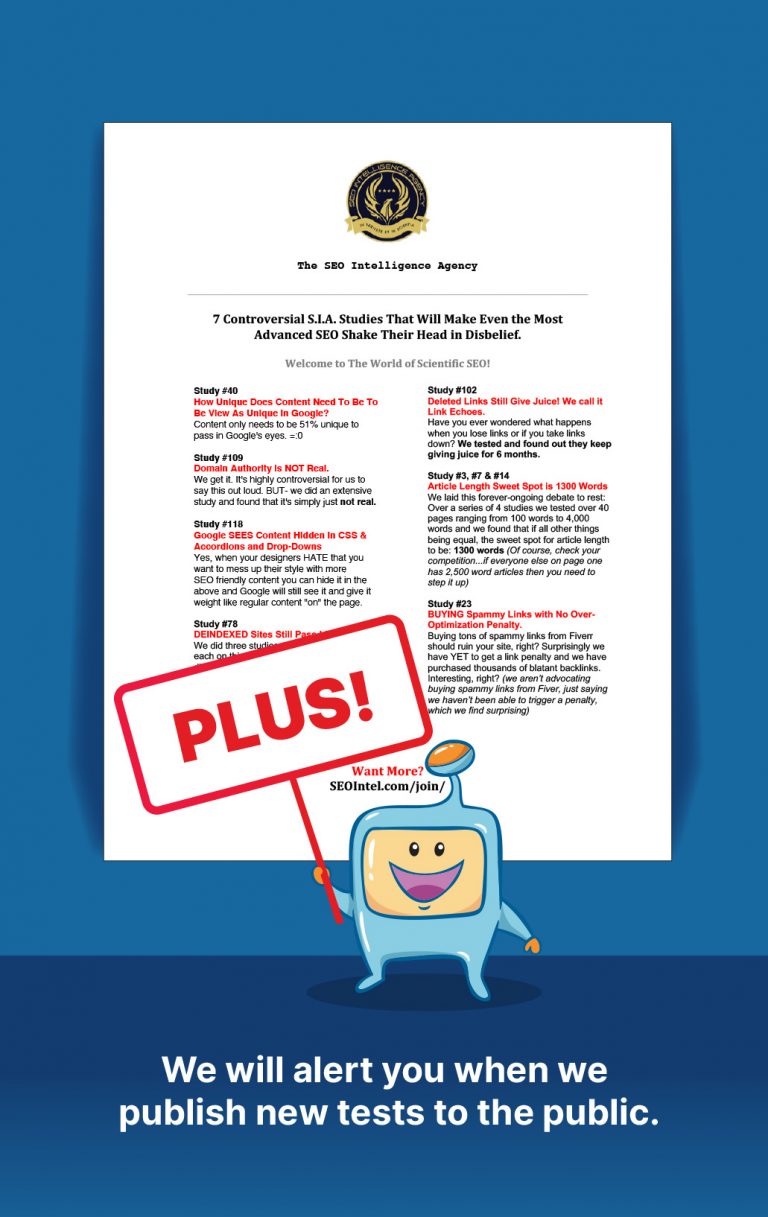
Get Our Most 7 Controversial S.I.A. Studies That Will Make Even the Most Advanced SEO Shake Their Head in Disbelief.
Plus we will alert you when we publish new tests to the public.
Obtenga nuestros 7 estudios S.I.A. más controvertidos que harán que incluso el SEO más avanzado sacuda la cabeza con incredulidad.
Además, le avisaremos cuando publiquemos nuevas pruebas al público.
Obtenez nos 7 études S.I.A. les plus controversées qui feront trembler la tête même les SEO les plus avancés d’incrédulité.
De plus, nous vous alerterons lorsque nous publierons de nouveaux tests au public.
Before you can receive free updates, link building strategies or SEO tips you need to confirm your email right now.
(It’s easy)
Just go to your inbox, open the confirmation email from the SIA, and click the link.
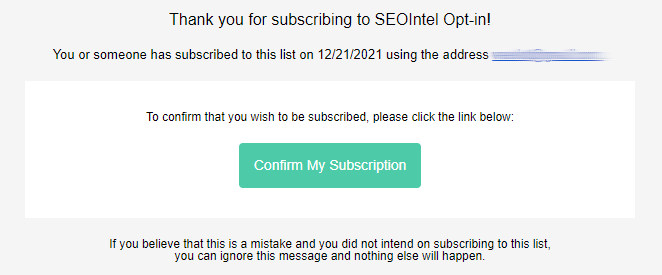
And that’s it!
PS: If you don’t see a confirmation email, please check your spam/junk or promotions folders. Sometimes the confirmation message ends up there by mistake.