AI search is changing where businesses appear and how people discover them, but visibility and measurable results do not always tell the same story.
This week, we examine new research on AI Overviews across commercial keywords, Google’s refreshed guidance on controlling content in Search and its AI features, and studies comparing AI referrals with organic traffic and conversions.
Together, these stories offer a practical way to assess what is changing, which controls are available, and where the evidence still falls short.
Google AI Overviews covered 88% of commercial keywords tracked by Semrush in August 2026, versus 45.75% in September 2025.
What the Study Found
Published October 21, the study monitored 400 fixed U.S. desktop keywords across banking, ecommerce and software. Modifiers covered alternatives, comparisons, “best X for Y,” pricing and reviews.
Reviews rose from 30.14% to nearly 90%; “best X for Y” reached 96.12%. Ecommerce climbed from 32.62% to 85.11%.
All five modifiers exceeded 80% coverage. Weighting keywords by estimated search volume raised overall coverage to 97.08%.
What Those Numbers Cannot Tell Us
The results describe the selected keywords, not the whole commercial search market. They do not establish mobile coverage, global adoption or the experience of every individual searcher. Search Engine Land’s coverage also makes an important distinction: this study did not measure changes in clicks or conversions. Its report concerns the same Semrush research, not a second independent dataset.
For marketing planning, that distinction matters. An answer appearing in search results is an exposure measure. A visitor arriving on a website is a traffic measure. A completed purchase or qualified inquiry is a business outcome. Treating these as interchangeable would turn a useful observation about search layouts into an unsupported claim about revenue.
The study therefore offers a reason to investigate commercially important searches, rather than a percentage to apply directly to next quarter’s traffic forecast.
Implications for SEO Teams
A practical response is to test how well the findings match a company’s own market. Begin with a manageable set of searches tied to valuable products or services. Include different customer needs and buying stages, rather than selecting only terms that already display an AI answer.
Record the device, market and observation date for each check. Repeat the checks consistently. A single screenshot can document what appeared at one moment, but it is a weak basis for reallocating a content budget.
Prioritize the queries that matter commercially. For example, a comparison search associated with qualified enterprise inquiries may warrant more attention than a broad shopping term with little relevance to the business. This is a practical way to prioritize testing, rather than a result established by the study.
Agree on the decision before commissioning more content: what evidence would justify investing, maintaining the current approach or changing direction? That question helps prevent a visibility dashboard from becoming an end in itself.
Keep Technical Work and Measurement Grounded
Google says standard SEO practices remain applicable to AI Overviews and AI Mode. There are no additional technical requirements or special schema needed. A page must be indexed and eligible for a search snippet to qualify as a supporting link, and eligibility does not guarantee inclusion.
That guidance supports checking existing technical foundations before buying a separate package of supposed AI-specific fixes. Any proposed change should identify the problem it addresses and how success will be evaluated.
Search Console also offers a dedicated Generative AI performance report for AI Overviews and AI Mode. Google documents impressions by page, country, date and device; the report may not appear if a site has too few impressions. Use it to assess visibility, not as a standalone measure of clicks, conversions or revenue.
For a useful internal evaluation, document content changes and compare relevant landing-page performance over time. Consider seasonality, paid campaigns, pricing changes and shifts in demand before assigning causation. If visibility improves without a corresponding business result, investigate the gap rather than assuming the investment has paid off.
Key Takeaways
Google has refreshed its guidance on controlling what appears in Search, bringing established indexing, preview and generative AI controls together in one overview.
The October 21 documentation update explicitly describes the additions as existing options. Google added references to robots meta tags, data-nosnippet, X-Robots-Tag and the Search generative AI control, while clarifying that the page concerns Google Search. This is a documentation refresh, not the announcement of a new feature.
For publishers and SEO teams, the practical value is a clearer starting point for decisions that can have very different consequences. Preventing a page from appearing in Search, limiting its preview and excluding it from generative AI features require different controls.
Match the control to the objective
The updated overview covers removing content, password protection, indexing restrictions, presentation settings and feature-specific exclusions. Private material needs access protection. A search directive does not stop someone with a direct link from visiting a publicly accessible page.
For a public page that should not appear in Google results, noindex is the relevant indexing instruction. It can be supplied through a robots meta tag or an X-Robots-Tag HTTP response header. Headers also work for non-HTML resources, including PDFs.
There is an essential implementation condition: Googlebot must be able to crawl the resource and read the instruction. Blocking the same URL in robots.txt can prevent that from happening. Google’s noindex documentation warns that inaccessible instructions cannot be applied, and a URL may still appear if other pages link to it.
Robots.txt addresses crawling rather than reliably removing a web page from results. Google may discover a blocked URL elsewhere and display the address or information drawn from links. Its robots.txt guidance therefore advises using an appropriate alternative when the goal is to prevent a URL from appearing in Search.
Preview controls offer a narrower approach
Publishers do not always need to remove a page entirely. Google’s robots directive specifications describe several ways to limit presentation:
These options differ in scope. Restricting one passage is more targeted than restricting a whole page. Neither should be treated as an access-control mechanism for confidential information.
Search Console provides a separate AI inclusion choice
The linked Search generative AI control help page says the control became available worldwide on August 31, 2026. Under Settings, site owners can manage inclusion in AI Overviews, AI Mode and generative AI features in Discover.
Exclusion prevents a site’s links and content from appearing in those features or serving as input to their generated responses. Google says the choice is not a ranking or inclusion signal for other parts of Search. It also does not override separate participation choices for services such as Merchant Center or Google Ads.
Property scope matters: child properties can inherit a parent’s setting or override it. Changes generally take a few days, with caching potentially delaying some exclusions. The control does not affect AI training; Google directs publishers to Google-Extended for that separate purpose.
What SEO teams should review
The editorial implication is straightforward: start with the business objective, then choose the narrowest suitable control. A request to keep a product detail out of previews should not automatically become a site-wide indexing restriction.
Before changing settings, record the intended outcome and affected URLs or properties. Review existing directives together so one implementation does not prevent another from being read. Agree on how the team will evaluate the resulting visibility and traffic changes rather than treating any exclusion as a cost-free adjustment.
Key Takeaways
Three new analyses suggest that identifiable visits from AI assistants remain a small acquisition channel compared with organic search. They also complicate two popular assumptions: that AI visitors consistently convert far better, and that substantial AI-driven demand can be recovered from direct-traffic reports.
The findings support closer scrutiny of AI visibility spending, rather than a blanket conclusion that AI has no commercial value. Measured referrals, wider influence on buying decisions and return on investment are different questions.
What the referral studies measured
In Marie Haynes’ analysis, 12 months of GA4 data from 100 websites covered more than 145 million sessions. ChatGPT generated 0.62% as many sessions as Google organic search. Including other large language models increased that comparison to 0.73%.
Those percentages use Google organic sessions as the denominator, not all website traffic. The published analysis does not specify the exact reporting dates.
Among the 55 sites tracking conversions, Haynes reported a 13.8% conversion rate for ChatGPT visitors against 3.02% for Google organic. Yet Google organic delivered 27 times as many conversions as all the LLMs combined. The higher rate did not overcome the difference in volume.
The SEO Works’ benchmark examined 95 websites from September 2025 through August 2026. It counted 72,095 AI referral sessions against 2,825,594 organic sessions, making AI referrals approximately 2.6% of organic volume.
Conversion comparisons used 63 sites with recorded organic conversions, at least 100 AI referral sessions and 1,000 organic sessions. Their pooled conversion rates were 7.18% for AI and 6.08% for organic, a considerably smaller advantage than Haynes found. AI converted worse on 23 of those sites.
The benchmark reported 3.2 AI conversions for every 100 organic conversions. Importantly, its AI-referral category excludes Google AI Overviews, whose clicks appear as organic sessions in GA4. These figures therefore cannot represent every visit influenced by AI-powered search.
These are separate samples, not successive measurements of one cohort. Their different conversion rates should not be read as evidence that AI traffic improved or deteriorated over time, or as universal benchmarks for every business.
Direct traffic does not resolve attribution
Kevin Indig’s investigation examined 12 GA4 properties, comparing August with September 2026. The sample leaned toward B2B businesses, and ten sites targeted the US.
Eight properties initially showed direct-traffic growth, but closer inspection exposed substantial bot activity. Across a filtered January-to-September sample, total direct sessions rose 140.9%, while engaged direct sessions changed by minus 1.0% in monthly counts, or plus 2.3% after normalizing for days per month.
A separate four-brand analysis tested relationships between AI visibility and later branded search or direct traffic. Indig could not establish a reliable connection. That is a limit on what this study demonstrated, not proof that AI never influences subsequent visits.
Google’s GA4 documentation explains that direct traffic lacks a clear referral source. Missing campaign information, redirects and links from offline documents can contribute, alongside people entering a URL themselves. Direct is therefore not a ready-made measure of hidden AI demand. An unexplained increase needs investigation before anyone assigns it to answer engines.
The missing step between conversions and ROI
For SEO teams, the practical question is what an additional investment produces for their own business. A referral report cannot answer that by itself. It records observed activity, while an investment decision requires a comparison with what would have happened without the work and what the same resources could achieve elsewhere.
Conversion definitions deserve particular attention. Google describes key events as actions a business chooses to mark as important. Reports can count those actions and distribute attribution credit across touchpoints. A completed sale and a newsletter registration can both be valuable, but they should not automatically receive equal weight in a budget discussion.
A useful evaluation would begin with a specific hypothesis: improving a defined group of pages will generate additional qualified enquiries or sales from a relevant audience. Record the baseline, the changes made and the associated costs. Agree on the outcome and review period before looking at results, rather than treating any rise in mentions as success after the fact.
Keep visibility reporting separate from commercial reporting. Citation coverage can show whether an experiment changed what an assistant displays. Referral and customer records can show what followed. Where attribution is uncertain, present that uncertainty explicitly instead of filling the gap with an assumed multiplier.
This approach leaves room for proportionate experimentation. A business does not need to abandon established search work to investigate a new discovery channel, nor commit to a large ongoing programme before it has evidence relevant to its customers.
Key Takeaways
The priority for search marketers is to connect visibility decisions with outcomes they can evaluate. Review the search results that matter to your business, understand what each content control changes, and compare traffic sources using consistent conversion definitions.
AI visibility deserves attention, but neither a citation nor a small referral share tells the whole story. Keep testing, document the limits of your data, and let business results guide the scale of your investment.
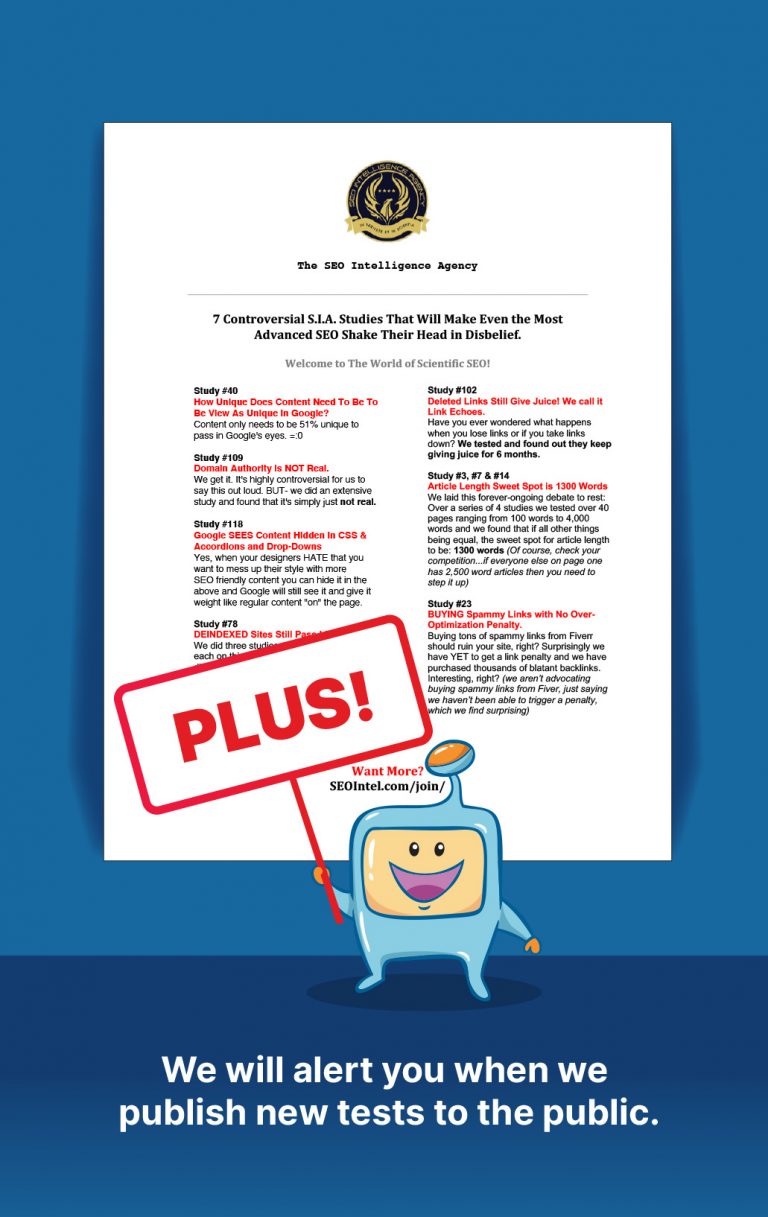
Get Our Most 7 Controversial S.I.A. Studies That Will Make Even the Most Advanced SEO Shake Their Head in Disbelief.
Plus we will alert you when we publish new tests to the public.
Obtenga nuestros 7 estudios S.I.A. más controvertidos que harán que incluso el SEO más avanzado sacuda la cabeza con incredulidad.
Además, le avisaremos cuando publiquemos nuevas pruebas al público.
Obtenez nos 7 études S.I.A. les plus controversées qui feront trembler la tête même les SEO les plus avancés d’incrédulité.
De plus, nous vous alerterons lorsque nous publierons de nouveaux tests au public.
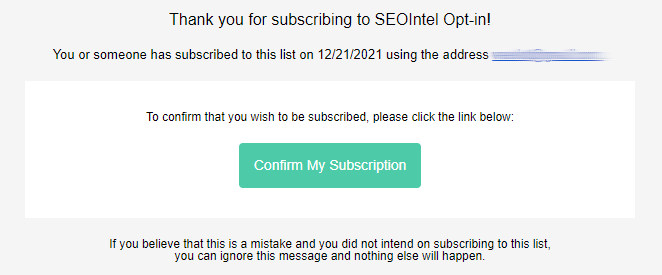
Before you can receive free updates, link building strategies or SEO tips you need to confirm your email right now.
(It’s easy)
Just go to your inbox, open the confirmation email from the SIA, and click the link.
And that’s it!
PS: If you don’t see a confirmation email, please check your spam/junk or promotions folders. Sometimes the confirmation message ends up there by mistake.