Google’s latest spam update is now rolling out, and SEOs will be watching closely over the next couple of weeks to see what kind of ranking movement follows.
The September 2026 Spam Update comes just one month after Google’s August spam update, which was linked to noticeable volatility and ranking drops across many industries. While it is still too early to know the full impact of this new rollout, site owners should monitor traffic carefully and review affected pages against Google’s spam policies.
This week also brings several AI and search visibility updates. Google Search Console now includes reporting for web multimodal search, giving SEOs a clearer way to measure searches that involve images, screenshots, and visual inputs. Google is also testing a new Dive Deeper feature in Discover with AI-generated topic overviews, raising more concerns for publishers. And new Comscore data shows AI Overviews now appear in nearly 4 out of 10 U.S. desktop Google searches.
Together, these stories show how search visibility is being reshaped by spam enforcement, AI summaries, multimodal search, and changing user behavior.
Google has released a new September 2026 spam update, marking another confirmed spam-related ranking update just one month after the August 2026 spam update.
According to the Google Search Status Dashboard, the September 2026 spam update began on September 24, 2026 at 9:15 AM PDT. Google said the update applies globally and to all languages, and the rollout may take up to two weeks to complete.
What Google Announced
Google listed the update as an incident affecting Ranking on the Search Status Dashboard.
The dashboard entry states:
This means site owners may see ranking movement while the update rolls out. Because the update is still active, it is too early to draw firm conclusions about which sites or tactics are being affected.
Another Spam Update Just One Month After August
This update comes shortly after the August 2026 spam update, which began on August 18, 2026 and finished on August 21, 2026, lasting 2 days and 16 hours according to Google’s Search Status Dashboard.
That makes the September update notable because Google has now rolled out two confirmed spam updates in back-to-back months.
Google also rolled out spam updates earlier in 2026, including the June 2026 spam update and the March 2026 spam update, according to Google’s Search Status Dashboard history.
What Happened With The August 2026 Spam Update
The August 2026 spam update appeared to create stronger-than-usual ranking disruption.
Search Engine Land reported that SE Ranking data found a major increase in top-ranking URLs dropping out of the top 100 during the August update window. According to the analysis, 16.71% of URLs that had ranked in Google’s top 10 fell beyond position 100 for the same keyword during the update, compared with 9.2% during a similar July period without a confirmed Google ranking update. That represented an 82% increase in top-10 URLs dropping beyond the top 100.
The same report said the volatility was broad across all 20 industries tracked by SE Ranking. However, the data did not identify specific sites, domains, or spam tactics that were most affected. It also only tracked positions 1 through 100, so it could not confirm whether pages were deindexed or simply fell below position 100.
Why The August Update Matters For This Rollout
Because the August spam update was followed by noticeable ranking disruption, SEOs will likely watch the September update closely.
However, it is important not to assume every traffic or ranking change during the rollout is definitely caused by the spam update. Google updates can overlap with normal ranking volatility, competitive changes, indexing changes, and shifts in search features.
Search Engine Roundtable also noted ranking volatility around September 23 and 24, just before and during the launch of the September spam update, which could make diagnosis more difficult for site owners looking at early movement.
What Spam Updates Target
Google’s spam updates are designed to improve its spam detection systems and reduce the visibility of content or tactics that violate Google’s spam policies.
Google’s spam policies cover attempts to deceive users or manipulate Google’s search systems, including tactics that try to gain rankings through manipulative or abusive behavior. Google’s Search Essentials also says spam policy violations can lead to a page or site ranking lower or being omitted from Google Search.
Spam-related issues can include areas such as:
Google did not say that the September 2026 spam update targets one specific spam tactic, so it should be treated as a general spam systems update unless Google provides more detail.
What Site Owners Should Watch
Because the rollout may take up to two weeks, site owners should avoid making rushed conclusions based on one or two days of data.
Instead, monitor:
If a site sees a major decline that lines up with the update, the next step is to audit for spam policy risks rather than assuming it is a normal quality update.
What To Do If You Are Hit
If rankings drop during the September 2026 spam update, the best response is not to make surface-level changes.
Site owners should review whether the site has any content, links, technical setups, or monetization strategies that could violate Google’s spam policies. This includes checking for mass-produced content, low-value programmatic pages, manipulative internal or external linking, hacked pages, doorway pages, or third-party content created mainly to exploit the host site’s ranking signals.
For many sites, recovery may require removing or improving problematic content, tightening editorial controls, cleaning up spammy sections, and making sure the site is not being used to manipulate rankings.
Key Takeaways
Google is adding web multimodal search reporting to Search Console, giving site owners a clearer way to see how their content performs when users search with images, screenshots, and other visual inputs.
Google announced the update on September 24, 2026, saying the new reporting is available in both the Performance report for Search results and the Generative AI features report. The new data is available through a multimodal search type filter.
What Google Announced
Google said web multimodal search reporting is designed to help site owners understand how users find their content when Search is used in more visual ways.
Instead of only looking at traditional text-based web searches, Search Console can now separate out performance from multimodal searches. These are searches where users use visual input, such as an image or screenshot, as part of the search experience.
This matters because search behavior is no longer limited to typing keywords into a search box. Users increasingly search with:
Where The Data Appears
Google said the new reporting appears in two areas of Search Console:
In the Performance report, site owners can apply the new multimodal search type filter to see how their site performs in web multimodal search.
In the Generative AI features report, the same filter can help site owners understand how multimodal search contributes to AI-related search visibility, such as AI Overviews and AI Mode when those features apply.
Google previously rolled out dedicated Search Console reporting for generative AI features, including AI Overviews, AI Mode, and generative AI features in Discover. Those reports are designed to give site owners a dedicated view of impressions in generative AI features, while still including the data in the overall Search performance reporting.
Why This Matters
This is an important update because it gives SEOs more visibility into how visual and multimodal search behavior affects site performance.
Until now, it could be difficult to separate traditional text searches from searches that use visual inputs. With this new filter, site owners may be able to better understand whether their images, product visuals, screenshots, diagrams, or other visual assets are helping them appear in Search.
This is especially useful for sites where visual content plays a major role, such as:
What This Means For SEO
For SEOs, this update reinforces that visual content is becoming more measurable in Search Console.
If multimodal search impressions and clicks are meaningful for a site, that may indicate that users are discovering the site through images or visually driven search behavior. This can help SEOs decide whether to invest more in image quality, visual explanations, product photography, diagrams, or better image optimization.
It also gives teams another way to compare search behavior. A page may perform differently in text-based search compared with multimodal search. For example, a product page, recipe page, tutorial, or visual guide may attract users through images even when it does not rank as strongly for traditional text queries.
How Site Owners Can Use The Data
Site owners should use the new multimodal filter to compare visual search performance against text-based search performance.
Useful questions to ask include:
This data can help content, SEO, and ecommerce teams better understand whether visual assets are contributing to search visibility.
A Bigger Shift Toward Visual And AI Search
This update also fits into Google’s broader shift toward multimodal and AI-powered search experiences.
Google Search already includes features such as Google Lens, Circle to Search, AI Overviews, AI Mode, and other visual discovery tools. Search Console reporting is now starting to reflect that shift by giving site owners more ways to measure how content performs when search is not purely text-based.
Google’s Search Central documentation for AI features says sites appearing in AI features such as AI Overviews and AI Mode are included in overall Search Console traffic and reported within the Web search type. The newer generative AI reports then give site owners a more dedicated view of AI feature visibility.
What To Watch Next
This reporting update is useful, but SEOs will likely want more detail over time.
Important things to watch include:
As with other Search Console reporting changes, this is likely just one step in a larger measurement shift.
Key Takeaways
Google is testing a new Dive deeper feature in Google Discover that opens an AI-generated topic overview instead of sending users directly to a publisher’s page.
The test places an AI-generated topic overview inside the Discover experience, replacing a slot that could have otherwise gone to a publisher’s article or video. The concern is that this could reduce publisher clicks from Discover, especially if users get enough information from Google’s AI overview without tapping through to the original source.
What Google Is Testing
The new feature appears as a Dive deeper option inside Google Discover.
When tapped, it opens an AI-generated overview of the topic. Instead of going directly to one publisher’s article, users are shown a Google-generated summary with links to related content.
The test is starting with videos. That means Google is testing the feature in Discover video cards first, though the broader concern is whether this type of AI overview could expand to more Discover formats later.
Why Publishers Are Concerned
For publishers, the issue is not simply that Google is testing another Discover feature.
The bigger concern is that Discover is already a major traffic source for many publishers. If Google inserts an AI-generated topic layer between the user and the publisher’s content, fewer users may click through to the original article or video.
Search Engine Land described the test as “not good for publishers” because the AI overview may satisfy the user’s curiosity inside Google’s own interface.
This is similar to the broader concern publishers have raised about AI Overviews in Search: Google may use publisher content to create helpful summaries, but those summaries can reduce the need to visit the publisher’s site.
How This Changes Discover
Google Discover has traditionally worked as a personalized feed that sends users to articles, videos, and other content related to their interests.
In 2025, Google said it was updating Discover to show more content types from publishers and creators, including articles, YouTube Shorts, Instagram posts, and X posts. Google also said users could follow publishers and creators directly in Discover to see more of their content.
That earlier framing positioned Discover as a “jumping-off point” for exploring publisher and creator content. The new Dive deeper test could shift part of that experience toward Google-generated topic exploration instead.
Why This Matters For SEO
For SEOs and publishers, this test is worth watching because Discover traffic is already unpredictable.
Unlike traditional organic search, Discover visibility is not based on a direct keyword query. Content appears based on user interests, freshness, quality, engagement patterns, and Google’s understanding of what users may want to read or watch.
If AI-generated topic overviews become a bigger part of Discover, publishers may face a new challenge: content may be surfaced as part of a topic, but the click may not go directly to the source.
That could affect:
The AI Overview Problem Moves Into Discover
This test also shows how AI summaries may continue spreading beyond traditional Search results.
AI Overviews and AI Mode already changed how users interact with search queries. Dive deeper could bring a similar pattern into Discover, where users are not actively searching but are browsing recommended content.
That difference matters. In Search, users usually ask a question or type a query. In Discover, Google recommends content before the user searches. If AI summaries are added there too, Google is not only answering queries. It is also shaping how users browse and understand topics inside a feed.
What Publishers Should Watch
For now, this appears to be a test, not a full rollout.
Publishers should monitor whether Discover traffic changes for content types that may be affected, especially video content if the test starts there. It may also be useful to compare Discover performance before and after the appearance of AI-led topic cards or Dive deeper placements.
Publishers should watch:
Key Takeaways
Google AI Overviews are becoming a much larger part of the desktop search experience, according to new data from Comscore’s Q2 2026 AI Intelligence Report.
The full Comscore report requires registration, but public coverage and Comscore’s own press release provide several important takeaways. The biggest number: Google desktop searches with an AI Overview grew from 25.8% in July 2025 to 39.4% in June 2026. That means AI Overviews appeared in nearly 4 out of 10 U.S. desktop Google searches by June.
AI Overviews Are Becoming A Normal Part Of Search
The new Comscore data shows that AI Overviews are no longer a small or occasional search feature.
Search Engine Land reported that Google AI Overviews now appear in 39% of U.S. desktop searches, based on Comscore’s Q2 2026 data. The article also noted that AI search is expanding as YouTube and Reddit gain more citation visibility, while ChatGPT loses prompt share to rivals.
This is important because it shows AI-generated answers are becoming part of the standard Google Search experience. Users are not only seeing traditional blue links, ads, shopping units, images, videos, and featured snippets. They are increasingly seeing AI-generated summaries at the top of the search results.
Google Is Not The Only Search Engine Adding AI Answers
Comscore’s public release also said Bing’s Copilot Search presence increased over the same period.
According to Comscore, Bing searches with Copilot Search increased from 11.8% in July 2025 to 17.3% in June 2026.
That means AI-generated answers are growing across major search engines, not just Google. Google still has the much larger search footprint, but Bing is also moving more search activity into AI-assisted results.
Search Volume Is Still Growing
One important point from the public summaries is that AI Overviews are not necessarily shrinking search activity overall.
Comscore counted 77 billion U.S. desktop searches in Q2 2026, up from 71 billion in Q2 2024. That means desktop search volume was still growing even as AI Overviews became more common.
This supports a more nuanced view of AI search. AI Overviews may reduce some clicks to publishers, but they do not appear to be stopping users from searching. Instead, search behavior may be shifting toward longer, more conversational, AI-assisted sessions.
AI Overview Coverage Is Not The Same As Traffic Impact
It is important to understand what the Comscore number measures.
The 39.4% figure refers to the share of U.S. desktop Google searches that included an AI Overview. It does not directly measure how many users clicked, how much traffic publishers gained or lost, or whether AI Overviews increased or decreased conversions.
For SEOs, this distinction matters.
A high AI Overview appearance rate means more searches now include AI-generated answers. But it does not automatically tell us:
The number tells us AI Overviews are present more often. It does not tell us the full click impact.
Other Research Points To Click Pressure
While the Comscore data is about AI Overview presence, other research suggests that AI search can reduce clicks to external websites.
Search Engine Land previously reported that U.S. Google searches ended without a click 68.01% of the time during the first four months of 2026, based on SparkToro research using Similarweb clickstream data. That was up from 60.45% in 2024. SparkToro said AI Overviews are likely contributing to the rise in zero-click searches, although the study did not isolate the exact amount of the increase caused by AI Overviews.
SparkToro found AI Overviews appeared on more than 20% of Google searches in that study, and when they appeared, click-through rates dropped by nearly 60%.
A separate 2026 field experiment on Google Search found similar concerns. Researchers reported that removing AI Overviews and AI Mode increased click-through rates to publishers, while forcing users into AI Mode reduced external click-through rates and hurt some user experience measures. The study found that removing AI Overviews increased external click-through by 8.8 percentage points, while AI Mode reduced external click-through by 18.8 percentage points compared with standard Google Search.
AI Discovery Is Also Fragmenting Beyond ChatGPT
Comscore’s Q2 2026 report also suggests that AI discovery is spreading across more platforms.
According to Comscore’s public release, Claude’s share of total AI prompt volume grew from 2% in January 2026 to 11% in June 2026, while Google Gemini nearly doubled from 17% to 30% over the same period.
This means ChatGPT is still important, but it is no longer the only platform shaping AI discovery. Gemini, Claude, Copilot, AI Overviews, and other AI search or assistant experiences are all becoming part of the discovery ecosystem.
For marketers and publishers, this means AI visibility can no longer be measured in one place. A brand may be visible in Google Search, cited in AI Overviews, mentioned in Gemini, summarized by Claude, or surfaced through ChatGPT.
YouTube And Reddit Continue To Matter
The Comscore report also highlighted that YouTube and Reddit are gaining citation visibility in AI search.
This matters because AI visibility is not only about traditional website pages. Google’s AI systems may surface or cite content from videos, forums, social platforms, and user-generated content communities.
For brands, this supports a broader SEO strategy. Visibility may depend on more than ranking a blog post or product page. It may also depend on whether the brand, product, or topic appears in trusted communities, video content, discussions, and third-party sources that AI systems use or cite.
Source Presence And Citations May Be Different
One of the more important ideas from the coverage is that being used as a source and being visibly cited may not always be the same thing.
Secondary coverage of the Comscore report noted examples where a domain could help inform an AI response but appear as a visible citation less often. For example, PikaSEO’s summary said Tripadvisor appeared in 61% of lodging AI responses but was cited in only 21%, while Hotels.com had 50% source presence but 18% citation visibility.
This detail should be treated carefully because it comes from secondary coverage rather than the publicly accessible Comscore report. But the concept is important for SEO reporting: AI visibility is not one metric.
SEOs may need to separate:
What This Means For SEOs
The main takeaway is that AI Overviews are becoming too common to ignore.
If nearly 4 in 10 U.S. desktop Google searches now include an AI Overview, SEOs need to think about how content performs in search results that include AI-generated answers.
This does not mean traditional SEO is dead. Search volume is still growing, and organic results still matter. But the search results page is changing. Rankings, citations, brand mentions, AI visibility, and click-through behavior all need to be evaluated together.
For publishers, the concern is clear: more AI answers may mean fewer clicks for some informational queries. For ecommerce, local businesses, and brands, the opportunity may be different: appearing in AI answers, product recommendations, YouTube citations, Reddit discussions, and trusted third-party sources may become part of the new search strategy.
What To Watch Next
SEOs should monitor:
The most important shift is that SEO reporting has to move beyond rankings alone. A site can rank, appear as a citation, influence an answer, or lose clicks even when visibility looks strong on the surface.
Key Takeaways
This week’s roundup highlights two major forces shaping SEO right now: Google’s spam enforcement and the continued expansion of AI-powered search experiences.
The September 2026 spam update is the most immediate item to watch, especially for sites that see sudden ranking or traffic changes during the rollout. But the bigger long-term story is how Google is changing the way search visibility is measured and experienced.
Search Console’s new multimodal reporting gives SEOs another lens for understanding visual search behavior. Discover’s Dive Deeper test shows that AI summaries may continue moving beyond traditional search results. And Comscore’s AI Overview data shows that AI-generated answers are now a regular part of desktop search.
For SEOs, the takeaway is clear: rankings still matter, but they are no longer the full picture. Visibility now includes AI Overviews, Discover, multimodal search, visual content, citations, and whether users still click through after getting answers directly from Google.
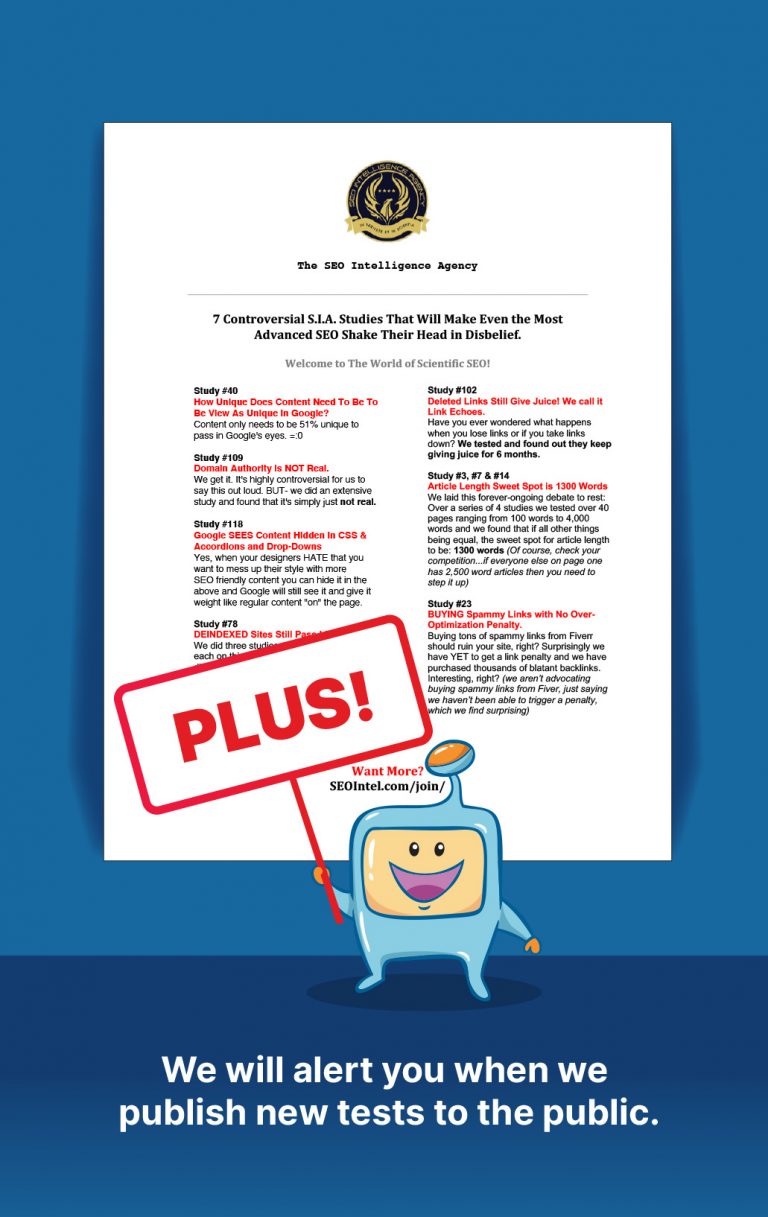
Get Our Most 7 Controversial S.I.A. Studies That Will Make Even the Most Advanced SEO Shake Their Head in Disbelief.
Plus we will alert you when we publish new tests to the public.
Obtenga nuestros 7 estudios S.I.A. más controvertidos que harán que incluso el SEO más avanzado sacuda la cabeza con incredulidad.
Además, le avisaremos cuando publiquemos nuevas pruebas al público.
Obtenez nos 7 études S.I.A. les plus controversées qui feront trembler la tête même les SEO les plus avancés d’incrédulité.
De plus, nous vous alerterons lorsque nous publierons de nouveaux tests au public.
Before you can receive free updates, link building strategies or SEO tips you need to confirm your email right now.
(It’s easy)
Just go to your inbox, open the confirmation email from the SIA, and click the link.
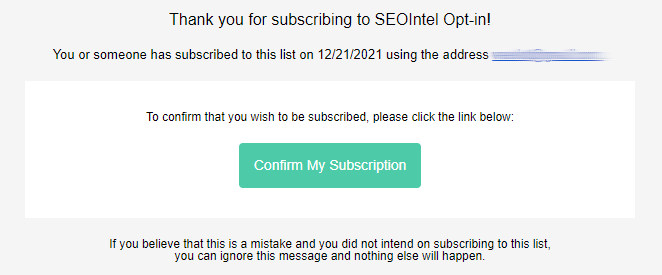
And that’s it!
PS: If you don’t see a confirmation email, please check your spam/junk or promotions folders. Sometimes the confirmation message ends up there by mistake.