Knowing what changed in search is only useful if the evidence behind it holds up.
This week, we examine new warnings about rank-tracking data, a small AI opt-out experiment, and research into where AI Mode sends product links.
We also look at Google’s updated guidance for user-generated spam and a broader analysis of organic traffic declines.
Together, these stories offer a practical way to review your reporting, content controls and search strategy without treating every sudden movement or headline as a reason to change course.
A sudden ranking collapse in an SEO dashboard may reflect a collection problem rather than a change in search performance. In an October 27 statement, Semrush confirmed that some automated Google requests return results that appear normal but differ from what a typical user would see.
Other tracking providers have documented similar anomalies. For SEO teams, the immediate challenge is deciding which changes deserve investigation and which data points need verification before anyone changes a page.
What Poisoned SERPs Look Like
Semrush describes two patterns: results that are visibly unrelated to the query, and pages that initially look credible but include only loosely relevant listings farther down.
Its example involved a Brazilian search for a specific stroller model that returned dental equipment because the products shared the Portuguese word “carrinho.” Semrush says it excludes clearly invalid results, has adjusted its data sources, and now flags questionable responses for another collection attempt. Read Semrush’s explanation.
A different pattern involves familiar ranking domains disappearing together. DemandSphere’s October 23 report explains that a page can retain Google’s normal layout while replacing the sites usually associated with a query. An automated tracker may then record apparent ranking losses without recognizing the underlying data problem.
Provider Numbers Need Context
DemandSphere classified 6.7% of the SERPs it collected on October 23 as poisoned. Its detection method compares each result page with domains that regularly appeared in that keyword’s recent history.
The company also acknowledges an important limitation: an unusual result alone cannot distinguish poisoning from an algorithm update, a Google test, or ordinary volatility. Repeated collection and surrounding historical data provide additional evidence. DemandSphere’s methodology describes its thresholds and retry process.
AccuRanker’s updated analysis reports that 40% of its initial desktop fetches were affected on October 24. After its checks, 3.2% of stored desktop keyword-days in its sample still failed its retrospective page-swap test.
These figures measure different collection stages using different definitions and samples. They cannot establish a provider accuracy leaderboard or a single industry-wide error rate.
Verify the Signal Before Changing the Site
Our practical recommendation is to separate a data-quality investigation from an SEO diagnosis.
Start by recording the affected keyword, landing page, device, location, and collection date. Preserve the suspicious result if your platform makes it available. That gives the provider a specific incident to investigate rather than a general complaint about volatility.
Then seek corroboration. Compare the affected query’s Search Console performance with the tracker’s history, and request a refresh where available. AccuRanker recommends checking whether familiar competitors also disappeared and whether the change reversed the following day. See its diagnostic checklist.
For reporting, mark unresolved anomalies rather than silently deleting them or presenting them as confirmed losses. For site changes, require stronger evidence before rewriting content, changing internal links, or rolling back a deployment.
Google’s motive is unconfirmed. AccuRanker offers efforts to deter bulk AI scraping as one possible explanation and notes that Google has not commented. Vendor observations support scrutiny of tracking data, not certainty about intent.
Key Takeaways
Cyrus Shepard reports that traditional organic clicks declined after a website opted out of Google’s AI features. AI impressions also fell to zero. His case study raises a question about AI visibility’s wider value, without establishing cause.
What the Experiment Actually Reported
Shepard estimated an AI click-through rate of approximately 0.9% by examining overall clicks before and after the change. That figure was inferred from the comparison, not directly measured feature-level CTR.
Shepard suggested a possible “Search SERP Halo Effect”: appearing in AI answers alongside conventional listings might encourage clicks through increased trust. He described the study as small and urged site-specific testing. Read his findings.
Crucial methodological details remain unavailable. Search Engine Land’s October 29 coverage notes that the site’s traffic volume, test dates, size of the organic click decline, and opt-out method were not disclosed. The public account also does not describe a control group.
Those omissions prevent a reliable estimate of the effect’s size or confidence that AI visibility caused it.
The Opt Out Method Matters
“Opting out of AI” can describe materially different technical changes. Google’s documentation directs publishers to Search controls for AI Overviews and AI Mode, while distinguishing those controls from Google-Extended. Google’s AI features guidance explains the distinction.
Under Google’s robots controls specification:
Google-Extended, by contrast, governs specified Gemini training and grounding uses. Google says it does not affect inclusion in Search and is not a Search ranking signal.
This creates a significant alternative explanation to examine: if an experiment also changes conventional snippets, changes in organic clicking cannot automatically be attributed to losing an AI citation. The available report does not establish whether that happened here.
How to Build a More Informative Test
Our recommendation is to document the implementation before debating the outcome.
Record the exact directive, affected URLs, deployment date, and evidence that Google processed the change. Google advises checking the HTML received by Googlebot and allowing time for recrawling and processing. Its troubleshooting guidance outlines those checks.
Next, compare a defined test group with similar unchanged pages. Record rankings, impressions, clicks, conversions, and any changes to conventional search appearance. Keep other site changes separate where practical, and publish absolute counts alongside percentages.
A repeatable pattern would make the hypothesis more useful. This initial report alone demonstrates neither an organic-ranking penalty for opting out nor a proven halo benefit from appearing in AI answers.
Key Takeaways
Google Shopping received 57% of the links displayed in AI Mode product answers in a Findrix study. Another 46.5% of product answers linked exclusively to Google-owned pages, according to Search Engine Land’s October 29 coverage.
What the study measured
Findrix collected 55,198 answers across ChatGPT, Gemini and AI Mode, testing 18,400 buyer questions in 35 U.S. markets from October 14 to 17. Each question was tested once per platform. The total sample covers all three services.
The pattern was weaker for local-service and software answers: only 5.1% and 1.1% of their AI Mode links went to Google pages, respectively.
The percentages count different things: links versus answers, not clicks or purchases. The findings are attributed here to Findrix through Search Engine Land’s reporting; the underlying report was not independently reviewed.
Audit the route to purchase
For ecommerce teams, a useful response would be to examine how a shopper could reach the business from a product recommendation. This is an editorial recommendation, not an additional finding from the research.
Start with a small set of commercially important questions drawn from customer conversations. For every answer, record which products appear, which seller is identified, what information is shown and where each relevant link leads. Keep screenshots and the date of observation so colleagues can review the same evidence.
Then classify the routes separately. A direct link to a retailer, a marketplace listing and an intermediary product page should not collapse into a single “brand visibility” score. Each creates a different set of questions about the shopper’s next step. Is the correct model shown? Is the business one of the available sellers? Does the destination make delivery and returns easy to evaluate?
This audit should complement commercial reporting rather than substitute for it. A team could improve the accuracy of its product appearances while seeing no immediate movement in attributable sales. Report those outcomes separately so that a visibility improvement does not become an unsupported revenue claim.
Check the product information you control
Google’s merchant-listing documentation explains that Product structured data can make pages eligible for shopping-related search experiences. Those displays can include price, availability, shipping and return information. Google also recommends validating markup and testing how it sees deployed pages.
A practical next step is to compare those fields with the customer-facing product page and the business’s current offers. Assign discrepancies to an owner and retest after corrections. Treat this as product-data quality work, not a promised shortcut into AI recommendations.
Before reallocating budget, repeat the answer audit over time with a consistent question set. Keep category-level observations visible rather than applying one aggregate percentage to the entire catalog. Prioritize the problems that a merchandising or product team can reproduce and fix, then document what changed for customers.
Key Takeaways
Google’s October 26 documentation update gives platforms a clearer reason to review which user-created pages become searchable. Its Search Central changelog describes new guidance on link-shared content and abuse monitoring. This is a documentation change, not an announcement of a new ranking update.
Decide whether a page belongs in search
Google’s revised spam-prevention guide asks services publishing shared pages, generated outputs and interactive tools to distinguish material intended for public discovery from direct-sharing, collaboration or utility content.
This does not call for excluding every shareable page. The relevant question is whether public search discovery is its purpose.
Crawling and indexing need different controls
The guide mentions default noindex rules or robots.txt restrictions for non-search content. These controls are not interchangeable.
A robots.txt restriction tells Googlebot not to crawl a URL. Google’s robots.txt documentation warns that a blocked web page’s URL can still appear in results if Google discovers links to it. Blocking crawling is therefore not a reliable way to ensure that a web page stays out of the index.
For an indexing exclusion, Google supports noindex through a robots meta tag or an X-Robots-Tag response header. Crucially, the crawler must be able to retrieve the resource to see that instruction. Blocking the same URL in robots.txt can prevent Google from discovering its noindex rule. Google explains the requirement in its noindex documentation.
For genuinely private material, use access controls. A search visibility setting is not a substitute for requiring authorization to view a resource.
Watch for abuse before it scales
Google recommends checking Search Console’s Page Indexing and Search performance reports for unexpected pages, impressions and queries, alongside unusual platform publication activity. Moderation, signup verification and user reporting also feature in its abuse-prevention guidance.
Make publication intent explicit
For product and SEO teams, an effective starting point would be a URL-template inventory. Identify which templates serve public audiences, which exist for collaboration and which require restricted access. Give each category a named owner and a documented visibility policy.
Then test examples from each category before changing defaults across the platform. Include older pages as well as newly generated ones. A setting that works for future publication may leave a substantial existing collection untouched.
Finally, agree on an investigation process. An unexpected query or page-count increase should trigger a review of the underlying URLs, account activity and intended use, rather than an automatic conclusion that all growth is spam. The operational goal is to preserve useful public content while stopping unauthorized mass publication.
Key Takeaways
A new analysis of organic search traffic finds substantial losses, but the scale differs sharply across site types and markets. For SEO teams, that makes diagnosis more useful than assuming every decline has the same cause.
The headline numbers need context
In an October 28 Search Engine Land analysis, Kevin Indig reports that estimated organic-search visits fell 13.2% in the U.S. sample and 24.4% in the French sample between August 2024 and August 2026.
His original report uses Similarweb’s monthly traffic estimates for 10,000 domains in each country, covering September 2023 through August 2026. The country lists differ, monthly coverage varies, and neither sample represents the entire national web. The two-year comparison uses smaller groups with complete organic estimates.
Publishers experienced substantially steeper declines: 41.5% in the U.S. and 42.5% in France. The findings describe modeled visits, not revenue, and do not establish whether AI or paid search caused the losses.
Check what the search results actually show
Changes outside AI deserve attention too. In its October 2025 announcement, Google introduced a shared, sticky “Sponsored results” label and a control for hiding grouped text ads. Google said ad sizes would remain unchanged, with no more than four text ads per group.
That documents a presentation change, not evidence that advertising caused a specific traffic decline. For an affected query, examine the actual results page before assigning a cause. A ranking report alone cannot explain everything a searcher encounters before choosing a link.
Use first party data to narrow the problem
For Google traffic, Google’s traffic-drop debugging guide recommends examining Search Console over 16 months to identify seasonal patterns, then comparing equivalent periods.
Break the change down by queries, URLs, countries, devices and search appearances. Check different search types separately rather than combining web, image and news performance.
The relationship between impressions and clicks also matters. When impressions hold steady but clicks decline, Google advises considering titles, snippets and competing rich results. Technical problems, ranking updates and changing demand are other possibilities.
For widespread losses, review indexing. For a smaller affected page group, inspect representative URLs. Google also advises checking its data-anomalies information because reporting changes can resemble a traffic problem.
Turn the diagnosis into a decision
SEO Intel’s recommendation is to build a short evidence log before approving a major strategy change. Give each suspected cause an owner, supporting observations and a next test. Keep confirmed problems separate from plausible explanations.
Prioritize by business exposure. A lost visit to a low-value archive page and a lost visit to a product-selection page should not automatically receive equal attention. Compare the affected page groups with qualified leads, purchases or other outcomes that the business can measure.
Then choose a response with a clear success criterion. A technical repair needs a technical verification. A content experiment needs a defined audience and outcome. A budget change needs evidence about returns, not just a persuasive industry narrative.
Key Takeaways
Start with the question your data can actually answer. Check unusual ranking movements against your own performance, distinguish displayed links from visits, and examine the trade-offs before changing content controls. Keep useful public pages accessible while preventing abuse of tools and shareable outputs. When traffic falls, investigate the affected pages, queries and channels before settling on a cause.
This week’s developments reward careful diagnosis and measured testing more than sweeping conclusions.
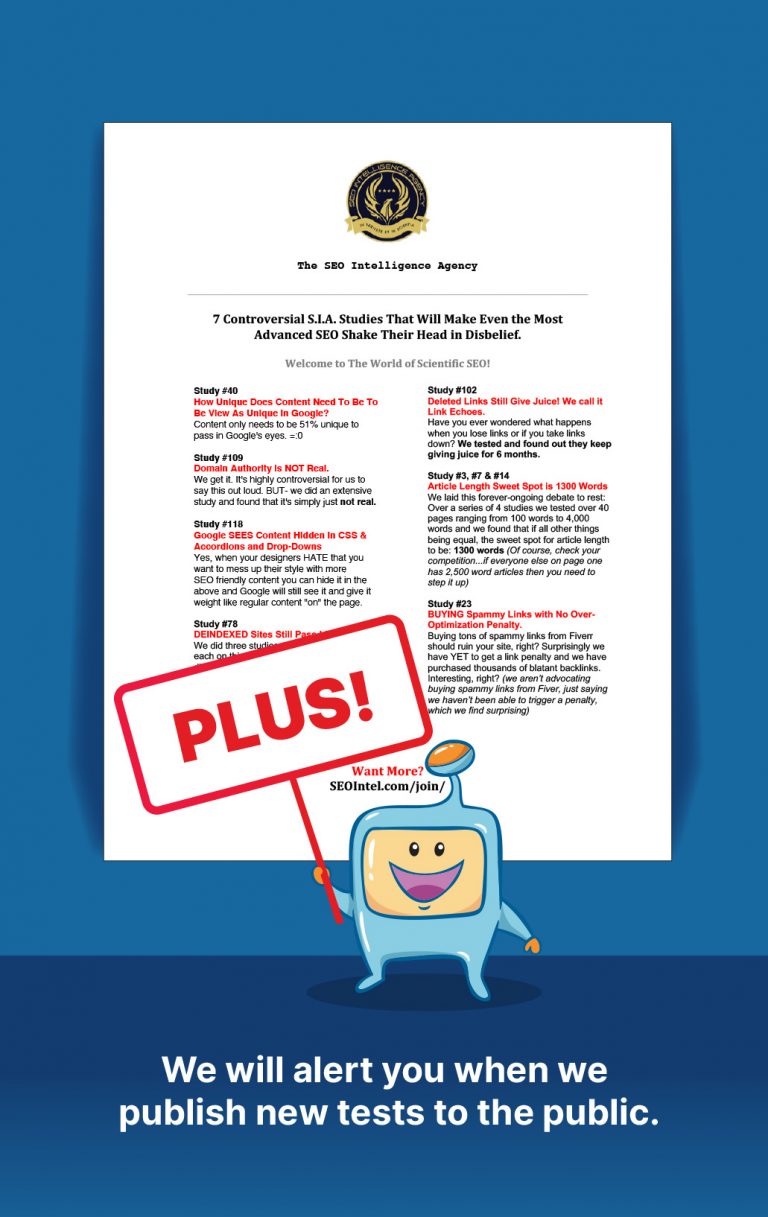
Get Our Most 7 Controversial S.I.A. Studies That Will Make Even the Most Advanced SEO Shake Their Head in Disbelief.
Plus we will alert you when we publish new tests to the public.
Obtenga nuestros 7 estudios S.I.A. más controvertidos que harán que incluso el SEO más avanzado sacuda la cabeza con incredulidad.
Además, le avisaremos cuando publiquemos nuevas pruebas al público.
Obtenez nos 7 études S.I.A. les plus controversées qui feront trembler la tête même les SEO les plus avancés d’incrédulité.
De plus, nous vous alerterons lorsque nous publierons de nouveaux tests au public.
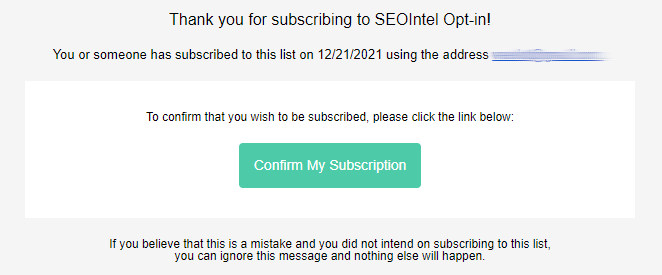
Before you can receive free updates, link building strategies or SEO tips you need to confirm your email right now.
(It’s easy)
Just go to your inbox, open the confirmation email from the SIA, and click the link.
And that’s it!
PS: If you don’t see a confirmation email, please check your spam/junk or promotions folders. Sometimes the confirmation message ends up there by mistake.