
This week’s SEO news is focused heavily on quality, trust, and technical fundamentals.
Google’s September 2026 spam update is still rolling out, and early reports suggest it may be moving through search results in multiple waves. SEOs are watching ranking volatility, Discover instability, and possible movement around large-scale templated, programmatic, or AI-assisted content.
At the same time, Google updated its helpful content guidance with more detail around main content, effort, originality, talent or skill, and accuracy. Google also strengthened its guidance on AI-generated content, making it clear that AI content should be manually reviewed and fact-checked before publishing.
To round things out, the latest Search Off the Record podcast revisits a long-standing technical SEO question: do sitemaps still matter? The answer is yes, but only when they are clean, accurate, and aligned with canonical signals.
Google’s September 2026 spam update is still rolling out, but early reports suggest the update is already having a visible impact across search results.
The update began on September 24, 2026 at 9:15 AM PDT, according to Google’s Search Status Dashboard. Google said the update applies globally, affects all languages, and may take up to two weeks to complete.
Because the rollout is still active, it is too early to say exactly which types of sites or tactics are being affected. However, early tracking tools, SEO community chatter, forums, and social media posts point to ranking volatility, Discover instability, and possible hits to large-scale templated or programmatic pages.
The Update Appears To Be Rolling Out In Waves
Early signs suggest that the September spam update may not be a single short burst.
The first visible wave appeared around September 25 to 27, shortly after the update launched. During that period, SEOs began reporting ranking movement, traffic drops, and increased volatility across tracking tools.
A second wave appeared around September 30 to October 1, after the update seemed to briefly cool down. This suggests the rollout may be moving through different systems, site groups, or spam signals in stages.
That makes this update different from the August 2026 spam update, which rolled out much faster. The August update started on August 18 and finished on August 21, lasting less than three days. The September update, by comparison, may take up to two weeks.
Another Spam Update Just One Month After August
The timing is notable because Google rolled out another spam update only one month earlier.
The August 2026 spam update created noticeable disruption. Third-party data from SE Ranking, reported by Search Engine Land, found that during the August update window, 16.71% of URLs that had ranked in Google’s top 10 dropped beyond position 100 for the same keyword. That compared with 9.2% during a similar July period without a confirmed Google ranking update.
That represented an 82% increase in top-10 URLs dropping beyond the top 100 during the August spam update.
Because of that, SEOs are watching the September rollout closely. If August was disruptive in a short window, the September update’s longer rollout could create more extended ranking movement.
Early Reports Point To Ranking Drops
Several site owners have reported sudden traffic and ranking drops shortly after the September update began.
Some reports mention large losses in Google Search traffic around September 27, which lines up with the first visible wave of the update. Other SEOs have reported fresh volatility around September 30 and October 1, which lines up with the possible second wave.
However, these reports should be treated carefully. A traffic drop during the rollout does not automatically prove that a site was hit by the spam update. Google updates can overlap with normal ranking volatility, competitor changes, indexing changes, Discover shifts, and changes in search result features.
For now, the safest conclusion is that the September 2026 spam update is associated with noticeable ranking movement, but the full impact will not be clear until the rollout is complete.
Programmatic And Templated Pages Are Being Watched
One of the strongest early themes from the SEO community is that large-scale templated or programmatic pages may be among the affected content types.
Some SEOs have pointed to examples involving pages generated at scale, such as pages created for every phone number, area code, location, or similar template-based query variation. Others have mentioned large AI-assisted or programmatic content setups as areas seeing movement.
That does not mean Google has confirmed that this update specifically targets AI content, programmatic SEO, or templated pages. Google has not named one specific spam tactic for the September update.
But because Google’s spam policies include areas such as scaled content abuse, scraped content, doorway pages, and low-value mass-produced pages, sites using large-scale automated or lightly reviewed content should pay close attention.
Discover And News Volatility Are A Major Theme
Another major theme in community discussion is instability in Google Discover and Google News traffic.
Some publishers have reported that Discover traffic dropped sharply, became inconsistent, or disappeared after briefly recovering. Others said Google News visibility weakened or became harder to predict during the same period.
There were also forum complaints that Discover was showing spammy content, including gambling-related content, thin AI-style articles, or press release-style results, while legitimate publisher traffic dropped.
This does not prove that the spam update directly targeted Discover or News. Google did not say that the September spam update is specifically about Discover. But the timing is notable, and publishers should watch Discover and News traffic separately from standard organic search traffic.
Spam Is Still Visible In Some Results
Some SEOs and site owners have also complained that spam is still visible in search results and Discover during the rollout.
That may sound contradictory during a spam update, but it is not unusual for results to fluctuate while an update is still processing. A spam update can take time to roll through systems, and visible spam during the rollout does not necessarily mean the update has failed.
It also means site owners should avoid making conclusions too early. Search results may look different by the time the update finishes.
AI Content May Be Involved, But It Is Not Confirmed
Because many of the early examples involve large-scale AI-assisted or programmatic content, some SEOs suspect the update may be affecting AI-heavy sites.
That said, it is important to avoid overstating this.
Google has not said that the September 2026 spam update specifically targets AI-generated content. Google’s broader guidance says AI content is not automatically against its policies. The problem is when automation or generative AI is used to create low-value, scaled content primarily to manipulate rankings.
So the better way to frame the early observations is this:
Some AI-assisted and programmatic content appears to be moving during the update, but the issue may be scale, quality, originality, usefulness, or spam policy violations rather than AI use alone.
What Site Owners Should Check
Sites seeing traffic drops during the September spam update should not rush into random changes.
Instead, review whether the affected pages share common patterns. Look at the specific pages and query groups that lost visibility, then compare them against Google’s spam policies and helpful content guidance.
Areas to check include:
The goal is not just to identify which pages dropped, but to understand whether those pages provide real value beyond capturing search demand.
Do Not Diagnose Too Early
Because the update may take up to two weeks, traffic and rankings may continue shifting before the rollout ends.
A site could drop during the first wave and recover later. Another site could look stable at first and move during a later wave. Rankings may also fluctuate as Google recalculates signals across different parts of the web.
For that reason, site owners should document changes now but wait for the rollout to complete before making major conclusions.
Useful data to collect includes:
Key Takeaways
Google has updated its helpful content guidance with more detail on how it defines main content and how quality is evaluated through signals such as effort, originality, talent or skill, and accuracy.
The update gives site owners, SEOs, and content teams a clearer framework for reviewing whether a page is actually helpful for users or simply created to perform in search. Google’s broader message remains the same: create helpful, reliable, people-first content instead of content made primarily to manipulate rankings.
What Google Means By Main Content
Google defines main content as any part of a webpage that directly helps the page achieve its purpose.
Depending on the page, this can include:
This is important because Google is not only looking at the visible article body. A page’s main content may include tools, reviews, comments, product details, media, or other elements that directly help users complete the purpose of the page.
Effort Matters
One of the clearest additions is Google’s emphasis on effort.
Google describes effort as the amount of human work that went into creating the content or the systems behind it. Examples of high effort include original analysis, a manually translated poem, or a custom interactive map for a game.
On the other hand, Google gives examples of low-effort content, such as automatically generating pages from feeds or using generative AI to produce large amounts of text without manual oversight or curation. Google also notes that simply giving attribution to other sources does not replace the need for original effort.
For SEOs, this is a major point. Content cannot simply be copied, summarized, rewritten, or mass-produced and still be considered high quality just because it cites sources. There needs to be meaningful work, review, analysis, or usefulness added for the visitor.
Originality Is A Core Quality Signal
Google also highlights originality as a key attribute of helpful content.
Originality refers to whether the content offers unique information or perspectives that are not already available on other websites. Google’s self-assessment questions also ask whether content provides insightful analysis, interesting information beyond the obvious, and substantial value compared with other pages in search results.
This matters in an environment where many websites are publishing similar articles on the same topics. If a page only repeats what is already available elsewhere, it may struggle to stand out.
Originality can come from:
The key point is that content should give users something they could not easily get from every other result.
Talent Or Skill Also Counts
Google also points to talent or skill as part of main content quality.
This means the content should show the level of skill needed to create a satisfying experience for visitors. Google gives examples such as clear writing, well-produced video, or functional page tools. It also clarifies that not every topic requires formal expertise. A person sharing a useful personal experience can still create helpful content even if they are not a credentialed expert.
For content teams, this is a useful distinction. Helpful content is not only about credentials. It is also about whether the creator has the ability to communicate, demonstrate, explain, build, or present something well enough to satisfy the user’s need.
Accuracy Is Especially Important For Informational And YMYL Pages
Google’s guidance also reinforces the importance of accuracy.
For informational pages, the content should be factually accurate. For topics that can significantly affect people’s lives or well-being, often called YMYL topics, Google says the content must be highly accurate and consistent with established expert consensus.
This applies especially to topics like:
For these topics, generic content, vague claims, outdated advice, or unsupported statements can be especially risky.
Helpful Content Is Not Just Text
One useful part of the update is that it broadens how site owners should think about content quality.
Helpful content is not limited to written articles. A page can be helpful because of a tool, a video, a product comparison, a calculator, a user discussion, a review section, or a well-organized tabbed interface.
That means quality audits should look beyond word count and keyword coverage. A short page with a useful tool or original data may provide more value than a long page that repeats common information.
AI Content Needs Oversight And Added Value
The update is also relevant to AI-generated content.
Google has said elsewhere that automation, including AI, is not automatically against its policies. The issue is whether the content is created primarily to manipulate rankings or lacks accuracy, quality, and relevance. Its AI content guidance points site owners back to helpful, reliable, people-first content and warns against scaled content abuse.
The updated helpful content guidance makes the same practical point: AI-assisted content still needs human oversight, original effort, and added value.
If a site uses AI to produce large amounts of generic text without review, curation, or unique contribution, that may be seen as low effort. But if AI is used as part of a workflow that includes human expertise, editing, fact-checking, original examples, and useful formatting, the outcome can still be helpful.
Why This Matters For SEO
This update gives SEOs a more concrete way to evaluate content quality.
Instead of asking only whether a page is optimized for a keyword, teams should ask:
These questions are especially important after core updates, spam updates, and helpful content-related ranking changes. If a page loses visibility, the problem may not be one missing keyword or one technical issue. It may be that the page does not provide enough original, useful, and trustworthy main content.
What Site Owners Should Do
Site owners should review their most important pages with this framework in mind.
Start with pages that lost traffic, pages created from templates, pages generated at scale, and pages that heavily summarize other sources. Check whether they provide original value or whether they simply exist to capture search demand.
For each page, look at the main content and ask whether it shows effort, originality, skill, and accuracy. If it does not, the page may need to be improved, consolidated, redirected, noindexed, or removed.
The goal is not to make every page longer. The goal is to make each page more useful for the person who lands on it.
Key Takeaways
Google has updated its guidance on using generative AI content, adding stronger language around manual review, accuracy, and trustworthiness.
In its October 2026 Search documentation updates, Google said it updated its guidance on using generative AI content with information from the Search Quality Raters Guidelines. Google said the reason for the update was “to get our documentation in sync with our presentations we use at our developer events.”
What Google Added
The most important addition is Google’s statement that it is critical to manually fact-check and review all AI-generated content before publishing.
Google’s updated guidance now says:
“It is critical to manually factcheck and review all AI-generated content for accuracy and trustworthiness before publishing.”
This is a stronger and clearer warning for site owners using AI tools to produce content at scale. Google is not saying that AI-generated content is automatically against its rules, but it is saying that AI content should not be published without human review.
AI Content Is Not Automatically Against Google’s Guidelines
Google’s position on AI-generated content remains mostly the same: the method of creation is not the main issue. The quality, purpose, and usefulness of the content are what matter.
Google’s documentation says appropriate use of AI or automation is not against its guidelines. However, using automation or generative AI to create many pages without adding value for users may violate Google’s spam policy on scaled content abuse.
In other words, AI can be part of a content workflow, but it should not be used to flood a site with low-value pages, inaccurate information, or content created mainly to manipulate rankings.
Why Manual Review Matters
The update matters because AI tools can produce content that sounds confident but contains mistakes, outdated information, fabricated details, unsupported claims, or misleading summaries.
Manual review helps catch problems such as:
For SEO, the issue is not just whether the content is AI-generated. The issue is whether the published page is accurate, trustworthy, useful, and meaningfully reviewed before it goes live.
Connection To Helpful Content
This update also connects closely to Google’s helpful content guidance.
Google’s helpful content documentation encourages site owners to create helpful, reliable, people-first content. It asks whether content provides original information, reporting, research, or analysis, and whether it offers substantial value compared with other pages in search results.
That framework applies directly to AI-generated content. If a page is generated quickly, lightly edited, and does not add original value, it may not meet Google’s expectations for helpful content.
This is especially important because Google’s quality guidance now places more emphasis on effort, originality, talent or skill, and accuracy. AI content that has not been fact-checked or improved by a knowledgeable person may struggle to show those qualities.
Connection To Search Quality Raters Guidelines
Google said the October update includes information from the Search Quality Raters Guidelines.
Those guidelines are used by search quality raters to evaluate the performance of Google’s ranking systems. They do not directly determine rankings, but they help explain the kinds of content quality Google wants its systems to reward.
Google’s documentation also points site owners to the Search Quality Raters Guidelines for evaluating scaled content abuse and main content created with little or no effort, little or no originality, and little or no added value.
For AI-generated content, this matters because low-effort AI pages can look polished on the surface while still lacking original value, accuracy, or trustworthy review.
What This Means For SEOs
For SEOs, the update is a reminder that AI content workflows need quality control.
A content process that relies on AI should include:
This is especially important for YMYL topics such as health, finance, safety, legal guidance, and major life decisions. In those areas, accuracy and trust are critical because bad information can cause real harm.
What Site Owners Should Avoid
Site owners should be careful with AI workflows that publish content with little or no human involvement.
Risky patterns include:
These practices can create content that looks complete but fails Google’s standards for helpfulness, accuracy, and trust.
AI Can Still Be Useful In Content Production
The update does not mean AI should be avoided entirely.
AI can still be useful for:
The key is that AI should support a human-led content process, not replace editorial responsibility.
Google’s message is not “do not use AI.” The message is: do not publish AI-generated content blindly.
Why This Matters Now
This update comes at a time when many sites are using AI to scale content production.
At the same time, Google is still rolling out the September 2026 spam update, and the SEO community is watching closely for signs that low-value or AI-assisted scaled content may be affected. Google has not said that the spam update specifically targets AI-generated content, so that connection should not be overstated. But the timing makes the documentation update especially relevant for sites using AI heavily.
For site owners, this is a good time to review AI content processes and make sure every published page has human oversight and clear value for users.
Key Takeaways
Google’s latest Search Off the Record podcast episode takes on a classic technical SEO question: do sitemaps still matter?
In the episode, Google Search Relations team members Martin Splitt and John Mueller discuss the history of sitemaps, how Google uses them today, common sitemap misconceptions, and why Search Console warnings like “Couldn’t fetch” are not always as straightforward as they seem. The episode also covers RSS feeds, sitemap limits, canonical URLs, lastmod, HTML sitemaps, LLMs.txt, and how crawl demand can affect sitemap fetching behavior.
Sitemaps Still Have A Purpose
The short answer from the episode is that sitemaps still matter, even though modern crawlers can discover many URLs through internal links.
Google’s documentation explains that a sitemap is a file that gives search engines information about pages, videos, images, and other files on a site, as well as relationships between them. Sitemaps help Google crawl a site more efficiently and identify which URLs the site owner considers important.
Google also says that if a site is properly linked internally, Google can usually discover most of its pages. However, sitemaps can still help larger sites, newer sites, sites with few external links, and sites with rich media or Google News content.
Why SEOs Should Keep Sitemaps Enabled
One of the practical messages from the podcast is that most sites have little to lose by keeping sitemaps enabled.
Many CMS platforms automatically generate sitemaps, so for most site owners, there is no major downside to keeping them active. Even if a small site does not strictly need a sitemap, it can still help with discovery as the site grows, changes, or adds more content.
For dynamic websites, ecommerce sites, publishers, and large CMS-driven sites, sitemaps are especially useful because they give Google a clean list of URLs the site wants discovered and considered for indexing.
Google Ignores priority And changefreq
The episode also revisits a long-standing sitemap misconception: not every XML sitemap field matters to Google.
Google’s documentation states that Google ignores <priority> and <changefreq> values. These tags may still appear in sitemap generators, but they should not be treated as meaningful signals for Google Search.
This is important because some SEOs still spend time adjusting priority values or change frequency values, expecting them to influence crawling or ranking. According to Google’s documentation, that effort is not useful for Google.
lastmod Can Matter, But Only If It Is Accurate
Unlike priority and changefreq, the <lastmod> value can be useful, but only when it is accurate.
Google says it uses the <lastmod> value if it is “consistently and verifiably” accurate, such as when it matches meaningful changes to the page. The date should reflect a significant update to the page, such as a change to the main content, structured data, or links. A minor change, such as updating a copyright year, is not considered a meaningful page update.
This means site owners should avoid setting every URL’s lastmod date to the current date automatically. If Google sees unreliable timestamps, it may ignore the signal.
Submit Canonical URLs Only
Another important point is that sitemaps should contain the URLs a site wants Google to show in search results.
Google’s documentation says that when creating a sitemap, site owners are telling search engines which URLs they prefer to show in search results. These should be the canonical URLs. If the same content is available through multiple URLs, site owners should choose the preferred URL and include that version in the sitemap instead of listing all duplicates.
This matters for sites with:
A sitemap should not be filled with parameter-heavy or duplicate URLs. It should guide Google toward the clean, preferred versions.
RSS Feeds Can Help With Recent Updates
The podcast also discusses RSS feeds and how they can function as a lightweight sitemap for recent content.
Google’s documentation says RSS, mRSS, and Atom feeds are similar in structure to XML sitemaps and are often easy to provide because CMS platforms generate them automatically. However, RSS feeds generally only provide information on recent URLs, so they are not a full replacement for a complete XML sitemap.
This makes RSS useful for publishers, blogs, and sites where recent updates matter, but it should not be treated as the only sitemap solution for larger or more complex sites.
Sitemap Limits Still Matter
The episode also covers technical sitemap limits.
Google’s sitemap documentation says a single sitemap file is limited to 50MB uncompressed or 50,000 URLs. If a site exceeds either limit, it needs to split URLs into multiple sitemap files. Site owners can also create a sitemap index file and submit that single index file to Google.
For large sites, sitemap index files can make sitemap management cleaner. They can also help SEOs track different sections of a site separately in Search Console, such as products, articles, categories, videos, or international sections.
HTML Sitemaps Are Not The Same As XML Sitemaps
Another point from the episode is that HTML sitemaps and XML sitemaps serve different purposes.
An HTML sitemap is a user-facing page that helps visitors and crawlers navigate the site through links. An XML sitemap is a structured file created for search engines and other crawlers.
HTML sitemaps can support internal linking and user navigation, but they do not replace structured XML sitemaps. XML sitemaps can provide additional information, such as lastmod, video data, image data, news data, and localized page relationships.
LLMs.txt Does Not Replace Sitemaps
The podcast also discusses LLMs.txt, a newer file format some site owners have been exploring for AI systems.
The important point is that LLMs.txt is not a replacement for XML sitemaps. Sitemaps are a long-established structured discovery mechanism for search engines. LLMs.txt may have a different purpose for AI-related context or content guidance, but it should not be treated as a substitute for the sitemap protocol.
For SEO, the practical advice is simple: do not remove XML sitemaps just because a site has an LLMs.txt file.
“Couldn’t Fetch” Is Not Always A Syntax Problem
One of the more useful parts of the episode is the discussion around Search Console’s “Couldn’t fetch” sitemap warning.
Many site owners assume this warning means the sitemap file is broken, blocked, or invalid. But the podcast notes that this error can also be related to host load management or crawl demand.
In other words, if a sitemap is valid and accessible in a browser, the issue may not be the XML syntax. Google may be choosing not to fetch it at that moment because of crawl demand, host load, or how useful Google believes the site’s URLs are for crawling and indexing.
This is an important reminder that Search Console messages need context. A “Couldn’t fetch” warning should be investigated, but it does not always mean the sitemap itself is technically wrong.
What SEOs And Developers Should Do
For most sites, the best approach is to keep sitemap setup simple, accurate, and clean.
Site owners should make sure their sitemap:
Google’s documentation also recommends using absolute URLs because Google will try to crawl URLs exactly as listed in the sitemap.
Why This Matters
Sitemaps may not be exciting, but they remain an important technical SEO tool.
They do not guarantee crawling or indexing, and they do not replace good internal linking. But they help Google understand which URLs matter, when important pages have changed, and how large or complex sites are structured.
The bigger takeaway from the podcast is that sitemaps are not magic, but they are still useful. They work best when they are accurate, consistent, and aligned with the site’s canonical signals.
Key Takeaways
This week’s updates all point in the same direction: Google wants cleaner signals, stronger quality control, and more trustworthy content.
The September spam update is the biggest item to watch right now, especially for sites seeing traffic or ranking movement during the rollout. But the related guidance updates are just as important. Google is making it clearer that helpful content requires real effort, originality, skill, and accuracy, while AI-generated content needs human review before it goes live.
The sitemap discussion is also a good reminder that technical basics still matter. Sitemaps will not guarantee indexing, but they help Google understand which URLs are important when they are accurate, canonical, and well-maintained.
For SEOs, the takeaway is simple: monitor the spam update, audit low-value or scaled content, tighten AI content workflows, and keep technical SEO foundations clean.
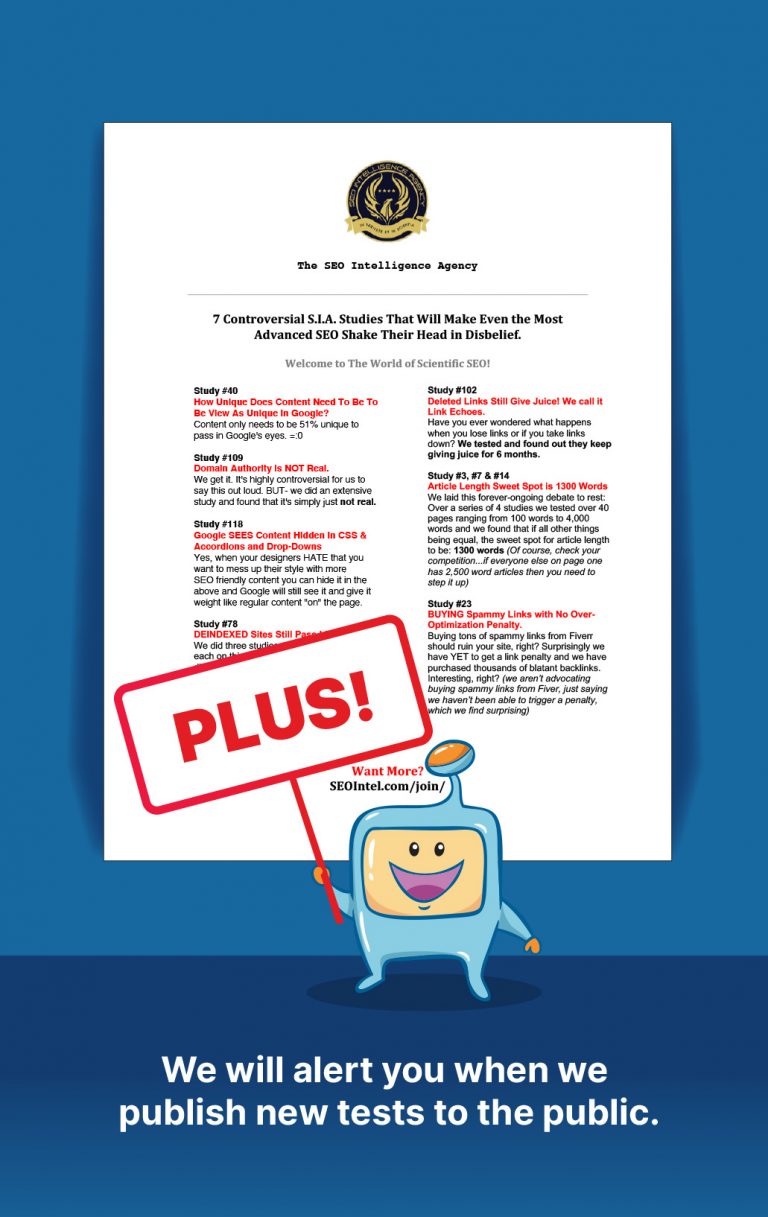
Get Our Most 7 Controversial S.I.A. Studies That Will Make Even the Most Advanced SEO Shake Their Head in Disbelief.
Plus we will alert you when we publish new tests to the public.
Obtenga nuestros 7 estudios S.I.A. más controvertidos que harán que incluso el SEO más avanzado sacuda la cabeza con incredulidad.
Además, le avisaremos cuando publiquemos nuevas pruebas al público.
Obtenez nos 7 études S.I.A. les plus controversées qui feront trembler la tête même les SEO les plus avancés d’incrédulité.
De plus, nous vous alerterons lorsque nous publierons de nouveaux tests au public.
Before you can receive free updates, link building strategies or SEO tips you need to confirm your email right now.
(It’s easy)
Just go to your inbox, open the confirmation email from the SIA, and click the link.
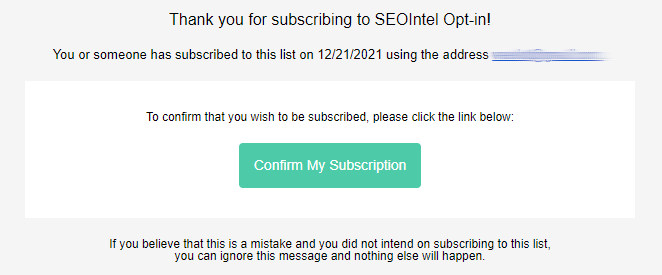
And that’s it!
PS: If you don’t see a confirmation email, please check your spam/junk or promotions folders. Sometimes the confirmation message ends up there by mistake.