This week’s roundup looks at a bigger question facing site owners and marketers: how do you make smart SEO decisions when the search landscape is changing so quickly?
Google published new guidance on third-party SEO tools, services, and advice, reminding site owners that outside tools can be useful but should not be treated as official Google data or guaranteed solutions. Google also updated its “Do you need an SEO?” documentation with more guidance on evaluating SEO providers, their recommendations, and newer AI optimization claims such as AEO and GEO.
At the same time, a new SparkToro study shows why these decisions matter. According to the study, less than one-third of Google searches now send a click, reinforcing the continued rise of zero-click search and the need for marketers to think beyond rankings and organic traffic alone.
Together, these updates point to a more cautious and strategic SEO environment. Site owners need reliable data, trustworthy advice, realistic expectations, and a broader view of search visibility as Google becomes more AI-driven and less click-focused.
Google has added new documentation to help site owners evaluate third-party SEO tools, services, and advice more carefully.
The new guide, titled Google Search’s guidance on using third-party SEO tools, services, and advice, was added on June 5, 2026. Google said the purpose is to highlight important considerations when evaluating outside SEO tools and advice, while also updating its “Do you need an SEO?” documentation with guidance on evaluating SEO recommendations and tools.
The update is informational, but timely. As SEO becomes more complex with AI Overviews, AI Mode, generative AI search, and new terms like AEO and GEO, site owners are increasingly relying on third-party tools, consultants, agencies, and software platforms to make decisions. Google’s message is simple: use external SEO resources carefully, verify claims against official guidance, and remember that no third-party tool has access to Google’s internal ranking systems.
Why Google Added This Guidance
Google said it added the guidance to help site owners evaluate third-party SEO tools and advice more effectively. The company also updated its “Do you need an SEO?” page to include guidance on evaluating an SEO provider’s recommendations and tools, along with other minor updates to simplify and modernize the page.
This matters because the SEO industry is full of tools and services that provide audits, keyword data, technical recommendations, ranking forecasts, AI visibility reports, content scoring, and competitive analysis.
Many of these tools can be useful. However, Google is warning site owners not to treat third-party advice as automatically accurate, official, or guaranteed.
Verify Advice Against Official Google Guidance
One of Google’s main recommendations is to evaluate external SEO advice against official Google Search guidance.
Google noted that there is plenty of third-party SEO advice online related to SEO, search listings, and AI experiences, including terms such as AEO for answer engine optimization and GEO for generative engine optimization. Some of that advice may be useful, but other advice may misinterpret what Google says or make claims about how Google’s ranking systems work.
Google said good advice generally does one of two things:
This is an important distinction.
SEO often involves testing, interpretation, and experience. But when advice is presented as something “Google says,” site owners should check whether Google actually said it.
Google Does Not Endorse Third-Party SEO Tools
Google also clarified that some third-party SEO tools and services may imply they are acceptable, approved, or endorsed by Google Search.
Google’s guidance is clear: it does not evaluate third-party services, and site owners should be wary of claims suggesting that a tool or service is approved by Google. Google also stated that using a service or tool does not guarantee ranking success.
This is especially important for tools that promise:
A tool can provide useful data, but it cannot guarantee that Google will rank a page higher.
Third-Party Tools Do Not Have Google’s Internal Ranking Data
Another major point in the guidance is that third-party SEO tools do not have access to Google’s internal ranking data.
Google explained that some third-party services provide data that users may mistakenly interpret as coming directly from Google. However, Google said these tools do not have access to its internal ranking data and cannot guarantee performance. Any predictions they provide are their own and may not happen.
This is a useful reminder for interpreting SEO metrics.
Third-party metrics like authority scores, visibility scores, keyword difficulty, traffic estimates, AI visibility scores, backlink scores, and content grades may be useful for analysis. But they are not Google metrics, and they should not be treated as direct ranking signals.
Third-Party SEO Tools Can Still Be Useful
Google is not saying that third-party SEO tools are bad.
In fact, the guidance acknowledges that third-party tools and services can assist with SEO work, including sitemap generation, indexing directives, SEO content suggestions, ranking advice, and tools that claim to support AI experiences or search formats.
The key is to use those tools critically.
SEO tools can help identify issues, organize data, monitor trends, and surface opportunities. But they should support decision-making, not replace it.
A technical audit tool may flag hundreds of “issues,” but not all of them will matter equally. A content tool may recommend adding keywords, but that does not mean the page will become more helpful. An AI visibility tool may estimate where a brand appears in AI answers, but those estimates may not reflect how Google’s systems actually work.
Search Console Remains the First-Party Source
Google strongly encourages site owners to use Google Search Console, its first-party tool that provides key information and data directly from Google Search.
This is one of the most practical takeaways from the update.
Third-party tools can provide useful outside analysis, but Search Console is still the direct source for information such as:
When third-party data conflicts with Search Console, site owners should understand that the two tools are measuring different things. Search Console reflects actual Google Search performance data for the verified property, while third-party tools often rely on estimates, crawls, samples, panels, or external datasets.
Why This Matters More in the AI Search Era
This guidance is especially relevant now because AI search has created a new wave of SEO advice, tools, and services.
As Google expands AI Overviews, AI Mode, generative AI features, AI visibility reporting, and AI-powered discovery surfaces, many new vendors are promoting services around:
Some of these tools may become useful parts of an SEO workflow. But Google’s guidance suggests site owners should be careful with any service claiming special knowledge of how Google’s AI systems rank, cite, or select content.
Google has already stated in its generative AI optimization guidance that AI Search is still rooted in Google’s core Search systems. That means the fundamentals still matter: crawlability, indexability, useful content, originality, technical quality, and satisfying user needs.
What Site Owners Should Watch Out For
Google’s guidance gives site owners a framework for evaluating SEO tools and services more carefully.
Be cautious if a vendor or tool:
This does not mean every bold claim is automatically wrong. But it does mean site owners should ask for evidence, context, and transparency.
What Good SEO Advice Should Look Like
Good SEO advice should be explainable.
It should make clear whether a recommendation is based on:
It should also explain the expected benefit, the possible risk, and how success will be measured.
For example, “fix this because the tool says so” is weak advice.
A stronger recommendation would explain that a page has indexing issues visible in Search Console, that Google cannot access important content, and that fixing crawlability could help the page become eligible for Search visibility.
That kind of advice connects the tool’s finding to a real Search issue.
The Bigger Picture
Google’s new guidance does not change how ranking works. It is not a new algorithm update, spam policy, or ranking factor announcement.
Instead, it is a reminder that SEO decisions should be based on critical thinking, verified data, and reliable guidance.
Third-party SEO tools can be valuable, especially for audits, monitoring, research, reporting, and competitive analysis. But they are not Google. Their scores are not ranking signals. Their forecasts are not guarantees. Their recommendations should be reviewed before implementation.
As SEO becomes more complicated with AI-powered Search, site owners will need to be even more careful about separating helpful tools from overconfident claims.
Key Takeaways
Google has updated its “Do you need an SEO?” documentation with new guidance on how site owners should evaluate SEO providers, their recommendations, and the tools they use.
The update was added on June 5, 2026, alongside Google’s new guidance on third-party SEO tools, services, and advice. According to Google’s documentation update page, the changes were made to help site owners evaluate SEO recommendations and tools, simplify parts of the page, modernize the content, and remove outdated examples.
This update is especially relevant now because SEO advice is becoming more complicated. Site owners are no longer just hearing about traditional ranking factors, technical audits, and keyword research. They are also being sold services around AI Overviews, AI Mode, AEO, GEO, generative AI optimization, AI visibility tracking, and other newer search concepts.
Google’s updated guidance gives site owners a practical reminder: hiring an SEO can be valuable, but it is still important to ask questions, understand the recommendations, and avoid anyone making unrealistic promises.
Hiring an SEO Can Help, But It Also Comes With Risk
Google continues to say that hiring an SEO can be helpful.
An SEO may help improve a site’s visibility, save time, review content and structure, provide technical advice, conduct keyword research, and bring market expertise. But Google also reminds site owners that hiring the wrong person or agency can create risk, including damage to the site and its reputation.
That is why Google recommends researching both the potential benefits and possible risks before hiring someone to work on your site.
For many small local businesses, Google says it may be possible to do much of the SEO work yourself by starting with Google’s SEO Starter Guide. Even if a business eventually hires a professional, understanding the basics can help the site owner recognize questionable or harmful recommendations.
Ask the Right Questions Before Hiring
Google’s updated guidance still emphasizes interviewing a potential SEO before giving them control over your site.
Some of the questions Google recommends asking include whether they can show examples of previous work, whether they follow Google Search Essentials, what kind of results they expect, how they measure success, what experience they have in your industry or location, and how they will communicate changes and recommendations.
This is important because SEO is not just a checklist of technical fixes.
A good SEO should want to understand the business, its customers, its competitors, and how search can help the business grow. Google specifically says that if an SEO is not interested in your business, you should find someone who is.
That is a useful standard for evaluating providers. If an SEO only talks about rankings, tools, or secret tactics, but never asks about the business itself, that can be a warning sign.
Evaluate the SEO’s Recommendations and Tools
One of the most notable updates is Google’s added guidance around evaluating an SEO’s recommendations and the tools they use.
Google says that if an SEO uses a third-party tool, site owners should remember that Google does not evaluate or endorse third-party SEO tools. These tools also do not have access to Google’s internal ranking data. Site owners should be cautious with any tool that claims to be “acceptable” or “approved” by Google Search.
Google also recommends checking significant recommendations from third-party audits against official Google Search guidance before making major changes to a site.
This matters because many SEO audits produce long lists of issues, scores, warnings, and opportunities. Some of those findings may be useful. Others may be low priority, misunderstood, or not relevant to the site’s actual performance.
The key point is that a tool’s report should not automatically become the site’s strategy.
A good SEO should be able to explain why a recommendation matters, how it connects to Google’s guidance, what outcome is expected, and how success will be measured.
Google Adds AI Optimization to the Hiring Conversation
The update also brings AI optimization into Google’s hiring guidance.
Google now suggests that if an SEO gives advice on optimizing for AI experiences, including services described as AEO or GEO, site owners should check whether that advice aligns with Google’s official guidance on optimizing for generative AI features.
SERoundtable also noted that the two key areas added to the updated document were content around third-party SEO tools and optimizing for generative AI, while the page was simplified compared with the older version.
This is an important addition because AI Search has created a new wave of marketing claims.
Many agencies and tools now promote services around appearing in AI Overviews, AI Mode, generative engines, answer engines, and large language model responses. Some of these services may be based on useful SEO principles. Others may be speculative, exaggerated, or disconnected from how Google says its AI features work.
Google’s advice suggests that site owners should not accept AI optimization claims at face value. They should ask whether the strategy is consistent with Google’s own Search documentation.
Be Wary of Guarantees
Google’s updated page continues to warn against guaranteed rankings.
Google says no one can guarantee a number one ranking on Google. Site owners should be cautious of SEOs that claim guaranteed rankings, suggest they have a special relationship with Google, or advertise priority submission to Google.
This advice is not new, but it remains especially relevant.
In the AI Search era, the same warning applies to newer promises. No provider can guarantee that a page will appear in AI Overviews, be cited in AI Mode, or become the preferred answer across Google’s generative AI features.
SEO can improve a site’s quality, accessibility, relevance, technical health, and content strategy. But it cannot guarantee specific placement in Google’s results.
Be Careful With Secretive Providers
Google also warns site owners to be careful if a company is secretive or unwilling to explain what it intends to do.
This is one of the most practical pieces of advice in the updated document. If an SEO is making changes to your site, they should be able to explain those changes clearly. Google says site owners should ask for explanations if anything is unclear, especially because site owners are ultimately responsible for the actions of companies they hire.
This is important because risky SEO tactics can have serious consequences.
If an SEO creates deceptive or misleading content on behalf of a site owner, Google says the site could be removed entirely from Google’s index.
That means transparency matters. A provider should be willing to explain their strategy, the tools they use, the content they create, the links they build, and the technical changes they recommend.
Start With Read-Only Access
Google also gives a practical recommendation around Search Console access.
If an SEO offers to perform an audit, Google says site owners should carefully consider what is involved and only grant read access to Search Console at that stage, not write access. An SEO audit should provide realistic estimates of improvement and the work involved. If the SEO guarantees first place rankings from those changes, Google says to find someone else.
This is useful advice for site owners who are evaluating a new provider.
Read-only access allows an SEO to review data without making changes. Write access should only be granted once trust, scope, and responsibilities are clear.
What Good SEO Advice Should Include
Google’s updated guidance points toward a simple standard: good SEO advice should be explainable and evidence-based.
When an SEO makes a recommendation, site owners should ask:
This is especially important when recommendations come from third-party tools.
A tool might flag a page as having a poor score, but the SEO should be able to explain whether that issue actually matters for the site. A tool might recommend adding keywords, but the SEO should explain whether that improves helpfulness, relevance, or user experience. A tool might claim to measure AI visibility, but the SEO should explain the limits of that data.
What This Means for Site Owners
For site owners, the update does not mean they should avoid hiring SEOs.
It means they should hire carefully.
A good SEO can help with strategy, technical improvements, content planning, structured data, site migrations, keyword research, local visibility, international SEO, analytics, reporting, and more. But a good SEO should also be transparent, realistic, and willing to explain their recommendations.
Site owners should be cautious of anyone who promises instant rankings, claims special access to Google, relies too heavily on tool scores, or pushes AI optimization tactics that do not align with Google’s guidance.
The Bigger Picture
Google’s update reflects how SEO is changing.
The field now includes traditional organic optimization, technical SEO, content strategy, Search Console analysis, AI Search visibility, generative AI optimization claims, and increasingly complex third-party tools.
That makes it harder for site owners to know whom to trust.
Google’s updated “Do you need an SEO?” page gives site owners a clearer framework for evaluating providers: ask questions, check references, review tools critically, compare recommendations against official guidance, and avoid guarantees.
For SEO providers, the message is also clear. Good SEO is not about secrecy, shortcuts, or inflated tool claims. It is about clear communication, responsible recommendations, and work that helps both the site and its users.
Key Takeaways
A new SparkToro study suggests that Google is becoming an even stronger zero-click environment.
According to SparkToro’s analysis of Similarweb clickstream data, 68.01% of Google searches in the U.S. ended without a click during the first four months of 2026. That means less than one-third of Google searches resulted in a click to another destination.
For SEOs, publishers, and marketers, this is an important data point. It reinforces something many site owners have been feeling for years: ranking in Google still matters, but ranking alone may not deliver the same traffic it once did.
Zero-Click Searches Continue To Rise
SparkToro’s study found that zero-click searches have increased significantly over the past decade.
The report notes that around 45% of Google searches were zero-click about ten years ago, compared with 68% in 2026. That is a 23-point increase over the decade.
SparkToro also compared the latest 2026 findings with its 2024 research. In 2024, U.S. zero-click searches on Google stood at 60.45%. By early 2026, that number had grown to 68.01%, representing a 7.5 percentage point increase in roughly two years.
That makes the recent acceleration especially notable. Zero-click search has been growing for years, but the pace appears to be increasing as Google adds more AI answers, instant results, rich features, and on-SERP experiences.
Why Fewer Searches Are Sending Clicks
The study points to several reasons why fewer Google searches are sending users away from the results page.
SparkToro attributes the rise in clickless searches to factors such as AI features, instant answers, interface elements that keep users inside Google’s results, and changing user behavior.
This aligns with what SEOs have been seeing across Search. Google is no longer only a list of links. It now includes AI Overviews, featured snippets, knowledge panels, local packs, shopping features, video modules, People Also Ask boxes, and other search features that can satisfy user intent directly on the results page.
For some queries, users may get the answer they need without clicking anywhere. For others, they may search again, refine their query, use another Google property, or interact with a Search feature instead of visiting a publisher’s website.
AI Overviews May Be Accelerating the Trend
SparkToro connects the recent rise in zero-click searches to the growth of AI Overviews.
The study references outside data indicating that AI Overviews now appear on more than 20% of searches and can reduce click-through rates when present. SparkToro argues that the expansion of AI-generated answers is likely contributing to the faster growth of clickless queries.
This is one of the biggest concerns for publishers and content sites.
If Google can summarize information directly in the results, users may not need to click through to the original source as often. Even when a site is used as a source or appears near an AI-generated response, the user may still complete the search journey without visiting the site.
That does not mean SEO is no longer useful. But it does mean that the relationship between visibility and traffic is changing.
AI Mode Is Still a Small Share of Searches
One interesting finding from the study is that AI Mode was not yet a major driver of search behavior during the January to April 2026 data period.
SparkToro reported that only 0.34% of searches made their way to AI Mode during that period. However, the report also noted that this number is likely growing quickly, especially after Google said at I/O 2026 that AI Mode had surpassed 1 billion monthly users and that queries were more than doubling every quarter.
This matters because AI Mode may become a larger part of the zero-click discussion later.
For now, the study suggests that the broader zero-click trend is not only about AI Mode. It is also about Google’s overall Search experience, including AI Overviews, instant answers, search refinements, ads, and other features that keep users inside Google’s ecosystem.
Google Is Sending Less Traffic to Websites
SparkToro also pointed to Ahrefs’ aggregated traffic data showing a decline in Google’s share of traffic to tens of thousands of websites.
According to the study, the decline from June 2025 to May 2026 was 8 percentage points, which SparkToro described as roughly a 22% drop in the traffic share Google sends to those websites.
This is not the same as saying every site is losing Google traffic. Some sites may still be growing. Branded searches, local intent, transactional queries, product research, and highly specific tactical searches can still drive valuable clicks.
But the overall pattern suggests that organic traffic from Google is becoming harder to rely on as the primary measure of search success.
More Searches May Lead to More Searches
Another notable finding is that users are increasingly performing another search instead of clicking away.
SparkToro reported that the percentage of searchers who perform another search increased by 7.2 percentage points from 2024 to 2026. The study interprets this as evidence that Google is becoming more successful at keeping users searching inside its platform.
This is important because it changes how marketers should think about Search behavior.
A search journey may no longer look like:
query → ranking result → website visit
Instead, it may look more like:
query → AI answer → refinement → another query → Google feature → brand search → later conversion
That makes attribution more difficult. A user may be influenced by your content, brand, or visibility in Google without clicking on your site during the first search.
What This Means for SEO
The biggest takeaway is not that SEO is dead.
It is that SEO is becoming less directly tied to traffic than it used to be.
Ranking well can still create value. Content that performs in Search may still influence AI answers, brand visibility, user trust, and future branded demand. But marketers may need to stop treating organic clicks as the only sign that SEO is working.
As Google answers more queries directly, a site may appear in important search surfaces without receiving the same number of visits it would have received in the past.
That means SEOs should track more than rankings and clicks.
Useful metrics may include:
The goal is to understand whether Search visibility is creating business value, even when the click does not happen immediately.
Why Publishers Should Pay Attention
Publishers are likely to feel the pressure most strongly.
Informational content has historically depended on Google clicks. If users can get answers directly in the results page, publishers may lose traffic even if their content is still being used, summarized, or referenced.
This makes it harder to monetize content through ads, subscriptions, affiliate links, and lead generation.
It also raises a larger strategic question: if Google can satisfy more informational searches without sending traffic to the open web, publishers may need to build stronger relationships with audiences outside of Google.
That could mean investing more in:
The sites that can become known destinations may be in a stronger position than sites that rely only on unbranded informational search traffic.
What Marketers Should Do Next
SparkToro’s recommendation is to think beyond traffic and invest in what it calls zero-click marketing. In practical terms, that means building influence and brand awareness even when users do not immediately click through to your website.
For SEOs and content marketers, this does not mean abandoning websites or organic search.
It means expanding the strategy.
Your website still matters. Google’s AI features may still rely on web content. Users still need landing pages, product pages, support articles, case studies, and trusted information. But the website should no longer be the only place where the brand creates value.
Marketers should think about where their audience spends time, what sources they trust, and how to reach them across multiple platforms.
The Bigger Picture
SparkToro’s study adds another data point to a trend that has been building for years.
Google Search is becoming more self-contained. Users can get answers, compare information, explore recommendations, refine searches, and interact with AI-generated summaries without always leaving Google.
For site owners, this makes search visibility more complicated.
The question is no longer just, “Are we ranking?”
It is also:
SEO still matters, but the value of SEO may increasingly come from influence, authority, and brand visibility, not just direct organic sessions.
Key Takeaways
Read the full study here.
This week’s updates show that SEO is becoming more complex, but the fundamentals of good decision-making still matter.
Google’s new guidance on third-party SEO tools and hiring an SEO makes it clear that site owners should ask questions, verify recommendations, and avoid treating tool scores or AI optimization claims as guaranteed answers. Third-party tools and consultants can be valuable, but they should support strategy — not replace judgment.
The SparkToro study adds another layer to that discussion. If fewer Google searches are sending clicks, then marketers need to measure more than rankings and organic sessions. Visibility, brand recognition, audience trust, and direct relationships are becoming more important as search behavior changes.
For SEOs, the takeaway is not to abandon Google or SEO. It is to become more thoughtful about how search visibility is measured, how advice is evaluated, and how brands build value even when the click does not happen right away.
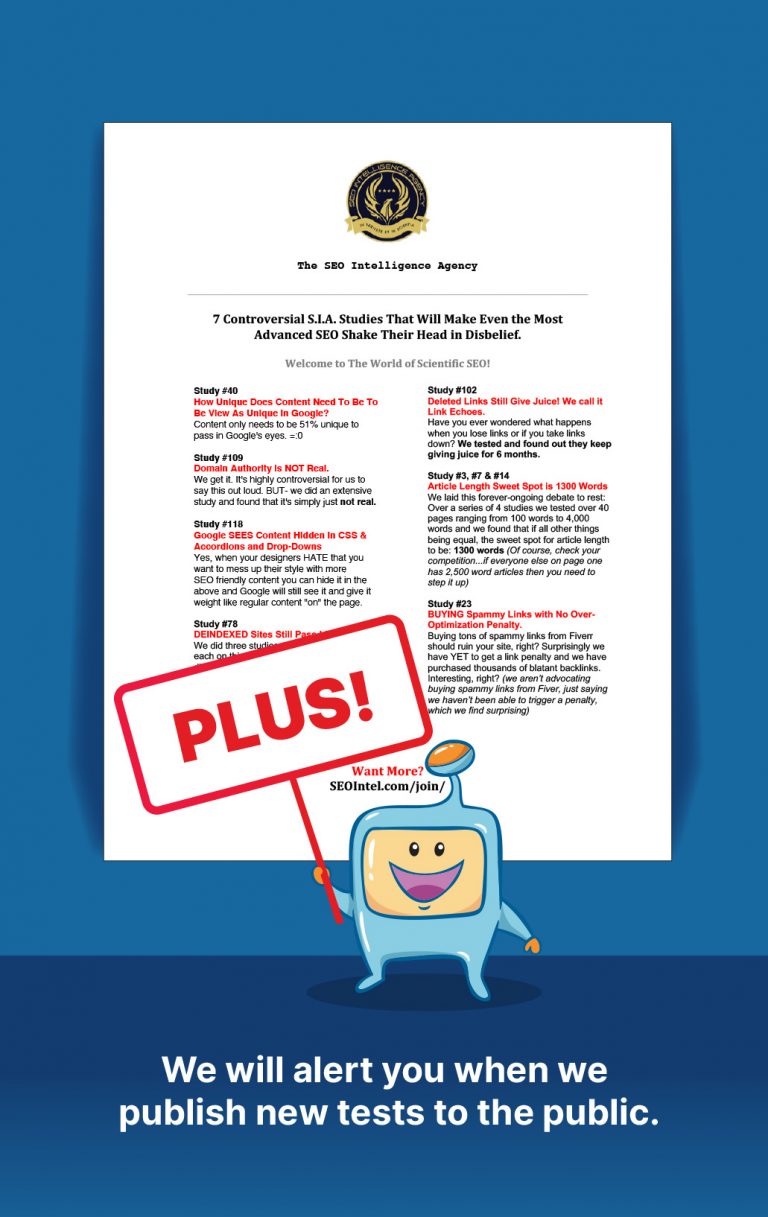
Get Our Most 7 Controversial S.I.A. Studies That Will Make Even the Most Advanced SEO Shake Their Head in Disbelief.
Plus we will alert you when we publish new tests to the public.
Obtenga nuestros 7 estudios S.I.A. más controvertidos que harán que incluso el SEO más avanzado sacuda la cabeza con incredulidad.
Además, le avisaremos cuando publiquemos nuevas pruebas al público.
Obtenez nos 7 études S.I.A. les plus controversées qui feront trembler la tête même les SEO les plus avancés d’incrédulité.
De plus, nous vous alerterons lorsque nous publierons de nouveaux tests au public.
Before you can receive free updates, link building strategies or SEO tips you need to confirm your email right now.
(It’s easy)
Just go to your inbox, open the confirmation email from the SIA, and click the link.
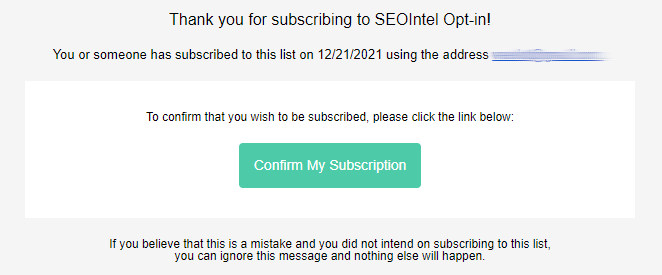
And that’s it!
PS: If you don’t see a confirmation email, please check your spam/junk or promotions folders. Sometimes the confirmation message ends up there by mistake.