
This week’s SEO news is heavily focused on how Google discovers, processes, and evaluates content.
The September 2026 spam update has officially finished rolling out after nearly two weeks, giving site owners a clearer window to assess ranking and traffic changes. Early reports showed multiple waves of volatility, with some sites seeing major losses while others remained stable or gained visibility.
Google also introduced a new UGC Fresh Data Program for large platforms that publish user-generated content, allowing eligible participants to send fresh content and engagement data directly to Google. On the technical side, Google shared detailed timing ranges for crawling, indexing, canonicalization, structured data changes, site moves, and recovery from updates.
Google also refreshed its crawl-rate documentation with clearer guidance on using the Retry-After HTTP header when sites urgently need Googlebot to slow down.
Together, these updates give SEOs a better picture of how Google processes content, how long changes can take, and what to do when crawling becomes a problem.
Google’s September 2026 spam update has officially finished rolling out after nearly two weeks of ranking volatility.
According to the Google Search Status Dashboard, the update began on September 24, 2026 at 9:15 AM PDT and completed on October 8, 2026 at 1:37 AM PDT, lasting roughly 13 days and 16 hours. The update applied globally and to all languages.
The unusually long rollout was notable because Google’s previous three spam updates in March, June, and August 2026 each completed in under three days.
The Update Appeared To Roll Out In Several Waves
The September update did not produce one single burst of ranking movement.
SEO tracking and community chatter pointed to at least three noticeable periods of volatility:
The first major movement appeared almost immediately after the update began. A second round of volatility emerged around September 30, followed by what appeared to be a final phase between October 4 and October 6.
This multi-wave pattern made attribution more difficult because ranking changes were spread across the entire two-week rollout rather than concentrated into a short window.
Google Called It A Normal Spam Update
Despite the longer rollout, Google described this as a normal spam update and did not announce a new spam policy or a specific new system being targeted.
Google’s spam systems operate continuously, but the company occasionally makes broader improvements to those systems and announces them as spam updates.
The September update was aimed at sites violating Google’s existing spam policies rather than one newly introduced tactic.
That means site owners should be cautious about declaring that the update specifically targeted AI content, programmatic SEO, affiliate sites, or any other single category unless Google confirms it.
Programmatic And AI-Heavy Pages Drew Early Attention
Even without confirmation from Google, one of the strongest themes from SEO community analysis was movement among highly templated and programmatic sites.
During the first major wave, Lily Ray reported seeing early signs that sites with large numbers of templated, programmatic, and potentially AI-generated pages were being affected. Examples included sites generating a separate page for every phone number or area code.
Glenn Gabe also reported seeing significant drops across multiple sites, verticals, and countries. He highlighted examples involving large-scale AI content and programmatic SEO.
These observations do not prove that AI-generated content itself was the target.
A more likely concern is the combination of scale, repetition, low differentiation, weak originality, and limited added value — all of which can overlap with Google’s existing spam and helpful content policies.
Some Sites Reported Severe Traffic Losses
Forum and Reddit discussions included several reports of dramatic ranking and traffic declines.
One independent events website reported losing approximately 95% of its Google Search traffic overnight beginning September 27. The site owner said the decline was visible in both Search Console and independent analytics and affected Google traffic specifically, while other acquisition channels remained relatively stable.
After the rollout finished, another Reddit user running a WooCommerce store reported losing roughly 98% of traffic, while another user said their rankings improved during the first days of the rollout before eventually returning close to their original positions.
Other discussions described falling organic keyword rankings and traffic, while some site owners said their sites remained relatively stable throughout the rollout.
These are anecdotal reports rather than controlled data, but they show how differently individual sites experienced the update.
Some Sites Improved Instead
Not every site lost visibility.
Early Reddit discussions included site owners reporting ranking improvements, particularly in competitive or spam-heavy niches. One user said some rank-and-rent properties jumped to the top position, while another commenter in the iGaming space reported seeing expired-domain, subdomain, canonical, and parasite-style strategies disappear from some search results.
This is an important reminder that algorithm updates redistribute visibility.
When one group of pages loses rankings, other pages naturally move into those positions. The sites that gain are not necessarily being specifically “rewarded” by the update; they may simply benefit from competitors losing visibility.
Some Sites Hit By Previous Updates Saw More Movement
Another interesting theme involved sites already trying to recover from previous spam updates.
One site owner who said they were heavily affected by the June 2026 spam update reported removing or noindexing thousands of low-value pages, rebuilding sitemaps, improving internal linking, and consolidating content.
During the months that followed, rankings reportedly returned in temporary spikes before dropping again. When the September update began, the site experienced another decline during one of those recovery periods.
This aligns with Google’s general guidance that recovery from spam systems may not happen immediately after a site makes changes. Google’s systems may need time to reassess whether a site consistently complies with its spam policies.
The Update Looked More Like A Core Update To Some SEOs
The breadth and length of the September spam update led some observers to describe the impact as unusually large for a spam update.
Some in the SEO community said the update looked more like the kind of widespread movement associated with a core update.
That does not mean it was secretly a core update. Google specifically labeled it a spam update.
However, the comparison reflects how broad the ranking movement appeared across different industries, countries, and site types during parts of the rollout.
Ranking Volatility Started Before The Announcement
Another complication is that Google Search was already volatile before the spam update officially began.
Significant ranking movement was being reported on September 23 and 24, before Google announced the spam update later on September 24.
That means not every change during the two-week window should automatically be attributed to the spam update.
SEOs diagnosing losses should compare the exact timing of the decline with:
There Is No Single Profile Of A Site That Was Hit
So far, there is no reliable public dataset showing that one specific industry or business model was universally targeted.
Reports include ecommerce sites, publishers, directories, event websites, rank-and-rent sites, programmatic content, and AI-heavy properties.
At the same time, many websites experienced little or no meaningful impact.
That makes page-level and template-level analysis especially important. A domain-wide traffic decline may hide the fact that one particular content type, directory template, programmatic section, or query group caused most of the loss.
What Site Owners Should Do Now
Now that the rollout is complete, site owners have a cleaner window for evaluating its impact.
Instead of reacting to daily fluctuations, compare performance before September 24 with performance after October 8.
Look for patterns such as:
The goal should be to understand why certain content may look spammy or low-value to Google, rather than making superficial changes simply because rankings dropped.
Recovery May Take Time
Sites affected by a spam update should not expect immediate recovery after cleaning things up.
Google’s spam guidance says sites that violate its policies can rank lower or disappear from results. Making changes can help, but Google’s automated systems may need months to recognize that a site has returned to compliance.
That makes recovery different from fixing a simple technical error.
If low-value programmatic pages, scaled content, spammy tactics, or other policy violations caused the decline, site owners may need to make meaningful sitewide improvements and then wait for Google’s systems to reassess the site.
Key Takeaways
Google has introduced a new UGC Fresh Data Program designed to help eligible platforms get fresh user-generated content processed and updated in Search more quickly.
The program is aimed at platforms that host large volumes of user-generated content, social posts, or forum discussions. Approved participants can use a dedicated data ingestion pipeline to send fresh content and engagement signals directly to Google instead of relying only on traditional crawling.
Google added documentation for the program on October 8, 2026, explaining who can apply, how the system works, and what platforms need to qualify.
What The UGC Fresh Data Program Does
The program gives approved platforms a faster way to send fresh user-generated content to Google.
Instead of waiting for Googlebot to discover and recrawl new posts or updates, participating platforms can proactively send content and interaction data through a dedicated ingestion pipeline.
Google says this is intended to help fresh, high-quality, authentic UGC appear more quickly across different Search features.
The types of content this could apply to include:
The program appears especially relevant for large platforms where new content and engagement can change quickly.
This Is Not The Google Indexing API
One of the most important distinctions is that this program is separate from the Google Indexing API.
Google says the UGC Fresh Data Program is a specialized pipeline specifically for trending user-generated content. It operates independently from:
That means site owners should not see this as a new general-purpose way to instantly submit pages to Google.
The program is specifically designed for qualifying UGC platforms.
Who Can Apply
Google has set fairly strict eligibility requirements.
Platforms must primarily host user-generated content, social posts, or forum discussions. The content must also live on dedicated pages with stable URLs rather than only on user profiles or feed pages.
Eligible platforms must also have:
This makes it clear that the program is not intended for ordinary blogs or small websites that happen to have a comment section.
Gated Content Is Not Eligible
Google requires content submitted through the program to be publicly accessible.
Content hidden behind:
is not eligible.
Google also requires the UGC to be attributable to a creator who has a public profile.
This helps Google verify where the content came from and understand the relationship between the platform and the person who created it.
Structured Data Is Required
Technical readiness is a major part of eligibility.
Google says participating platforms need to be capable of using secure OAuth 2.0 authentication and creating strictly validated JSON-LD payloads.
Platforms must also already use, or be prepared to use, appropriate schema.org structured data.
Examples include:
This indicates that Google wants both the content itself and its engagement information presented in a structured, machine-readable format.
Engagement Signals Can Also Be Sent
The program does not only allow platforms to submit new content.
Approved platforms can also provide interaction signals, such as engagement counters.
Google says these engagement figures should be updated regularly, ideally within 72 hours of the content being created.
This could include signals such as:
For fast-moving conversations, these signals may help Google better understand which discussions are active or relevant.
Freshness Is A Major Requirement
Google emphasizes that content should be submitted as quickly as possible.
Ideally, new UGC should be sent to Google within minutes of publication.
This is a major clue about the purpose of the program.
Traditional crawling can introduce delays, especially on extremely large platforms where millions of new posts or comments may be created every day. A dedicated ingestion system gives Google a more direct way to receive fresh content and engagement information.
Participation Does Not Guarantee Search Visibility
Even if a platform is accepted into the program, Google says there is no guarantee that submitted content will appear in Search.
The program helps Google process content faster, but normal Search systems still decide:
This means the program should not be viewed as a ranking shortcut.
It is primarily a faster discovery and freshness mechanism.
Content Quality And Moderation Matter
Google also requires participating platforms to actively moderate their content.
Platforms must not publish illegal content and need to maintain systems that allow users to report problematic material.
This requirement suggests that Google does not want the fresh data pipeline overwhelmed with spam, illegal content, or poorly moderated UGC.
For large forums and social platforms, moderation quality may therefore become part of whether they qualify for the program.
How To Apply
Eligible platforms can apply directly through Google.
Google says applications do not guarantee acceptance.
After applying, platforms should expect a response within approximately six to eight weeks.
If accepted, Google will provide additional technical documentation and onboarding instructions for implementing the data ingestion system.
Why Google Is Doing This
User-generated content has become increasingly visible in Google Search.
Forums, community discussions, Reddit-style threads, reviews, and social content often provide something traditional webpages cannot: real-time, first-hand perspectives from actual users.
That is especially valuable for searches involving:
However, UGC also changes extremely quickly.
A normal crawling system may not always process new discussions or rapidly changing engagement levels quickly enough. The Fresh Data Program gives Google another way to keep those results current.
What This Means For SEO
For most SEOs, there is no immediate action required.
The program is intended for large UGC platforms, not normal company websites or content publishers.
However, it is significant because it reinforces how important first-hand user content has become within Google Search.
Google has increasingly surfaced forums, discussions, reviews, and community perspectives in search results. This new program provides large platforms with a more direct technical path to keep that content fresh.
For brands and publishers, that means UGC should continue to be considered part of the broader search ecosystem.
A brand may gain or lose visibility based not only on its own website, but also on:
Could Platforms Like Reddit Benefit?
Google has not publicly listed participating platforms.
However, the eligibility requirements clearly fit large discussion and social platforms with significant user bases, high posting volumes, public creator profiles, and strong structured data capabilities.
Platforms similar to Reddit, large forums, and social networks would be natural candidates.
Whether any specific platform already participates has not been confirmed in Google’s documentation.
Key Takeaways
Google has shared unusually detailed information about how long different Search processes typically take, covering everything from discovering a new URL to indexing, canonicalization, structured data updates, site moves, and recovery from algorithm updates.
The data was presented by Google’s Gary Illyes during the Search Central Live Deep Dive Europe event in Barcelona on October 2, 2026.
For each process, Google provided a typical timeframe and a slower end of the range, giving SEOs a much clearer benchmark for understanding when delays are normal and when they may indicate a deeper issue.
Google Shared Internal Timing Data
The figures came from Google’s internal analysis and cover three major stages of Search:
One important caveat is that these processes are connected.
A page cannot be indexed until Google has crawled it. A search result cannot reflect certain changes until indexing has been updated. Because of that, delays at one stage can carry over into the next.
The numbers should therefore be treated as general benchmarks rather than guaranteed deadlines.
Crawling: New URLs Are Typically Discovered In About 20 Hours
Google said a newly discovered URL is typically found in about 20 hours.
At the slow end, however, discovery can take weeks or may never happen.
This distinction is important. Publishing a page does not automatically mean Google will discover it quickly.
Discovery depends on signals such as:
For site owners, a new page that has not been discovered after one day is not necessarily a problem. But if important URLs remain undiscovered for weeks, it may be worth investigating how Google is finding those pages.
Known URLs May Be Refreshed Around Every 30 Days
For URLs Google already knows about, the typical refresh time was listed at approximately 30 days.
That does not mean every existing page is crawled once every 30 days.
High-value or frequently updated pages may be crawled much more often, while less important pages may be revisited less frequently.
At the slower end, Google said refreshes can take weeks or may not happen at all.
This helps explain why changing content on an existing page does not always result in an immediate Search update.
Sitemap Processing Usually Takes About 24 Hours
Google said sitemap processing typically takes around 24 hours.
At the slow end, processing can take up to 14 days, or may never happen if Google determines there are quality issues.
That provides useful context for Search Console.
Submitting or updating a sitemap does not mean every URL will immediately be crawled or indexed. The sitemap itself first needs to be processed, and Google still decides which URLs are worth crawling and indexing.
Robots.txt Changes Are Usually Processed Within A Day
Changes to robots.txt are typically processed in around 24 hours, with the slowest cases around 25 hours.
Compared with many other Search processes, this is relatively fast.
That makes sense because robots.txt directly controls crawler access and Google needs reasonably current instructions before crawling a site.
Crawl Demand Can Take Much Longer To Change
Crawl demand was listed at around 20 hours typically, but the slow end can stretch from weeks to months.
Crawl demand refers to how much Google wants to crawl a site based on factors such as importance, freshness, popularity, and overall quality.
This means technical fixes alone may not immediately increase crawling.
If Google does not consider certain URLs particularly valuable or necessary to revisit, crawl frequency may stay low even if the server can technically handle more Googlebot activity.
Rendering Can Be Fast, But Queues Create Delays
For indexing, Google said rendering itself can happen within seconds.
However, a page may sit in the rendering queue for hours before that happens.
In slower cases, rendering delays can stretch into days or weeks.
This matters especially for JavaScript-heavy sites.
A page may have been crawled but still need rendering before Google can fully process its content, links, structured data, and other elements.
End-To-End Indexing Typically Takes Around 1.5 Hours
One of the most interesting figures was the typical time for end-to-end indexing: approximately 1.5 hours.
That represents a situation where all the necessary processes complete successfully.
At the slow end, indexing may take months or never happen, particularly when quality issues are involved.
This helps explain why some pages can appear in Google extremely quickly while others remain unindexed despite being technically crawlable.
Crawlability is only part of the equation. Google still decides whether a page belongs in the index.
Meta Annotation Changes Can Take 45 To 90 Minutes
Google said meta annotation processing typically takes 45 to 90 minutes, with slower cases taking one to four days.
This can include signals Google extracts from page metadata during indexing.
However, that does not mean every visible Search change will appear within 90 minutes. Serving systems may require additional time before users see the updated result.
Link Signals Can Take Much Longer
Link annotations show a much wider range.
Google said they can be processed within minutes in some cases but may typically take anywhere from minutes to one to three weeks.
At the slower end, they can take months.
For SEOs, this reinforces why internal linking changes and backlink acquisition should not always be judged immediately.
Google first needs to discover the link, crawl the relevant pages, process the relationship, and incorporate that information into its systems.
Canonicalization Changes Typically Take One To Three Weeks
Google listed one to three weeks as the typical timeframe for canonicalization changes.
At the slower end, changes can take months when signals conflict.
This aligns with Google’s recent canonicalization guidance, which warned SEOs not to expect canonical fixes to be processed immediately.
If a canonical tag says one thing while internal links, redirects, sitemaps, and content similarity suggest another, Google may need considerably more time to resolve the conflict.
For SEOs, the practical lesson is to make canonical signals consistent rather than relying on the canonical tag alone.
Structured Data Changes May Take Hours To Two Weeks
Structured data updates typically take anywhere from hours to one or two weeks.
In slower cases, they may take weeks or may never result in changes if quality requirements are not met.
This is particularly relevant when troubleshooting rich results.
Fixing schema markup does not guarantee that a rich result will appear immediately, or at all. Google still evaluates eligibility and quality independently from technical validity.
Images And Videos Can Take Days Or Months
For images, Google said processing typically takes hours to days, while slower cases can stretch into weeks or months.
Videos have a similar typical range of hours to days, but deeper video analysis can also require weeks or months.
This provides more context for sites that rely heavily on visual search, video indexing, or multimodal search visibility.
Site Moves Can Take Months
Site migrations are one of the slower processes.
Google said a site move typically takes one to three months to settle.
At the slower end, the process can take six months to more than a year.
Smaller and cleaner migrations can finish faster, but these numbers reinforce why major migrations require patience.
Redirects, canonicals, internal links, sitemaps, and other signals all need to be processed and consolidated.
Search Result Changes Have Their Own Timelines
Even after Google has crawled and indexed changes, the visible search result may not update immediately.
For example, Google said:
At the slower end, these changes can take several weeks or even months.
This explains why updating a title tag does not necessarily mean Google’s displayed title will change the same day.
Search Console Removals Can Be Much Faster
One of the fastest serving changes involves Search Console’s removal tool.
Google said an owner-requested Search Console removal typically takes about two hours, with slower cases taking up to 24 hours.
This is much faster than waiting for normal crawling and indexing processes to remove a URL from Search.
Manual Action Recovery Takes Longer
Google said manual action removals typically take one to two weeks.
At the slower end, recovery can take four to six weeks, or even longer for sites that are dormant or rarely crawled.
This provides a useful expectation for sites submitting reconsideration requests after fixing manual action issues.
Core Update Recovery Can Take Months
Google also shared a typical timeframe for recovery after a core update.
The typical range was listed as three to six months, while slower cases may require six months to a year, potentially until another core update provides an opportunity for systems to reassess the site.
This is one of the most important figures for site owners.
Sites affected by a core update should not expect to make a few quick changes and recover within days.
Meaningful recovery may require sustained improvements followed by enough time for Google’s systems to recrawl, reprocess, and reassess the site.
Spam Update Recovery May Also Be Slow
Google’s presentation also included timing for spam-related changes.
The typical timeframe was listed as one to two weeks, with slower cases potentially taking months because some spam systems rely on batch refreshes.
This is particularly relevant after the September 2026 spam update, which itself took nearly two weeks to roll out.
Sites affected by spam systems may therefore need to make substantial improvements and wait for Google’s systems to process those changes.
These Numbers Are Benchmarks, Not Guarantees
The most important thing to understand is that Google did not present these figures as promises.
They are broad timing ranges based on internal analysis.
A small, frequently crawled publisher and a low-authority site with millions of URLs will not necessarily experience the same processing speed.
Factors such as site quality, server performance, crawl demand, URL importance, internal linking, and conflicting technical signals can all change how long a process takes.
The numbers are most useful as diagnostic benchmarks.
If something takes longer than the typical range, that does not automatically mean something is wrong. But if an important process moves far beyond both the typical and expected slower range, SEOs may have a stronger reason to investigate.
Why This Matters For SEO
For years, many SEO questions about timing have been answered with some version of “it depends.”
Google’s new data does not eliminate that uncertainty, but it provides much better context.
SEOs can now make more informed decisions about when to wait and when to investigate.
For example:
Understanding those differences can prevent teams from making unnecessary changes simply because Google has not responded immediately.
Key Takeaways
Google has updated its documentation on reducing crawler traffic, adding clearer instructions for using the Retry-After HTTP header when a site urgently needs Google’s crawlers to slow down.
The documentation change was published on October 6, 2026. Google said the underlying crawling behavior is not new; the update mainly reorganizes the guidance and makes its existing support for Retry-After easier for site owners and developers to find.
What Google Changed
The most important addition appears in Google’s section on urgently reducing crawler traffic during emergencies.
Google now explicitly explains that when a site returns a 503 Service Unavailable or 429 Too Many Requests response, it can include a Retry-After HTTP header telling Google’s crawlers when they should try the request again.
The retry period can be specified in two ways:
For example, a server could return a 503 response and ask Googlebot to retry the page after 120 seconds.
This gives site owners more control during temporary server problems without permanently blocking crawling.
This Is Not A New Crawl Control
Google emphasized that support for the Retry-After header is not new.
The feature was already documented in Google’s guidance for temporarily pausing or disabling a website. The October update simply brings the information directly into the crawl-rate reduction guide, where site owners are more likely to look for it during a crawling emergency.
So this is primarily a documentation clarification rather than a change to how Googlebot works.
When Should You Reduce Google’s Crawl Rate?
Google generally recommends allowing its systems to determine an appropriate crawl rate automatically.
Google’s crawling infrastructure attempts to crawl as many useful pages as possible without overwhelming the site’s servers. In most situations, manually interfering with that process is unnecessary.
However, reducing crawl traffic may make sense when Google’s crawling creates a critical server load, contributes to unwanted infrastructure costs, or becomes problematic during an outage.
This should be viewed as an emergency measure rather than a normal SEO optimization tactic.
Use 500, 503, Or 429 Status Codes For Emergencies
Google says site owners who urgently need to slow crawling for a short period can return:
instead of a normal 200 OK response.
When Google encounters significant numbers of these responses, its crawling infrastructure automatically reduces the crawl rate for the entire hostname.
That includes both URLs returning errors and URLs on the same hostname that are still functioning normally.
Once Google sees fewer of these server errors, crawling should automatically begin increasing again.
Retry-After Gives Google More Information
The new documentation makes it clearer how Retry-After can supplement this process.
When returning a 503 or 429, the server can tell Google when it expects to be available again.
For example:
Retry-After: 120
would tell the crawler to wait approximately 120 seconds before retrying.
Alternatively, a specific UTC date and time can be provided.
This can be particularly useful during:
Instead of leaving Google to determine when to retry entirely on its own, the server can provide an additional timing signal.
Do Not Use This For Long Periods
Google strongly warns against returning these error codes for more than a short period.
The recommendation is generally to use this approach for only a couple of hours or one to two days.
If Googlebot continues encountering server errors on the same URLs for several days, those URLs may eventually be dropped from Google’s index.
That makes this an emergency tool, not a permanent method for managing crawl budget.
Long-term crawl problems should instead be investigated at the site architecture and technical SEO level.
Reducing Crawling Has SEO Consequences
Site owners should also understand what happens when Googlebot slows down.
Google specifically warns that reducing crawler traffic can cause:
For ecommerce sites and frequently updated publishers, these delays can be significant.
A crawl reduction should therefore only be used when protecting the server is more important than keeping Google’s index completely current.
Investigate Why Crawling Increased First
Before trying to reduce Googlebot activity, Google recommends determining why the crawl spike happened.
Google says common causes of unexpectedly high crawling include inefficient URL structures generated by site functionality.
Examples include:
These systems can create enormous numbers of crawlable URLs, causing Googlebot to spend resources repeatedly crawling pages that may provide little SEO value.
Site owners should check server logs and hosting data to identify which URLs are receiving the crawler traffic.
Fix Crawl Inefficiencies Instead Of Throttling Googlebot
If excessive crawling is caused by site architecture, reducing the crawl rate only treats the symptom.
For example, an ecommerce site may unintentionally generate thousands or millions of parameter combinations through filters such as:
If those URLs are crawlable, Googlebot may spend significant resources exploring them.
The better long-term solution is to improve faceted navigation controls, internal linking, canonicalization, URL handling, and overall crawl efficiency.
This helps Google spend more of its crawl resources on URLs that actually matter.
Crawl Rate Changes Affect The Whole Hostname
Another important point is that Google reduces crawling across the whole hostname when it encounters enough server errors.
For example, if the affected host is:
shop.example.com
Google may reduce crawling across that entire subdomain rather than only the specific URLs returning errors.
This means site owners should be cautious about intentionally generating server errors as a crawl-control mechanism.
The impact can extend beyond the individual pages causing the original problem.
Google Still Offers An Exceptional Request Option
If returning server errors is not practical, Google also allows site owners to submit a special request when Google’s crawl rate is unusually high.
In that request, site owners can explain the problem and provide the optimal crawl rate their infrastructure can handle.
However, Google notes that these requests may take several days to evaluate.
Site owners also cannot use the request to increase Google’s crawl rate. It is only intended for exceptional situations where crawling needs to be reduced.
Why This Matters For Technical SEO
The documentation update is useful because crawler traffic can sometimes look like a simple SEO problem when it is actually an infrastructure or site architecture problem.
Googlebot crawling too aggressively may reveal:
The new Retry-After guidance gives developers a clearer emergency tool, but the long-term solution should still be fixing whatever is causing unnecessary crawl activity.
Key Takeaways
This week’s updates offer a useful look at both sides of SEO: quality enforcement and technical processing.
With the September spam update now complete, site owners can begin comparing pre- and post-update performance with more confidence. At the same time, Google’s new UGC program shows how much importance it is placing on fresh, authentic user content.
The crawl and indexing timing data is also a valuable reminder that many Search changes simply take time. Canonical fixes, structured data updates, migrations, and even recovery from algorithm updates all operate on very different timelines.
And when crawling becomes a problem, Google’s updated Retry-After guidance gives developers a clearer emergency option — but not a substitute for fixing the underlying site architecture.
For SEOs, the bigger takeaway is to combine patience with better diagnosis. Understand what Google is processing, how long it normally takes, and when a delay or traffic change points to a real issue.
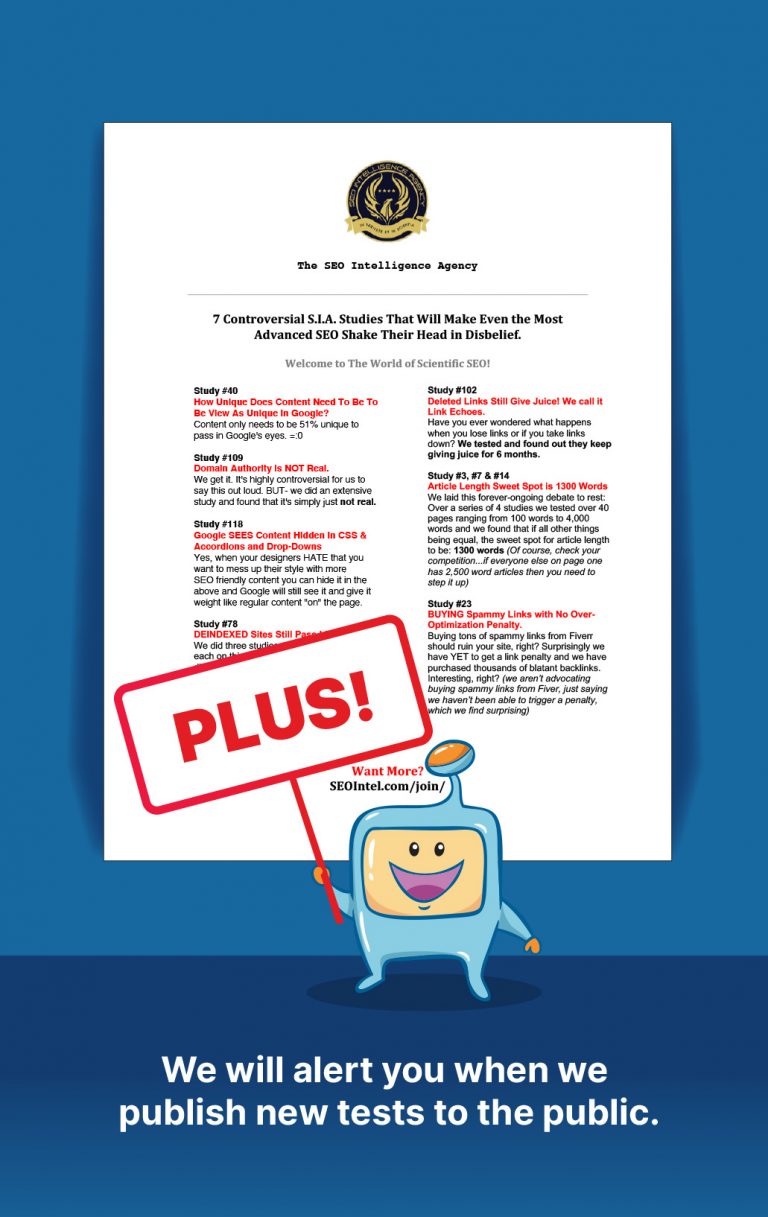
Get Our Most 7 Controversial S.I.A. Studies That Will Make Even the Most Advanced SEO Shake Their Head in Disbelief.
Plus we will alert you when we publish new tests to the public.
Obtenga nuestros 7 estudios S.I.A. más controvertidos que harán que incluso el SEO más avanzado sacuda la cabeza con incredulidad.
Además, le avisaremos cuando publiquemos nuevas pruebas al público.
Obtenez nos 7 études S.I.A. les plus controversées qui feront trembler la tête même les SEO les plus avancés d’incrédulité.
De plus, nous vous alerterons lorsque nous publierons de nouveaux tests au public.
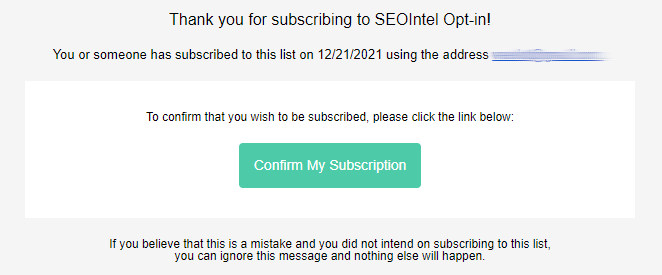
Before you can receive free updates, link building strategies or SEO tips you need to confirm your email right now.
(It’s easy)
Just go to your inbox, open the confirmation email from the SIA, and click the link.
And that’s it!
PS: If you don’t see a confirmation email, please check your spam/junk or promotions folders. Sometimes the confirmation message ends up there by mistake.