This week’s roundup looks at how search visibility is becoming more complicated across AI, technical SEO, user trust, and regulation.
Google clarified that LLMS.txt files do not help or hurt Google Search rankings, reinforcing its broader message that site owners do not need special AI-specific files to appear in Search or generative AI features. Google also updated its site move guidance with new advice on handling domain variants, reminding SEOs that migrations work best when every relevant version of a domain is properly accounted for.
Beyond technical guidance, new Pew Research data shows that AI adoption is growing, but Americans remain deeply skeptical about its impact, privacy risks, and pace of development. At the same time, the UK’s Competition and Markets Authority is requiring Google to provide more transparency around how search results are ranked.
Together, these updates show the different pressures shaping Search right now: clearer technical guidance, rising AI use, user skepticism, and growing regulatory demand for transparency.
Google has clarified its guidance on LLMS.txt files, making it clear that these files are not needed for visibility in Google Search or Google’s generative AI features.
The clarification was added on June 15, 2026 to Google’s AI optimization guide. According to Google’s documentation update page, the change was made to address community questions and clarify that LLMS.txt files are not needed for Google Search. Google also said maintaining these files for other services or systems is fine, but they will not positively or negatively affect visibility or rankings in Google Search.
What Are LLMS.txt Files?
LLMS.txt files are machine-readable text files that some site owners and developers have discussed using to provide information for large language models or AI systems.
The idea is that a site could create a dedicated file to help AI tools understand its content, access preferred summaries, or identify important pages. Some have compared the idea loosely to robots.txt, though the two serve very different purposes.
Robots.txt is a long-established protocol used to communicate crawling instructions to compliant crawlers. LLMS.txt, on the other hand, is not something Google Search says it uses for ranking, visibility, or generative AI search inclusion.
That distinction is important because AI search has created a lot of new recommendations, experiments, and “optimization” ideas. Some may be useful for certain systems, but that does not mean they matter for Google Search.
Google Says LLMS.txt Is Not Needed for Google Search
Google’s updated AI optimization guide states that site owners do not need to create new machine-readable files, AI text files, special markup, or Markdown to appear in Google Search, including its generative AI capabilities. Google says Search itself does not use them.
This means creating an LLMS.txt file is not a requirement for appearing in:
Google also clarified that while it may discover, crawl, and index many types of files beyond HTML, that does not mean those files receive special treatment. In other words, even if Google sees an LLMS.txt file, that does not mean it will use the file as a ranking or AI visibility signal.
Maintaining LLMS.txt Files Is Fine, But Not for Google Search
Google did not say site owners should never create LLMS.txt files.
Instead, the guidance makes a more specific point: these files are not needed for Google Search.
Google says it is completely fine to create and maintain LLMS.txt files or similar files for other services or systems that use them. However, doing so will not help or hurt visibility or rankings in Google Search because Google Search ignores them.
SERoundtable summarized the update in the same way, noting that Google says LLMS.txt files will not help or hurt Google Search rankings.
This is useful because it separates two questions:
For Google Search, the answer is clear: no.
For other systems, the answer depends on whether those systems actually support or use the file.
Why Google Added the Clarification
Google added the clarification because LLMS.txt has become part of the broader conversation around AI optimization.
As generative AI search grows, more site owners are looking for ways to make their content easier for AI systems to understand, cite, or use. That has led to interest in AI-specific files, machine-readable summaries, Markdown versions of pages, content “chunking,” special markup, and other proposed tactics.
Google’s AI optimization guide places LLMS.txt inside its mythbusting section, alongside other ideas that site owners do not need to focus on for Google Search. Google says many suggested AEO or GEO “hacks” are not effective or supported by how Google Search actually works.
The purpose of the clarification is to help site owners avoid spending time on tactics that do not affect Google Search visibility.
This Fits Google’s Larger AI Search Guidance
The LLMS.txt clarification is part of a broader message from Google: traditional SEO fundamentals still matter for generative AI search.
Google’s AI optimization guide says site owners should continue prioritizing foundational SEO best practices, such as building a clear technical structure and creating unique, valuable content. It also says the foundation for visibility in generative AI search experiences remains the same as Google Search overall.
This means site owners should focus on things like:
Those efforts are more meaningful for Google Search than creating AI-specific files that Google says it ignores.
LLMS.txt Is Not the Same as Robots.txt
One reason LLMS.txt can be confusing is that the name sounds similar to robots.txt.
But site owners should not treat them the same way.
Robots.txt is used to manage crawler access. It can tell compliant crawlers which parts of a site they should or should not crawl. It plays a recognized role in crawl management.
LLMS.txt does not have that same role in Google Search. Google has clarified that it does not need the file and does not use it for Search visibility, rankings, or inclusion in generative AI Search features.
This means site owners should not create LLMS.txt expecting it to function like a Google Search control.
If the goal is to manage Google crawling or indexing, site owners should use the established tools and directives Google supports, such as robots.txt, meta robots tags, canonical tags, noindex, and Search Console tools where appropriate.
What Site Owners Should Do Instead
For Google Search, the practical advice is simple: do not prioritize LLMS.txt as an SEO task.
If your team wants to test or maintain LLMS.txt for other AI systems, that is fine. But it should not replace core SEO work.
Instead, site owners should focus on the areas Google says matter for Search and generative AI visibility:
Google’s own mythbusting section also says site owners can ignore other AI-specific “hacks” for Google Search, such as unnecessary AI text files, forcing content into tiny chunks, rewriting content only for AI systems, seeking inauthentic mentions, or overfocusing on structured data as if it were required for generative AI search.
What This Means for AEO and GEO Claims
This update is also relevant to the growing number of services promoting AEO, GEO, and AI visibility optimization.
Some AI search optimization advice may be useful, especially when it overlaps with strong content strategy, technical SEO, entity clarity, and brand authority. But Google is making it clear that not every new AI-focused tactic matters for Google Search.
If a tool, consultant, or agency says an LLMS.txt file is required for Google AI visibility, that claim should be questioned.
Google’s guidance says the opposite: LLMS.txt files are not needed for Google Search and will not help or hurt rankings or visibility.
That does not mean LLMS.txt has no possible use anywhere. It means site owners should understand which systems use it before spending time on it.
The Bigger Picture
Google’s clarification on LLMS.txt is a reminder that AI Search has created a lot of noise around optimization.
As AI Overviews, AI Mode, and other generative AI features become more visible, it is natural for site owners to look for new ways to improve their chances of appearing. But Google’s message remains consistent: there is no special AI file, markup, or shortcut required for Google Search.
Instead, visibility still depends on the same broad principles that have long shaped SEO: helpful content, crawlability, quality, relevance, technical accessibility, and user value.
For SEOs, the takeaway is not that experimentation is bad. It is that experimentation should be prioritized carefully.
If LLMS.txt is useful for another platform, it may be worth maintaining. But for Google Search, it should not be treated as an SEO requirement, ranking factor, or AI visibility booster.
Key Takeaways
Google has updated its site move documentation with clearer guidance on how to handle domain variants during domain migrations.
The update was added on June 17, 2026. According to Google’s documentation update page, the site move guide now includes information on using the Change of Address tool for all subdomain variants, including www and non-www versions, during domain migrations. Google said the reason for the update is that domain migrations work best when all variants of a site are migrated properly.
This is a small documentation change, but it matters for SEOs and site owners managing domain moves. Site migrations are already high-risk projects, and missing a domain variant can make it harder for Google to understand and process the move correctly.
What Google Added
Google’s updated site move documentation now says that when moving from one domain to another, site owners should submit Change of Address requests for all subdomains and the www and non-www variants of the old domain name.
Google gives examples such as:
Even if some of these variants are not actively being used, Google says they should still be included in the migration process. Site owners should also make sure all of these variants are verified in Search Console.
This guidance applies specifically to domain migrations, such as moving from example.com to new-example.net.
It does not apply to simple HTTP to HTTPS migrations. Google’s site move guide says that if you are moving a site from HTTP to HTTPS, you do not need to use the Change of Address tool.
What Are Domain Variants?
Domain variants are the different versions of a domain or host that may exist around a site.
These can include:
Domain variants as variations of a domain, including subdomains, different TLDs, and www versus non-www versions.
Even when a business primarily uses one version of a domain, other variants may still exist, redirect, have historical links, or appear in Search Console. During a migration, those variants can matter.
Why This Matters for Site Moves
Site moves can affect crawling, indexing, rankings, traffic, and how signals are transferred from old URLs to new URLs.
Google’s update reinforces a simple point: domain migrations are cleaner when every relevant version of the old site is accounted for.
If only one version of the domain is submitted in the Change of Address tool, Google may not receive the clearest possible signal about every version of the site that is moving. This may be especially important for sites that historically used multiple hostnames, had old www and non-www versions, used subdomains, or had backlinks pointing to different variants.
The Change of Address tool is meant to help Google understand that a site has moved to a new domain. Using it for all relevant old-domain variants gives Google more complete migration signals.
Search Console Verification Is Required
One important detail in Google’s guidance is that site owners should verify all variants in Search Console.
Google’s site move documentation already recommends verifying both the old and new sites in Search Console before a migration. It also says to verify all variants of both the old and new sites, including www.example.com and example.com, and both HTTPS and HTTP variants if HTTPS URLs are used.
This matters because the Change of Address tool works through Search Console. If the relevant versions are not verified, site owners may not be able to submit the correct Change of Address requests.
For SEOs managing migrations, this should be part of the pre-launch checklist.
Before the move, verify:
The goal is to avoid discovering after launch that a key variant was never verified.
Change of Address Is Only One Part of a Migration
The Change of Address tool is helpful, but it does not replace the rest of the migration process.
Google’s site move guide still emphasizes the need to prepare carefully, map old URLs to new URLs, implement redirects, test the redirects, update canonical tags and robots directives, submit updated sitemaps, and monitor traffic after the move.
For domain migrations, Google also recommends keeping redirects for as long as possible, generally at least one year. This gives Google time to transfer signals to the new URLs, recrawl pages, and process links from other sites that still point to the old URLs.
From a user perspective, Google says site owners may want to keep redirects indefinitely, although redirects can be slower for users. Google also recommends updating internal links and high-volume external links to point directly to the new URLs where possible.
What SEOs Should Do Before a Domain Migration
Google’s update makes it clear that SEOs should include domain variants in their migration planning.
Before launching a domain move, teams should identify every relevant version of the old domain. That includes the live version of the site, historical versions, old subdomains, www and non-www versions, and HTTP or HTTPS versions that may still exist.
Then, each relevant variant should be checked for:
This helps prevent important legacy URLs or hostnames from being missed.
A domain migration is not just about moving the main site. It is about making sure Google and users are consistently sent from every old version of the site to the correct new destination.
What To Watch After the Move
After the migration begins, Google recommends monitoring both the old and new sites.
Ideally, traffic and crawling activity should decrease on the old site and increase on the new site. Site owners can monitor this through Search Console and other analytics tools.
Google also notes that visibility in Search may fluctuate temporarily during a move. This is normal, and rankings should settle over time. For small to medium-sized websites, Google says most pages may move within a few weeks, while larger sites can take longer.
SEOs should watch for:
If these problems appear, they should be addressed quickly.
Why This Update Is Useful
This guidance may seem minor, but it addresses a practical migration issue.
Many migrations fail not because the strategy is wrong, but because the details are incomplete. A site may redirect its main domain correctly while forgetting an old subdomain. Or it may move the non-www version but overlook the www version. Or a historical HTTP version may still have backlinks and indexed URLs that were not included in the migration plan.
By explicitly telling site owners to submit Change of Address requests for all relevant variants, Google is making the process clearer.
The update also gives SEOs a stronger reason to include domain variant checks in migration documentation and client conversations.
The Bigger Picture
Site migrations remain one of the more sensitive SEO projects because they affect how Google discovers, processes, and transfers signals from old URLs to new URLs.
Google’s latest guidance does not change the fundamentals of migration work. Redirects, URL mapping, canonical updates, Search Console verification, sitemap submissions, and monitoring still matter.
What it does change is the level of clarity around domain variants.
For SEOs, the takeaway is simple: do not treat a domain migration as a single-domain task. Treat it as a full property migration that includes every meaningful version of the old domain.
That includes www, non-www, subdomains, and other variants that may still carry links, signals, or search visibility.
Key Takeaways
A new Pew Research Center report shows that artificial intelligence is becoming more common in Americans’ daily lives, but public trust and optimism are not rising at the same pace.
The study, “Americans and AI 2026: Chatbots, Smart Devices and Views on Impact,” is based on a survey of 5,119 U.S. adults conducted from February 17 to 23, 2026. It looks at how Americans use AI chatbots, smart devices, and AI search summaries, as well as how they feel about AI’s impact on society, privacy, regulation, and their own lives.
The main takeaway is clear: AI adoption is growing quickly, but many Americans remain uneasy about where the technology is heading.
About Half of U.S. Adults Now Use AI Chatbots
One of the biggest findings from the report is the growth of chatbot use.
Pew found that 49% of U.S. adults now say they use AI chatbots, up from 33% in 2024. That means chatbot use has moved from a minority activity to something close to mainstream behavior in just two years.
Daily use is also becoming more common. About 24% of U.S. adults use chatbots daily, including 12% who use them several times a day and 4% who use them almost constantly. Another 25% use chatbots several times a week or less, while 51% do not use them at all.
This shows that AI chatbots are no longer just experimental tools for early adopters. For a meaningful share of the public, they are becoming part of everyday information-seeking, work, productivity, and personal routines.
Search and Work Are the Most Common Chatbot Uses
The most common use case for AI chatbots is information search.
Pew found that 42% of U.S. adults use chatbots to search for information. Among employed adults, 38% use chatbots for work-related tasks. Other common uses include entertainment, image or video creation, medical advice, diet and fitness information, news, emotional support, and companionship.
The spread of use cases matters because it shows how broadly chatbots are entering daily decision-making. People are not only using them for casual questions. They are using them for work, health-related topics, creative tasks, and even personal support.
That raises opportunities and concerns. Chatbots can make information easier to access and help users complete tasks faster. But when people use them for medical advice, emotional support, or news, accuracy, trust, transparency, and source quality become much more important.
ChatGPT Still Dominates the Chatbot Market
Pew also looked at which chatbots Americans use.
ChatGPT remains far ahead of other tools. 44% of U.S. adults say they use ChatGPT, up from 34% in 2025 and more than double the 18% who reported using it in 2023. Gemini follows at 24%, Copilot at 17%, Meta AI at 14%, Grok at 8%, Claude at 6%, and Character.ai at 3%.
This suggests that while the chatbot market is becoming more crowded, ChatGPT continues to have the strongest consumer awareness and adoption among U.S. adults.
For marketers, publishers, and businesses, this matters because AI visibility is not only about Google. Users are increasingly turning to multiple AI systems for answers, recommendations, summaries, and assistance. But if one chatbot has much wider use than others, it may have a larger influence on how people discover and evaluate information.
Users See Chatbots Helping Productivity and Knowledge
Despite broader public skepticism about AI, people who use chatbots tend to see practical benefits.
Pew found that Americans are more likely to say chatbots help rather than hurt their productivity, knowledge, and creativity. 30% say chatbots help their productivity, while only 5% say they hurt it. Similarly, 28% say chatbots help them stay informed, compared with 5% who say they hurt. For creativity, 21% say chatbots help, while 11% say they hurt.
This distinction is important.
Americans may be worried about AI overall, but many users still see value in specific tools. The public does not appear to be rejecting AI entirely. Instead, the report suggests a more complicated attitude: people are adopting AI where it is useful, while remaining concerned about its broader effects.
AI Search Summaries Are Already Reaching Most Americans
The Pew report also highlights how AI is changing search behavior.
According to the survey, 60% of U.S. adults say they read AI summaries at the top of search engine results. Another 30% say they do not, while 10% are not sure.
This is a major finding for SEOs, publishers, and marketers.
AI search summaries are no longer a niche feature. If six in ten adults report reading them, then AI-generated search answers are already shaping how many people consume information. For publishers, this adds to concerns about zero-click search, content attribution, and whether users still click through to original sources after reading AI-generated summaries.
It also reinforces the need to think beyond traditional blue-link rankings. Visibility in search is increasingly tied to summaries, citations, source mentions, and how information is presented directly on the results page.
Smart Devices Show AI Is Already in the Home
The report also shows that AI is not limited to chatbots and search.
Pew found that 37% of U.S. adults have a smartwatch. In the home, 35% have a smart speaker, 18% have a smart doorbell, 13% have a robot vacuum, and 11% have a smart thermostat with AI features.
These numbers show that many Americans are already interacting with AI through devices they may not always think of as “AI.”
A person may not use ChatGPT, but they may still rely on a smart speaker, smartwatch, smart doorbell, or AI-powered search summary. This makes AI adoption broader than chatbot use alone.
It also helps explain why public concern is high. AI is not only something people access on a website or app. It is increasingly embedded in household devices, search engines, watches, cameras, and everyday digital services.
Americans Expect AI’s Impact To Be More Negative Than Positive
Despite growing use, Americans remain skeptical about AI’s long-term impact.
Pew found that 40% of U.S. adults think AI will have a negative impact on society over the next 20 years, compared with only 16% who expect a positive impact. Another 31% expect the impact to be equally positive and negative.
Views are also negative, though less strongly, when people think about their own lives. 31% expect AI to have a negative impact on them personally, while 23% expect a positive impact.
This gap between use and trust is one of the most important parts of the study.
People are using AI more, but many are not convinced it will make society better. That creates a challenge for AI companies, policymakers, employers, educators, publishers, and marketers. Adoption alone does not equal confidence.
Younger Adults Use AI More, But Are Not More Optimistic
One surprising finding is that younger adults are not more positive about AI.
Pew reports that adults under 30 are more likely than older adults to say AI will have a negative impact on society and on them personally. 48% of adults ages 18 to 29 say AI will have a negative impact on society, compared with 39% of adults ages 30 to 49 and 37% of those 50 and older. For personal impact, 37% of adults under 30 expect a negative effect, compared with 30% of those ages 30 to 49 and 28% of those 50 and older.
This challenges the assumption that younger generations are automatically more enthusiastic about new technology.
Younger adults may be more comfortable using AI, but they may also be more exposed to its risks around work, education, creativity, misinformation, privacy, and social impact. In other words, familiarity does not necessarily lead to optimism.
Most Americans Think AI Is Moving Too Fast
Another major concern is the speed of AI development.
Pew found that 63% of U.S. adults say AI is advancing too quickly. Only 2% say it is advancing too slowly, while 19% think it is moving at about the right pace and 16% are not sure.
This finding helps explain the broader skepticism in the report.
People may see benefits in specific tools, but many are uneasy about the pace of change. AI is moving into search, work, education, media, healthcare, home devices, and personal decision-making faster than many people feel prepared for.
For companies building or using AI, this means communication matters. Users may want innovation, but they also want clarity, safety, control, and accountability.
Privacy Is One of the Biggest AI Concerns
The strongest concern in the report is personal data security.
Pew found that 71% of U.S. adults think the increased use of AI will make their personal information less secure. Only 3% think AI will make their personal information more secure.
This is one of the clearest signals in the study.
As AI systems require more data, personalization, prompts, voice inputs, browsing behavior, location signals, and device interactions, users are worried about what happens to their personal information.
For businesses, this is not just a policy issue. It is a trust issue. AI features that feel invasive, unclear, or poorly explained may face resistance even if they are technically useful.
Confidence in Government and Companies Is Low
The report also found low confidence in both government and businesses when it comes to AI.
67% of Americans say they have little or no confidence in the U.S. government to regulate AI effectively, up from 62% in 2024. About six in ten adults are also not confident that U.S. companies will develop and use AI responsibly.
There are also partisan differences. Pew found that Democrats and Democratic-leaning independents are now more likely than Republicans and Republican leaners to lack confidence in the government’s ability to regulate AI effectively, 74% vs. 61%. Democrats are also more likely than Republicans to say they are not confident in U.S. companies to develop AI responsibly, 65% vs. 53%.
This shows that AI skepticism is not limited to one political group or one type of user. Concerns about regulation, corporate responsibility, and privacy are broad.
What This Means for Marketers and Publishers
For marketers and publishers, Pew’s findings point to two realities happening at the same time.
First, AI is becoming a major information layer. People are using chatbots, reading AI search summaries, and interacting with AI-enabled devices. This means content discovery, brand visibility, and user journeys are changing.
Second, trust is fragile. Many Americans are skeptical of AI’s impact, worried about privacy, and unsure whether companies or government can manage the technology responsibly.
That means AI strategies should not only focus on automation or visibility. They also need to focus on trust.
For publishers, this may mean making content more clearly sourced, authoritative, and transparent. For brands, it may mean explaining how AI features work, what data is used, and how users remain in control. For SEOs, it means understanding that AI visibility will matter, but so will credibility and user confidence.
The Bigger Picture
The Pew study shows that AI adoption is not a simple story of enthusiasm.
Americans are using AI more. Chatbots are growing. AI search summaries are widely read. Smart devices are already present in many homes. But people are also worried about the pace of AI, its impact on society, personal data security, and whether institutions can manage it responsibly.
This creates a tension that will likely shape the next phase of AI adoption.
AI tools may continue to grow because they are useful. But their long-term acceptance will depend on whether users feel informed, protected, and respected.
For businesses, publishers, and technology platforms, the takeaway is clear: adoption is not enough. Trust will be just as important.
Key Takeaways
The UK’s Competition and Markets Authority has imposed new conduct requirements on Google that aim to make Search more transparent, fair, and easier for businesses to challenge.
The new requirements are part of the UK’s digital markets competition regime and apply to Google’s general search services. The CMA said Google must improve the transparency of how search results are ranked, use fair and objective ranking criteria, give businesses clearer ways to raise concerns, and allow users to transfer certain search-related data to authorized third parties.
For SEOs, publishers, and businesses that depend on Google visibility, this is an important development. It does not mean Google will publish its full ranking algorithm. But it does mean the UK regulator is pushing Google to provide clearer explanations, fairer processes, and more accountability around how ranking decisions affect businesses.
Why the CMA Is Taking Action
The CMA designated Google as having Strategic Market Status in UK search services in October 2025. That designation gives the regulator the power to impose targeted conduct requirements when it believes they are needed to support fair dealing, open choices, trust, and transparency. Google accounts for more than 90% of general search queries in the UK, which is why the CMA considers its role in search especially important.
The CMA said many businesses rely on Google Search to reach customers, but some have raised concerns that search ranking practices can be difficult to understand, unpredictable, and hard to challenge. The regulator said uncertainty around ranking changes can affect businesses’ ability to invest and compete.
This is the core issue behind the new requirements. Google Search acts as a major gateway to online visibility. When rankings change, businesses may gain or lose traffic, leads, sales, and revenue. The CMA wants businesses to have more clarity about how those ranking systems work and what they can do if they believe something has gone wrong.
What Google Must Do
The CMA’s new requirements focus on two main areas: fair ranking and data portability.
Under the fair ranking requirement, Google must use objective and non-discriminatory criteria when ranking search results. The requirement is designed to ensure that businesses competing for visibility in search are treated fairly. Google will also need to provide clearer information about how ranking works and create a transparent process for businesses to raise concerns and receive timely responses.
The data portability requirement is separate. It requires Google to allow users to port certain search-related data to authorized third parties, such as rewards platforms or other services that users choose. Google has three months to comply with the data portability requirement and six months to implement the fair ranking requirement.
This means the data-sharing requirement has a shorter timeline, while the ranking transparency requirement gives Google more time to adjust its systems and processes.
This Does Not Mean Google Is Publishing Its Full Algorithm
Some headlines may make the update sound like Google has been ordered to fully reveal its ranking algorithm.
That is not the practical meaning of the requirement.
The CMA is requiring Google to explain more clearly how ranking works, use objective and non-discriminatory criteria, and give businesses better ways to challenge issues. It is not the same as forcing Google to publish every ranking signal, weighting system, anti-spam mechanism, or machine-learning process behind Search.
This distinction matters because Google’s ranking systems are highly complex and constantly changing. Full disclosure of the algorithm would likely create spam and manipulation risks. The CMA’s action is more focused on transparency, accountability, and fair treatment for businesses, rather than exposing every technical detail of Google’s ranking systems.
Why This Matters for Businesses
For businesses, Google rankings can have a direct effect on revenue.
A change in visibility can affect traffic, calls, bookings, purchases, and leads. For small businesses, publishers, travel companies, ecommerce brands, local service providers, comparison sites, and other online businesses, Search visibility can be a major part of customer acquisition.
The CMA said businesses reported that Google’s ranking practices could feel opaque and unpredictable, with changes made without enough notice. The regulator said this uncertainty can hold businesses back from investing in their own companies.
If the new requirements work as intended, businesses may get clearer information about ranking principles and more transparent complaint pathways when they believe their visibility has been affected unfairly.
Why This Matters for SEO
For SEOs, the update is important because it shows regulators are paying closer attention to how ranking systems affect competition.
SEO has always involved adapting to ranking changes, algorithm updates, and shifts in Search features. But when Google has such a dominant role in search discovery, ranking transparency becomes not only a marketing issue, but also a competition issue.
The CMA’s requirement could lead to more formal explanations from Google around ranking criteria, ranking changes, and how businesses can raise concerns. It may also increase pressure on Google to provide clearer documentation, better reporting, or more structured processes for handling disputes.
That said, SEOs should not expect this to become a ranking-factor checklist.
Google is unlikely to turn Search into a fully transparent formula. But businesses and SEO professionals may gain more clarity around principles, policies, processes, and recourse.
AI Search Adds More Pressure
This move also comes as Google Search is changing quickly because of AI.
Google is expanding AI Overviews, AI Mode, AI-generated summaries, and other AI-powered search features. These features can affect how users discover content, whether they click through to websites, and which sources receive visibility.
The CMA has already taken action on publisher controls for AI-powered Search features, requiring Google to let publishers manage how their content is used in AI-generated responses without losing traditional search visibility.
The ranking transparency requirement should be seen in that broader context. Search is no longer only about traditional blue links. Ranking, visibility, attribution, AI summaries, source selection, and data access are becoming more connected.
For publishers and businesses, that makes transparency even more important. If AI-generated results change how traffic flows across the web, businesses will want to understand not only how they rank, but also how they are surfaced, summarized, cited, or excluded in AI-driven search experiences.
Data Portability Could Open New Possibilities
The second part of the CMA’s action focuses on data portability.
Google must allow users to transfer certain search-related data to authorized third parties. Reuters reported that this could include third-party services such as rewards platforms.
This requirement is not as directly tied to SEO as ranking transparency, but it still matters for competition. If users can move or share their search data more easily, third-party services may be able to build new products around search behavior, personalization, rewards, or alternative discovery experiences.
In practice, the effect will depend on how the requirement is implemented, what data is included, and how many users choose to share it. But it reflects the CMA’s broader goal of reducing Google’s control over search-related data and increasing opportunities for other services.
Google’s Response
According to Reuters, Google said it would cooperate with the CMA while emphasizing the need to protect the integrity of Search.
That tension is likely to remain central.
Regulators want more transparency and fairness. Businesses want clearer explanations and better ways to challenge problems. Google wants to protect the quality, security, and anti-spam integrity of its search systems.
The challenge will be finding a balance that gives businesses meaningful clarity without making Search easier to manipulate.
What SEOs and Site Owners Should Watch
This is a UK regulatory action, but it may have broader implications.
If the CMA’s requirements lead to more transparency in the UK, other regulators may watch closely. Google is already facing competition scrutiny in multiple markets, including the U.S. and EU. The UK’s approach may become part of a wider regulatory push around search transparency, AI search, data access, and platform accountability.
For now, SEOs and site owners should watch for:
The most immediate impact will likely be procedural rather than tactical. This is not a new SEO ranking factor or algorithm update. It is a regulatory move that could change how Google communicates with businesses and handles ranking-related concerns.
The Bigger Picture
The CMA’s action reflects a growing reality: Google Search is not just a search engine. It is a critical part of the digital economy.
For many businesses, ranking visibility can determine whether customers find them. For publishers, search visibility can shape traffic, subscriptions, ad revenue, and audience growth. For users, search results influence what information they see and which services they choose.
As Search becomes more AI-driven and self-contained, the stakes become even higher.
The CMA’s requirements are designed to make Google’s role in that ecosystem more transparent and accountable. They will not give SEOs a complete view of Google’s algorithm, but they may create more pressure for clearer explanations, fairer processes, and stronger protections for businesses affected by ranking decisions.
For site owners, the takeaway is simple: search visibility is becoming not only an SEO issue, but also a regulatory and competition issue.
Key Takeaways
This week’s updates show that SEO and search visibility are being shaped from several directions at once.
Google’s clarification on LLMS.txt files is a reminder that not every new AI optimization idea matters for Google Search. The updated site move guidance also shows that traditional technical SEO still matters, especially during high-risk projects like domain migrations.
At the same time, the Pew Research findings show that AI may be growing quickly, but trust remains a major issue. Users are adopting chatbots, AI search summaries, and smart devices, yet many still worry about privacy, speed of development, and the broader impact of AI on society.
The UK regulator’s action against Google adds another layer. Search visibility is no longer just an SEO concern. It is also becoming a competition, transparency, and accountability issue.
For SEOs and site owners, the takeaway is clear: focus on fundamentals, be careful with unsupported AI tactics, plan technical changes properly, and pay attention to how public trust and regulation may shape the future of Search.
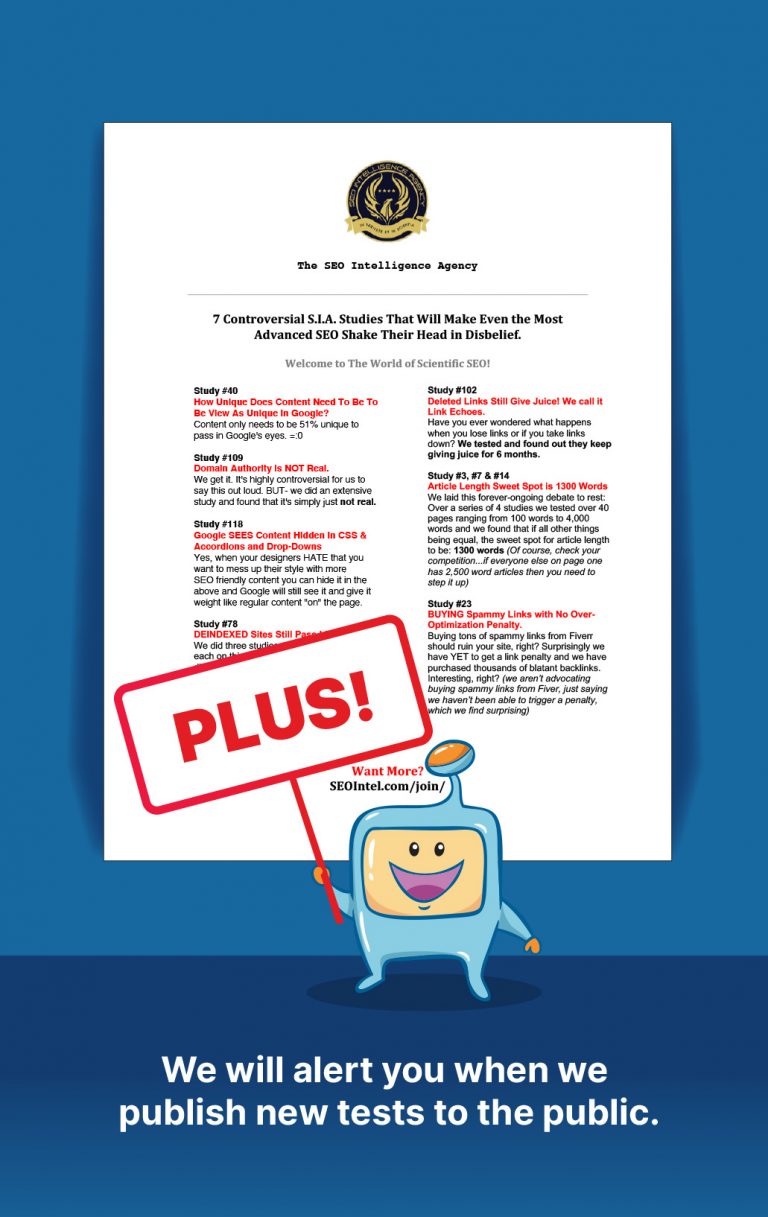
Get Our Most 7 Controversial S.I.A. Studies That Will Make Even the Most Advanced SEO Shake Their Head in Disbelief.
Plus we will alert you when we publish new tests to the public.
Obtenga nuestros 7 estudios S.I.A. más controvertidos que harán que incluso el SEO más avanzado sacuda la cabeza con incredulidad.
Además, le avisaremos cuando publiquemos nuevas pruebas al público.
Obtenez nos 7 études S.I.A. les plus controversées qui feront trembler la tête même les SEO les plus avancés d’incrédulité.
De plus, nous vous alerterons lorsque nous publierons de nouveaux tests au public.
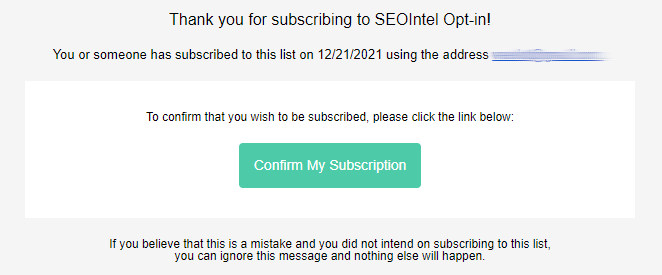
Before you can receive free updates, link building strategies or SEO tips you need to confirm your email right now.
(It’s easy)
Just go to your inbox, open the confirmation email from the SIA, and click the link.
And that’s it!
PS: If you don’t see a confirmation email, please check your spam/junk or promotions folders. Sometimes the confirmation message ends up there by mistake.