
This week’s SEO news highlights how quickly search visibility and measurement are changing.
Google is continuing to reshape AI Mode and AI Overviews, adding more inline links, news carousels, creator information, and clearer pathways back to websites. The update gives publishers more opportunities to appear inside AI-generated results, but it also raises the ongoing question of whether increased visibility will translate into more clicks.
At the same time, traditional rank tracking is becoming harder to trust. Third-party tools are increasingly reporting missing rankings, unusual SERPs, and discrepancies that do not always match Search Console or real traffic. As a result, SEOs are leaning more heavily on Search Console, analytics, manual checks, and multi-tool validation.
Google also used the latest Search Off the Record episode to explain how PDFs are handled in Search. PDFs can rank, appear in AI Overviews and AI Mode, and work for SEO, but they also come with limitations around accessibility, mobile experience, canonicalization, crawl frequency, and content updates.
Together, these stories show how SEO is becoming less about tracking one ranking number and more about understanding visibility across multiple Search experiences.
Google is rolling out a new set of updates to AI Mode and AI Overviews designed to make it easier for searchers to move from AI-generated answers to websites, news articles, and creators across the web.
The changes include more inline links, higher placement for important sources, dedicated sections for official websites, broader news carousels, more prominent related-article links, and clickable creator and publisher profiles.
Google announced the updates on October 15, 2026, saying the goal is to make exploring the web from AI Search simpler, more visual, and more engaging.
More Inline Links In AI Responses
One of the biggest changes is an increase in inline links inside AI-generated responses.
These are links attached directly to words or phrases within the response, allowing users to click through to supporting sources while they are reading rather than looking for citations elsewhere on the page.
Google says it has made substantial increases to the number of inline links appearing in its AI Search experiences.
The company is also changing where those links appear.
Important sources will now be surfaced higher in AI responses more often, which could make them more visible and easier to click.
For publishers and SEOs, placement may matter almost as much as inclusion. A citation near the top of an AI response is likely to receive more attention than one buried at the bottom.
Google Is Testing Dedicated Sections For Official Websites
Google is also testing a new display for searches where there are only one or two authoritative places to complete a task or obtain the exact information needed.
In those situations, AI Search may show a dedicated section near the top of the response containing links to the relevant official websites.
Google will also provide context explaining why each link may be useful.
This could apply to searches involving tasks such as:
This expands on Google’s existing efforts to surface direct website links prominently when search intent is clearly navigational.
Timely News Carousels Are Expanding
Google is also expanding the prominent article carousels used for timely news and reporting.
These carousels are beginning to roll out to additional locations and languages globally and will appear across a broader range of queries.
The feature can also highlight websites that users have selected through Google’s Preferred Sources feature.
Google said usage of Preferred Sources has increased by more than seven times since the beginning of the year.
That growth suggests users are increasingly interested in influencing which publishers and sources they see inside AI Search.
For publishers, earning direct audience loyalty may therefore become increasingly valuable.
Preferred Sources Could Give Publishers Another Visibility Path
Preferred Sources allows users to select publications and websites they want Google to prioritize when showing certain Search results.
With the new AI Search updates, those preferences can also influence prominent article carousels.
This introduces another layer of personalization into Search visibility.
Traditional rankings are still important, but publishers may increasingly benefit from becoming a source users deliberately choose to follow.
That puts more emphasis on:
SEO visibility may therefore depend not only on whether Google considers a source relevant, but also whether users actively value that source.
Related Article Links Are Becoming More Visual
Google is also redesigning some of the links displayed at the end of AI responses.
Instead of simple text links, users may see more prominent related-article recommendations with:
Google says these links are intended to help users continue exploring a topic after they have received an initial AI-generated explanation.
For publishers, this could create another opportunity to attract clicks even when a site is not the primary source cited inside the AI response.
Creator And Publisher Profiles Are Coming To AI Mode
Google has also started testing clickable creator and publisher names on video results inside AI Mode.
Clicking a name can take the user to a Search profile that provides more information about that creator or publisher and their broader body of work.
The goal is to give searchers more context about who created the content they are viewing.
This is notable because it adds another identity and reputation layer to AI Search.
Rather than evaluating only an individual piece of content, users may be encouraged to explore the person, publisher, or organization behind it.
Creator Identity Is Becoming More Visible
Google has increasingly emphasized original voices, firsthand perspectives, and identifiable creators across its AI Search features.
Earlier updates added more context such as creator names, handles, and community names to links appearing in AI responses.
The new clickable profiles expand that approach.
For SEO and content teams, this reinforces the value of making authorship and publisher identity clear.
Useful signals can include:
Google did not say that having a Search profile directly improves rankings, but the increased visibility of creator information shows that source identity is becoming a more important part of how AI Search presents content.
Google Continues To Emphasize Connections To The Web
The update is part of a broader pattern in Google’s AI Search development.
Over the past year, Google has repeatedly added features intended to make external websites more visible inside AI-generated results.
Those efforts have included:
Google has argued that AI Search should help users discover information across the web rather than replace websites entirely.
The latest update continues that positioning by making links more visible and more integrated into AI responses.
Will More Links Mean More Publisher Traffic?
That remains the key question.
Google says making links more prominent helps users explore sources and engage with websites.
However, publishers continue to be concerned that AI-generated answers may satisfy many searches without requiring users to click through.
Adding more links creates more opportunities for referral traffic, but visibility does not necessarily translate into clicks.
The practical impact will depend on several factors, including:
For publishers, simply being cited may therefore not be enough.
Content may increasingly need to give users a reason to continue beyond the AI answer.
What This Means For SEO
The updates reinforce how different visibility inside AI Search can be from traditional blue-link rankings.
AI Mode and AI Overviews can surface sources in multiple formats:
That means SEO teams may need to think beyond a single ranking position.
The broader goal becomes increasing the chances that a brand, article, creator, or website is considered useful enough to appear somewhere within an AI-generated search journey.
Content that offers original information, unique reporting, expert analysis, first-hand experience, or useful tools may be particularly valuable because AI responses can summarize generic information themselves.
Brand And Publisher Loyalty May Matter More
One of the most interesting aspects of the update is the continued growth of Preferred Sources.
If users increasingly tell Google which websites they trust, publishers may gain another reason to invest in building direct relationships with audiences.
That includes:
SEO has traditionally focused heavily on earning visibility from Google.
AI Search may make it increasingly important to also earn preference from users.
Key Takeaways
Third-party Google rank tracking has become noticeably less reliable in recent weeks, with SEO tools reporting sudden ranking losses, missing keywords, delayed visibility changes, and SERPs that do not match what users actually see.
The issue appears to be tied to Google’s increasingly aggressive efforts to limit automated scraping of its search results.
For SEOs, this creates a major reporting problem: a dramatic ranking decline inside a tracking platform may no longer mean the website actually lost those rankings.
Google Is Making SERP Scraping Harder
Rank tracking platforms typically rely on automated systems that repeatedly query Google and record the results they receive.
Google has always tried to limit automated scraping, but those defenses appear to have become substantially more aggressive.
Recent changes and observations include:
These measures are likely aimed broadly at automated scraping, including AI companies and large-scale data collection systems, rather than SEO rank trackers specifically.
However, rank-tracking platforms use similar collection methods, so they are being caught in the same defenses.
Nozzle Says Some SERPs Are Being “Poisoned”
One of the most detailed analyses comes from rank-tracking platform Nozzle.
The company analyzed 27.5 million SERPs collected across 49 countries and found what it described as “poisoned SERPs.”
According to Nozzle, these are search results pages that:
Nozzle found that 8% of the SERPs it analyzed since September 13 met its definition of poisoned, compared with only 0.17% during its earlier baseline period.
During the worst period, from September 27 through September 29, roughly a quarter of measured SERPs were affected.
Again, Google has not confirmed that it intentionally serves false rankings to trackers. “Poisoned SERP” is Nozzle’s terminology for the pattern it found in its dataset.
Blocked Requests Started Before The Strange Results
Nozzle’s data suggests the problems developed in stages.
On September 13, a growing number of automated requests began failing.
Beginning around September 20, some of the requests that successfully reached Google began returning complete SERPs that did not match their normal historical patterns.
That is potentially more disruptive than a simple block.
If a rank tracker receives a CAPTCHA or error, it knows the request failed and can retry.
But if Google returns a normal-looking results page containing unusual rankings, the tracker may record those rankings as legitimate.
That can make the resulting reports look like genuine SEO losses.
Some Tracked Sites Completely Disappeared From The Top 10
Nozzle found a particularly striking difference when looking at sites being actively tracked.
On the suspect SERPs, the tracked website was missing from the top 10 58.6% of the time.
Under normal conditions, that happened only 2.7% of the time.
Nozzle also found that many of these unusual SERPs corrected themselves quickly.
About 77.9% returned to something close to their normal results within three days.
This means a keyword showing a sudden one-day or two-day collapse could be a data-collection issue rather than an actual ranking loss.
The September Spam Update Made Diagnosis Harder
The timing was particularly unfortunate for SEOs because the tracking problems overlapped with Google’s September 2026 spam update.
That update created real ranking volatility.
At the same time, third-party tools were experiencing collection problems.
This made it difficult to distinguish between:
Some websites appeared to disappear completely inside ranking tools even while their Google Search Console impressions and organic traffic remained stable or improved.
Different Rank Trackers Are Showing Different Stories
SEO professionals have reported major discrepancies between platforms.
Glenn Gabe shared examples where a website’s real-world performance was known, but third-party visibility tools reacted very differently.
In one case, Ahrefs detected a decline relatively quickly, Semrush reflected it later, and Sistrix did not show the same decline at that point.
In another example, Ahrefs showed a recovery that Sistrix did not yet reflect, while Semrush appeared to catch up with a delay.
The important point is not that one platform is always accurate and another is always wrong.
Different tools use different:
As Google makes automated collection harder, those technical differences can produce increasingly different results.
SEO Forums Are Reporting The Same Problem
The issue is not limited to rank-tracking companies themselves.
SEO forums and Reddit discussions are filled with examples of practitioners seeing tracking tools report dramatic losses that do not match reality.
One agency reported keywords that genuinely ranked in position one randomly disappearing entirely from its rank-tracking reports.
Another SEO said rankings appeared to vanish in third-party tools while relevant organic traffic was actually increasing.
Others reported tools showing terms as unranked even when manual checks showed the site at the top of the results.
Comments across the SEO community increasingly recommend verifying ranking declines before reporting them to clients or making changes to pages.
Rank Tracking Was Never An Exact Measurement
Even before the recent scraping problems, rank tracking was never a perfect representation of what every user sees.
Google results can vary by:
A traditional rank tracker gives you a controlled snapshot of one version of the SERP.
That is useful for identifying trends, but it has never represented a universal ranking for every searcher.
The current problems make that limitation more important.
So How Are SEOs Monitoring Rankings Now?
The biggest change is that many SEOs are no longer treating third-party rankings as a standalone source of truth.
Instead, they are combining several data sources.
1. Google Search Console Comes First
Google Search Console is increasingly being used as the primary validation layer.
If a rank tracker claims a page has suddenly disappeared, SEOs are checking:
If third-party rankings collapse but Search Console impressions and clicks remain stable, that is a strong sign the problem may be with the tracker rather than the website.
Search Console is not identical to traditional rank tracking.
Its average position metric reflects positions across actual impressions and can include many locations and result types.
But it does show what Google actually displayed to real users.
2. Actual Organic Traffic Is Becoming More Important
SEOs are also checking analytics before assuming a ranking drop is real.
Important metrics include:
If a rank tracker reports that dozens of keywords disappeared but organic traffic and conversions remain stable, the reported ranking loss deserves skepticism.
A genuine large-scale loss in visibility would normally create some measurable downstream impact.
3. Manual SERP Checks Are Being Used For Validation
Manual checking has become more common again for high-priority keywords.
SEOs are using:
Manual checking is not scalable for thousands of keywords and is still affected by localization and personalization.
But it can help validate a suspicious result.
If a tool says a website no longer ranks in the top 100 while multiple manual checks still show it on page one, the rank tracker is probably the problem.
4. SEOs Are Comparing More Than One Tracker
Some agencies are now cross-checking rankings across multiple platforms rather than relying on a single provider.
For example, they may compare:
If several independent platforms show roughly the same change and Search Console agrees, confidence in the result increases.
If one tool shows a catastrophic loss while everything else remains stable, the data should be treated cautiously.
5. Manual Refreshes Can Sometimes Help
Some SEO professionals using tools that support manual SERP refreshes have reported better results after triggering a recheck.
That makes sense if the original query happened to encounter a blocked or abnormal SERP.
A second request may take a different route and return a normal result.
However, repeatedly refreshing also does not guarantee accuracy if Google continues to interfere with automated collection.
6. Trend Reporting Is Replacing Single-Position Reporting
Another important shift is toward trends rather than exact positions.
Instead of telling a client:
“Keyword X moved from position 3 to position 8 today,”
SEOs are increasingly looking at broader patterns such as:
This reduces the risk of making strategic decisions because of one abnormal SERP snapshot.
7. Keyword Groups Are More Useful Than Sitewide Average Position
Some practitioners are also building Search Console reports around specific query groups.
For example:
They then track clicks, impressions, and average position for those groups over time.
This gives clients something closer to traditional rank reporting while relying on Google’s own impression data.
It can also be segmented by device and country to reduce some of the noise in Search Console averages.
8. Local SEO Needs Additional Validation
Local rank tracking presents its own challenges because rankings can vary dramatically by physical location.
For local businesses, SEOs are increasingly validating rank-tracker data against:
If an organic tracker reports a collapse while local leads, calls, and impressions remain unchanged, the ranking report alone should not trigger major changes.
What About Search Console Average Position?
Search Console average position should not simply replace a traditional rank tracker number one-for-one.
They measure different things.
A tracker asks Google from a controlled environment and records the position it sees at that moment.
Search Console calculates position from real impressions, potentially across many:
That makes Search Console noisier for exact rank reporting but often more useful for understanding real visibility.
The strongest approach is to combine the two rather than expecting either one to answer every question.
Do Not Change Pages Based On A Tracker Alone
Perhaps the most important practical lesson is to avoid reacting too quickly.
If a third-party tool suddenly shows a major decline:
Making major content or technical changes because of faulty ranking data can create a real SEO problem where none existed before.
This Could Change SEO Reporting
If Google continues making SERP scraping harder, traditional keyword rank reports may become less dependable.
That could push SEO reporting toward metrics that are closer to actual business outcomes.
Instead of focusing primarily on hundreds of exact keyword positions, reports may increasingly emphasize:
Rankings will still matter, but they may become one diagnostic signal among several instead of the headline KPI.
Key Takeaways
Should important content live in a PDF, or is HTML always the better option?
In a recent episode of Search Off the Record, Google’s Martin Splitt and John Mueller discussed how Google Search handles PDF files, including how PDFs are converted during indexing, how they can rank, whether they can appear in AI Overviews and AI Mode, and the technical issues that can make PDFs difficult for both search engines and users.
The overall message was straightforward: Google can process and rank PDFs effectively, but HTML is generally easier to work with for search, accessibility, mobile usability, and content maintenance.
Google Converts PDFs Into HTML During Indexing
One of the most important details discussed in the episode was what happens to a PDF after Google crawls it.
PDFs are binary files rather than normal text-based webpages.
Instead of trying to process the PDF directly throughout the Search pipeline, Google uses a converter during indexing.
The converter takes the PDF and creates an HTML representation of its content.
That HTML version can then move through many of the same systems Google uses for normal webpages.
This allows Google to understand elements inside the PDF such as:
Once converted, the rest of Google’s Search systems can largely treat the document like a normal HTML page.
That is why links inside properly constructed PDFs can still be detected and used.
PDFs Can Rank Normally In Google Search
Because Google converts PDFs into an HTML-like representation, PDFs can be indexed and ranked similarly to other documents.
Mueller asked directly whether PDFs can rank normally in Search, and Splitt confirmed that indexing and ranking are essentially the same as for other documents.
There is no inherent SEO penalty simply because content is published as a PDF.
However, extremely large PDFs can create some of the same problems as extremely long webpages.
If a 500-page document contains hundreds of unrelated topics, for example, it may be more difficult for Search to understand which specific topic or passage should make that document relevant for a query.
That is similar to publishing an entire book on a single HTML page.
PDFs Can Appear In AI Overviews And AI Mode
The discussion also addressed how PDFs interact with Google’s AI-powered Search features.
Because Google converts PDF content into a format its Search systems can process, PDFs can also appear in:
Google does not maintain a meaningful distinction downstream between content that originally came from a PDF and content that started as an HTML webpage.
Once the PDF has been converted and processed, it can be used by Google’s systems like other searchable content.
Mueller also noted that he has seen PDFs referenced by other AI systems.
The broader point was that PDFs are not inherently unsuitable for AI search, grounding, or generative search experiences.
As Splitt summarized during the discussion, good SEO is good GEO.
Do Not Put LLMs.txt In A PDF
The episode opened with a deliberately humorous question: should someone publish an LLMs.txt file as a PDF?
The answer from Google was emphatically no.
The purpose of LLMs.txt is to make information available in a simple format that language models can consume.
PDF is not a simple text format.
It is a binary container that requires additional parsing and conversion before its content can be processed.
Even though Google can process PDFs, that does not mean every crawler or AI system handles PDFs in the same way.
If someone chooses to use LLMs.txt, Google’s recommendation from the discussion is to keep it in a simple text-based format rather than turning it into a PDF.
Google Has File Size Limits
Google also discussed crawling limits.
There are limits on how much data Google will fetch and process for documents, although Splitt did not provide a specific current PDF file-size limit.
He explained that PDF files likely have different limits from ordinary HTML pages because PDFs can contain much larger documents such as:
Google intentionally avoids publishing some exact technical limits because they can change over time as infrastructure and typical file sizes change.
For most normal PDFs, the limits are unlikely to be a problem.
But extremely large documents could potentially reach a point where Google does not process everything inside them.
Rasterized PDFs Are A Major Problem
One of the biggest PDF SEO problems discussed in the episode is rasterization.
Some PDFs do not actually contain machine-readable text.
Instead, each page is essentially an image of the original document.
This frequently happens with:
When that happens, Google may not be able to extract the text as normal document content.
Splitt suggested a very simple test.
Open the PDF, select all the text, copy it, and paste it into a plain text editor or document.
If the text appears correctly, the PDF contains accessible text.
If nothing meaningful copies across, the pages may simply be rasterized images.
That can create problems for both SEO and accessibility.
Do Not Rely On OCR
Optical Character Recognition can sometimes recover text from scanned pages, but Mueller cautioned that site owners should not rely on OCR to solve the problem.
If text is important for Search visibility, it is much safer to make sure the PDF contains real text in the first place.
That also benefits users who rely on:
A PDF that consists only of images can therefore create both an SEO problem and a user-experience problem.
PDFs Are Often Worse On Mobile
Another major limitation is how PDFs behave on mobile devices.
HTML pages can begin rendering while content is still being downloaded.
PDFs generally need much more of the file to be downloaded before the user can interact with the document.
This can make them slower on:
PDF layouts are also usually fixed.
When a user zooms into the document, the content does not necessarily reflow to fit the screen the way responsive HTML does.
That can make reading awkward on a phone.
This is one of the main reasons Google generally prefers HTML when the same information could reasonably be presented as a webpage.
Canonicalization Can Be Harder With PDFs
PDFs can also create interesting duplicate-content and canonicalization problems.
Mueller described PDFs as essentially binary blobs.
If someone downloads the exact same PDF and uploads it to another website, Google may encounter files that are literally byte-for-byte identical.
That differs from normal HTML duplication, where two pages might contain substantially similar text but still have technical or structural differences.
With PDFs, the file itself may be completely identical.
That can make determining the preferred version more complicated.
Use The Rel Canonical HTTP Header
One way to provide canonicalization signals for PDFs is through the HTTP response.
PDF files cannot contain a normal HTML <link rel=”canonical”> element in the same way a webpage can.
However, site owners can use a rel=”canonical” HTTP Link header when serving the PDF.
This allows the server to tell Google which URL should be treated as the canonical version.
It is more technical than adding a canonical tag to an HTML page, but it provides an important tool when PDFs are duplicated or have corresponding HTML versions.
Link Back To Your Website From The PDF
Mueller also suggested a simpler practical step.
Include a normal clickable link back to the original website somewhere prominent in the PDF.
For example, the document header could contain:
When Google converts the PDF to HTML internally, that link remains part of the converted document.
Even if the PDF is copied or hosted elsewhere, users can still find their way back to the original source.
Fill Out PDF Metadata
Splitt also recommended making use of the metadata available inside PDF files.
Depending on the document, useful metadata can include:
Metadata should not be viewed as a magical ranking factor, but it can provide useful document information and help maintain clearer attribution.
Password-Protected PDFs Cannot Be Indexed Properly
If a PDF requires a password before the content can be accessed, Google cannot simply open it and read the content.
That means password-protected content should not be expected to appear normally in Search.
If the goal is intentionally to prevent Google from crawling a PDF, site owners can also block it through robots.txt.
But if the document is supposed to rank, it needs to be publicly accessible and readable by Google’s crawlers.
PDF Updates May Be Discovered More Slowly
Another important issue is how often Google recrawls PDFs.
Mueller explained that Google generally assumes PDF files do not change frequently.
The same is often true for images.
As a result, Google may not keep refetching an existing PDF every few minutes or every day.
That can create problems when a business repeatedly updates the same PDF URL.
If a PDF changes significantly, Mueller suggested that it can sometimes make sense to publish the new version under a new filename and URL.
Google can then discover the new link and recognize that it is a new resource that needs to be crawled.
Think About HTTP Caching
Splitt also recommended considering HTTP caching settings.
If a PDF is a catalog that changes only once every quarter, it may make sense to allow aggressive caching for a period of time.
If the file changes frequently, shorter caching periods may be appropriate.
Good caching helps reduce unnecessary file transfers while giving both users and crawlers appropriate expectations about how often the document changes.
Avoid Indexable PDFs For Highly Dynamic Content
PDFs are not ideal for information that changes constantly.
Mueller gave the example of automatically generated documents containing fresh or dynamic information.
If the HTML version changes frequently but the PDF version is crawled less often, Google could end up indexing an outdated PDF alongside the current webpage.
The two versions could also compete with each other in Search.
For highly dynamic content, HTML is generally the safer format.
If a PDF version must exist for users, site owners may want to consider preventing the PDF from being indexed.
What About Images Inside PDFs?
Google can recognize that images exist inside PDFs, but Splitt was cautious about how those images interact with Google Image Search.
Normal webpage images usually have their own image URLs that can be sent through Google’s image-processing pipeline.
An image embedded directly inside a PDF does not necessarily have a separate crawlable URL.
As a result, Google may understand that the PDF contains an image without treating that image exactly like a normal standalone web image.
Splitt noted that this was his current understanding and that the system could change.
For important visual assets that should rank in Google Images, relying solely on an embedded PDF image may therefore not be ideal.
When PDFs Make Sense
Google was not telling site owners to stop publishing PDFs.
There are many situations where PDF is still a perfectly appropriate format.
Examples include:
Splitt said that if the content genuinely benefits from the PDF format, site owners should use it.
The problem is using PDF simply because it is convenient for the publisher when HTML would provide a significantly better experience for users.
Restaurant Menus Are A Good Example
The episode ended with a practical example: restaurant menus.
If the choice is between having a menu available only as a PDF and not publishing a menu at all, both Mueller and Splitt agreed that the PDF is better.
Google can index the menu as long as the text is readable.
But if the restaurant has the resources to maintain an HTML version, the HTML page generally provides a better experience.
HTML menus:
The recommendation is therefore pragmatic rather than absolute.
Use PDF when it makes sense, but choose HTML when it provides the same information more effectively.
HTML Is Still The Preferred Option
Perhaps the clearest takeaway from the entire discussion is that PDFs work for Search, but HTML is usually easier.
Google can crawl, convert, index, rank, and reference PDFs in AI features.
But HTML offers advantages in:
If content naturally belongs in a PDF, publishing it as one will not destroy its SEO or AI visibility.
But if there is no particular reason the content must be a PDF, HTML will usually be the cleaner choice.
Key Takeaways
Watch the full episode below:
This week’s updates reinforce how much the definition of search visibility is expanding.
Google is creating more ways for websites, publishers, and creators to appear inside AI-generated results, but visibility is no longer limited to a traditional ranking position. Links, news carousels, creator profiles, Preferred Sources, and citations are all becoming part of the Search experience.
At the same time, measuring that visibility is getting more complicated. Rank trackers remain useful, but recent inconsistencies show why SEOs should not rely on a single platform or keyword position when evaluating performance.
And while newer AI features continue to evolve, Google’s PDF discussion is a reminder that technical fundamentals still matter. Content needs to be accessible, indexable, easy to maintain, and useful to users regardless of the format it is published in.
For SEOs, the broader takeaway is to look beyond individual rankings and focus on the full picture: visibility, traffic, engagement, source authority, accessibility, and real business results.
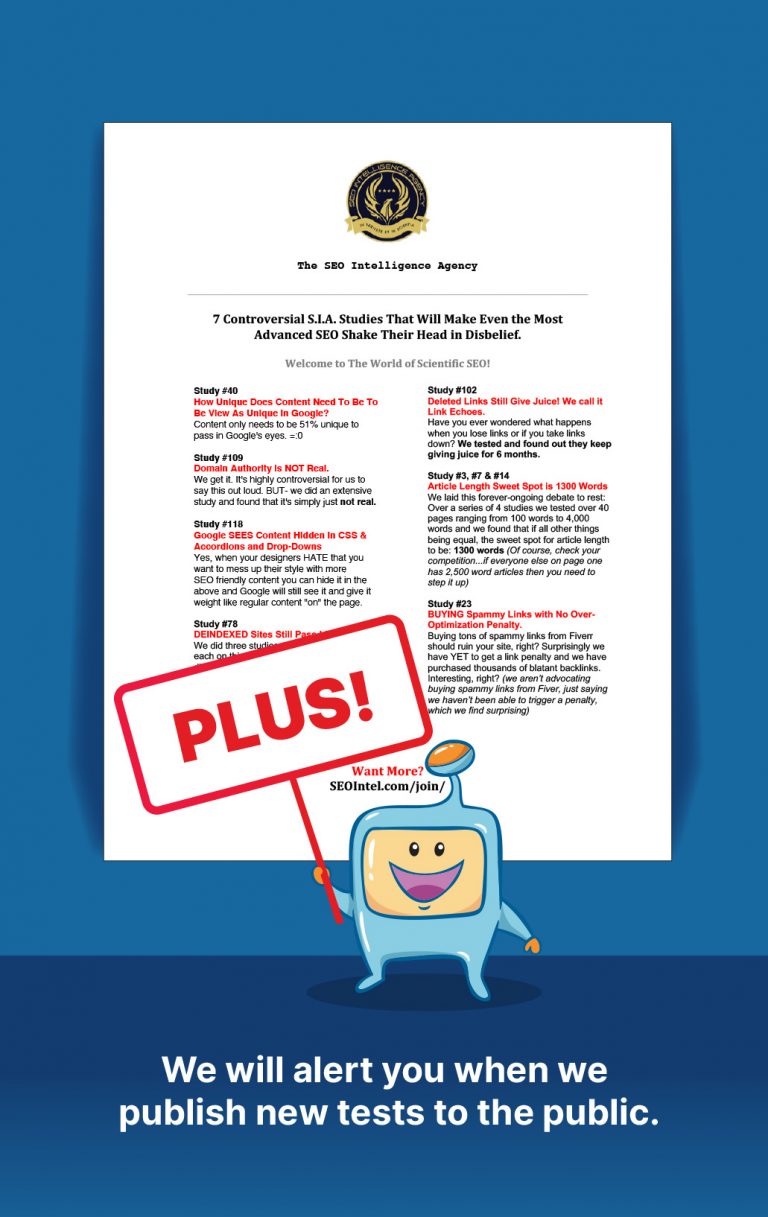
Get Our Most 7 Controversial S.I.A. Studies That Will Make Even the Most Advanced SEO Shake Their Head in Disbelief.
Plus we will alert you when we publish new tests to the public.
Obtenga nuestros 7 estudios S.I.A. más controvertidos que harán que incluso el SEO más avanzado sacuda la cabeza con incredulidad.
Además, le avisaremos cuando publiquemos nuevas pruebas al público.
Obtenez nos 7 études S.I.A. les plus controversées qui feront trembler la tête même les SEO les plus avancés d’incrédulité.
De plus, nous vous alerterons lorsque nous publierons de nouveaux tests au public.
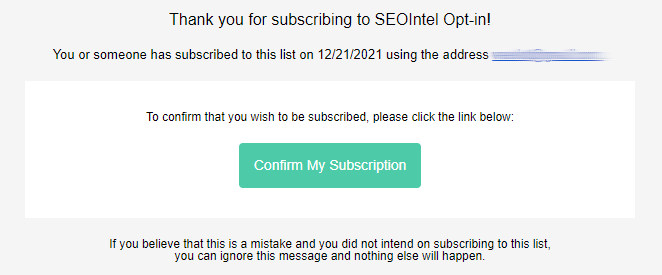
Before you can receive free updates, link building strategies or SEO tips you need to confirm your email right now.
(It’s easy)
Just go to your inbox, open the confirmation email from the SIA, and click the link.
And that’s it!
PS: If you don’t see a confirmation email, please check your spam/junk or promotions folders. Sometimes the confirmation message ends up there by mistake.