Search continues to evolve quickly — but this week’s updates point to something deeper than just new features. From Google expanding AI-powered experiences, to fresh data showing people are searching less, to early discussions around giving publishers more control over AI usage, the signals are starting to connect.
This week’s roundup looks at what’s changing, why it matters, and what these shifts could mean for visibility, traffic, and the future shape of Search.
Google has announced a new wave of updates to its AI-powered Search experience, further expanding both AI Overviews and AI Mode. The changes are designed to make search more conversational, contextual, and continuous — signaling Google’s ongoing shift toward AI-first interactions within Search.
At the center of this update is the deeper integration of Google’s latest Gemini model into AI Overviews. According to Google, this allows Search to deliver more nuanced summaries, stronger reasoning, and better follow-up handling — especially for complex or exploratory queries.
One of the most noticeable changes is how follow-up questions now flow directly into AI Mode. When users view an AI Overview, they can ask additional questions related to the summary without starting a new search. Instead, Google maintains context and either expands the overview or seamlessly transitions the user into AI Mode, where a more interactive, chat-like experience takes over.
This creates a smoother handoff between:
Rather than treating AI Mode as a separate feature, Google is positioning it as a natural continuation of the search journey.
Google says these updates are meant to help users explore topics more naturally — moving away from one-off queries and toward an ongoing dialogue with Search. With Gemini powering the experience, AI Overviews are expected to better understand intent, preserve context across questions, and surface more relevant supporting information from the web.
Importantly, Google continues to emphasize that AI Overviews still link out to source websites, even as the experience becomes more self-contained.
These updates reinforce a broader reality: visibility in Search is no longer just about ranking blue links. As AI Overviews and AI Mode become more central to how users interact with Search, being referenced, cited, or used as a source within AI-generated responses is increasingly important.
For site owners and SEOs, this highlights:
While Google has not removed traditional results, the smoother transition into AI Mode suggests that conversational, AI-driven search will play a larger role in shaping traffic patterns going forward.
The State of Search Q4 2025: Behaviors, Trends, and Clicks Across the US & Europe report — published by State of Search Q4 2025: Behaviors, Trends, and Clicks Across the US & Europe (Datos) — paints a data-driven picture of how search behavior is actually changing in the age of AI.
This clickstream-based analysis, developed with millions of real user interactions (US, EU, UK), offers the latest quantitative insight into search habits, query composition, discovery pathways, and the shift toward AI-influenced engagement.
One of the most striking findings highlighted in industry coverage of the report is that Google desktop searches per U.S. user declined by nearly 20% year-over-year from 2024 to 2025 — a dramatic drop in repeat search frequency in the U.S., while Europe saw only modest decreases.
Analysts and commenters point to AI-driven answers and richer SERP experiences as key drivers — reducing the need for multiple follow-ups or repeated searches because users increasingly get what they need faster through direct answers, instant data, or generative summaries.
The report introduces new metrics that weren’t previously tracked, including:
These trends indicate that users are:
The report also examines behavioral contrasts between regions. While the U.S. shows a sharp drop in searches per user, the EU and UK show only subtle declines — suggesting regional dynamics and adoption curves differ across markets.
Beyond core search behavior, the data explores where search attention goes next:
From the combined insights in the report and subsequent coverage:
The State of Search Q4 2025 report thus reinforces the narrative that the rise of AI responses and richer search features isn’t just a technical shift — it’s changing how often people search, what they search for, how they navigate results, and where opportunities for discovery now exist.
Google has announced that it’s exploring updates to its controls so websites may be able to opt out of having their content used in Search AI features like AI Overviews and AI Mode — a move largely driven by regulatory pressure from the UK’s Competition and Markets Authority (CMA).
In a blog post on January 28, Google said it’s in early discussions with the web ecosystem about adding more granular controls for sites to manage how their content appears in generative AI-powered aspects of Search — without affecting traditional Search visibility. The company noted it already offers a range of controls like robots.txt, featured snippet settings, and Google-Extended for AI training usage, but none currently let sites cleanly opt out of AI Overviews or AI Mode.
Google explained that any new controls would need to be simple, scalable, and not fragment or break the user experience — a critical point as AI becomes a more central part of how people find information in Search. The company said it will continue discussing these ideas with site owners and is engaging with the CMA’s public consultation now underway.
The CMA’s ongoing consultation includes proposals to give websites more authority over how their content is used in Google’s AI Search features, including options to opt out of AI Overviews and to require clearer attribution when content is used. Regulators also want stronger guarantees around fair ranking and easier ways for consumers and businesses to choose alternative search engines.
According to industry reports, the proposed controls could allow sites to:
Right now, existing options like robots.txt, nosnippet, or Google-Extended are either too broad or don’t separate traditional Search from AI use, so publishers want a more targeted opt-out that doesn’t harm their core visibility.
For many sites, this is significant because AI Overviews often reduce the need for users to click through to the original content, which can hurt organic traffic and ad revenue. A clean opt-out could let publishers protect certain content types — like news articles or proprietary analysis — from being synthesized into AI summaries without being removed from Search altogether. However, it also carries a risk: opting out may mean missing out on visibility in AI-driven search contexts that users increasingly prefer.
This development is part of a larger trend where regulators in the UK and beyond are pushing major tech platforms to offer more transparency, choice, and control to publishers and users as AI plays a greater role in search and discovery.
Taken together, this week’s updates reinforce a growing reality: Search is becoming more conversational, more AI-driven, and more selective about how users engage with it. For site owners and SEOs, the challenge isn’t just adapting to new features — it’s understanding how user behavior, visibility pathways, and control mechanisms are changing at the same time. As always, staying grounded in data, clarity, and intent will matter more than reacting to every new interface shift.
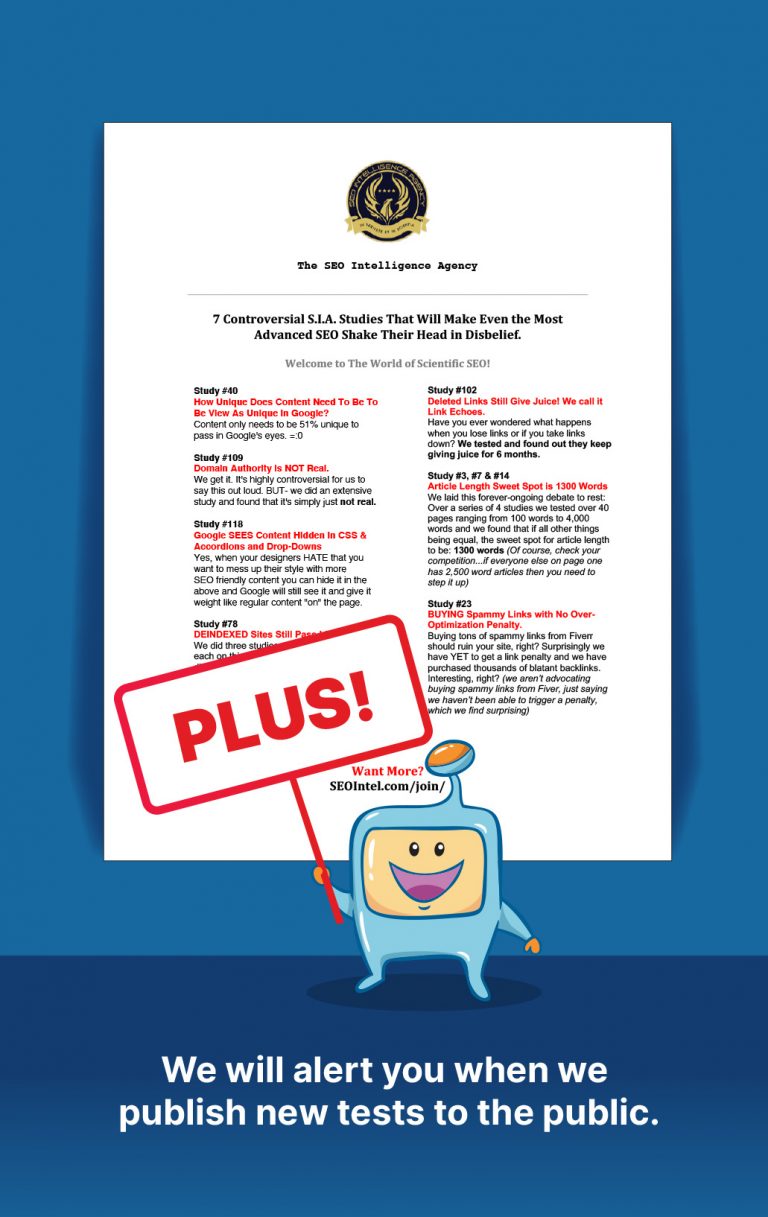
Get Our Most 7 Controversial S.I.A. Studies That Will Make Even the Most Advanced SEO Shake Their Head in Disbelief.
Plus we will alert you when we publish new tests to the public.
Obtenga nuestros 7 estudios S.I.A. más controvertidos que harán que incluso el SEO más avanzado sacuda la cabeza con incredulidad.
Además, le avisaremos cuando publiquemos nuevas pruebas al público.
Obtenez nos 7 études S.I.A. les plus controversées qui feront trembler la tête même les SEO les plus avancés d’incrédulité.
De plus, nous vous alerterons lorsque nous publierons de nouveaux tests au public.
Before you can receive free updates, link building strategies or SEO tips you need to confirm your email right now.
(It’s easy)
Just go to your inbox, open the confirmation email from the SIA, and click the link.
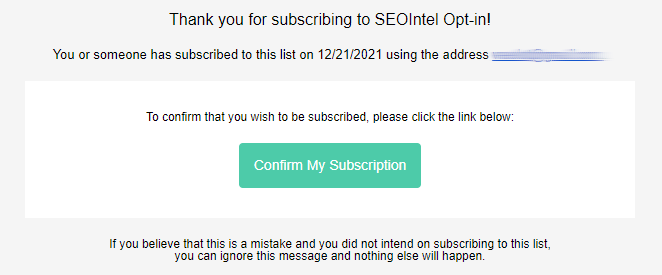
And that’s it!
PS: If you don’t see a confirmation email, please check your spam/junk or promotions folders. Sometimes the confirmation message ends up there by mistake.