
Google is tightening control across multiple fronts this week—and it’s not just about rankings anymore.
From spam reports now triggering manual penalties, to a new crackdown on back button hijacking, and a major shift toward AI-driven browsing in Chrome, the direction is becoming clearer:
These updates may seem separate—but together, they point to a deeper shift in how Google evaluates, surfaces, and controls content.
Here’s what you need to know.
Google has quietly updated its documentation to clarify a major shift: spam reports can now directly lead to manual actions.
While spam reporting has long been part of Google’s ecosystem, this update changes how impactful those reports can be—turning them into a more direct enforcement tool.
From Feedback Tool to Enforcement Signal
Previously, Google maintained that spam reports were mainly used to improve algorithms over time, not to take immediate action on specific sites.
That has now changed.
Google explicitly states that it “may use spam report submissions to take manual action against violations”, confirming that reports can now directly influence penalties.
This moves spam reports from a passive signal to an active enforcement mechanism.
Your Report May Be Sent to the Site Owner
One of the most notable aspects of this update is transparency.
If a manual action is taken based on a report, Google may send the exact text of the submission to the site owner—verbatim.
Important details:
In short: what you write matters—and it’s no longer just for Google.
A Shift From Previous Messaging
This clarification stands out because it appears to contradict earlier guidance.
In the past, Google indicated that spam reports were not typically used for manual actions.
Now, the wording confirms that they can be.
This suggests a broader change in how Google handles spam detection—combining:
What This Means for SEOs
This update has implications on both sides of the equation.
For those submitting spam reports:
For site owners:
Manual Actions Still Require Human Review
Despite the change, one key point remains:
Manual actions are still issued by human reviewers
These penalties occur when Google determines a site is violating spam policies and can result in:
Spam reports now serve as a stronger trigger for that review process, not an automatic penalty.
The Bigger Picture
This update fits into a larger trend:
Google is tightening enforcement, not just detection
From spam updates to new policies (like back button hijacking), Google is increasingly:
Final Thoughts
Google’s clarification on spam reports marks a subtle but important shift.
What was once a background feedback tool is now part of the frontline enforcement process.
For SEOs, the takeaway is clear:
As Google continues refining search quality, accountability is becoming more immediate—and more visible.
Google is continuing its push toward AI-first search with a major update to AI Mode in Chrome, introducing features designed to keep users inside a single, continuous search experience.
Instead of jumping between multiple tabs, users can now explore content, compare sources, and ask follow-up questions—all within the same interface.
A Shift Away from Tab-Based Search
The biggest change is how users interact with search results.
With the new update, clicking on a link in AI Mode no longer opens a new tab. Instead, the page loads side-by-side with the AI interface, allowing users to:
This effectively removes one of the most common friction points in traditional browsing—tab switching.
Google is clearly aiming to turn search into a continuous, interactive workflow, rather than a series of disconnected clicks.
Search Across Tabs, Files, and Inputs
Beyond the interface update, AI Mode is also becoming more powerful in how it gathers and processes information.
New capabilities include:
These updates allow AI Mode to act more like a research assistant, pulling together information from multiple sources in real time.
Toward “Deeper Search” Experiences
Google describes this update as enabling users to “search deeper,” and that framing is important.
AI Mode already uses techniques like query fan-out, where a single query is broken into multiple sub-queries to generate more comprehensive answers.
With Chrome integration, that capability is now paired with:
The result is a hybrid between search engine, chatbot, and browser—all working together.
What This Means for SEO
This update reinforces a direction that has been building for over a year:
Key implications:
At the same time, Google is making links more visible within AI Mode, likely in response to ongoing concerns from publishers about declining traffic.
Still, the overall trend is clear:
AI is becoming the primary interface, with websites supporting that experience.
The Bigger Picture
This Chrome update is part of a broader shift across Google’s ecosystem:
Together, they signal a move toward a future where users:
Final Thoughts
Google’s AI Mode in Chrome isn’t just a feature update—it’s a glimpse into where search is heading.
By reducing tab switching, integrating context, and enabling deeper exploration, Google is redefining how users interact with information.
For SEOs and marketers, the challenge is no longer just visibility in search results.
It’s understanding how to stay visible inside the AI layer itself.
Google has introduced a new spam policy targeting a long-standing but often overlooked tactic: back button hijacking.
Starting June 15, 2026, websites that interfere with normal browser navigation may face manual penalties or algorithmic ranking drops—marking a significant shift in how Google treats this behavior.
What Is Back Button Hijacking?
Back button hijacking happens when a website manipulates a user’s browser history, preventing them from returning to the previous page as expected.
Instead of going back, users may:
Google defines this as a violation of user expectations, noting that the back button should always function predictably.
Now Classified as a “Malicious Practice”
What makes this update important is how Google is categorizing it.
Back button hijacking is now explicitly listed under “malicious practices” in Google’s spam policies—placing it in the same category as deceptive and harmful behaviors.
Google says these practices create a mismatch between what users expect and what actually happens, leading to frustration, loss of trust, and a degraded browsing experience.
Enforcement Starts June 15, 2026
Google is giving site owners a two-month window to fix any issues before enforcement begins.
After that, sites using back button hijacking may face:
Both can significantly reduce visibility and organic traffic.
Why Google Is Acting Now
While this behavior has existed for years, Google says it has seen a rise in usage across the web, prompting the need for explicit enforcement.
Previously, Google did not apply direct ranking penalties for this tactic—but that has now changed.
The focus is clear:
Third-Party Scripts Could Put Sites at Risk
One important detail: not all back button hijacking comes from intentional site behavior.
Google notes that the issue can originate from:
Even if unintentional, site owners are still responsible and must audit their implementations.
What Site Owners Should Do
Google’s guidance is straightforward:
If a site is penalized and the issue is fixed, a reconsideration request can be submitted through Search Console.
What This Means for SEO
This update reinforces a broader trend in Google’s ranking philosophy:
UX manipulation is increasingly treated as spam
Beyond content quality, Google is continuing to crack down on technical behaviors that degrade user experience.
Key implications:
Final Thoughts
Google’s move against back button hijacking closes a long-standing gap in its spam policies.
What was once tolerated is now explicitly penalized—and the message is clear:
If your site tricks users, it won’t rank
As search continues to evolve, user experience is no longer just a best practice—it’s a ranking requirement.
This week’s updates highlight a shift that goes beyond traditional SEO.
Google isn’t just refining rankings—it’s tightening enforcement, redefining user experience, and accelerating its move toward AI-driven interactions.
From spam reports becoming actionable, to stricter penalties for deceptive behavior, to AI reshaping browsing itself, the message is consistent:
What worked before may not work moving forward
As these changes roll out, the advantage will go to those who adapt early—not just to rankings, but to how search itself is evolving.
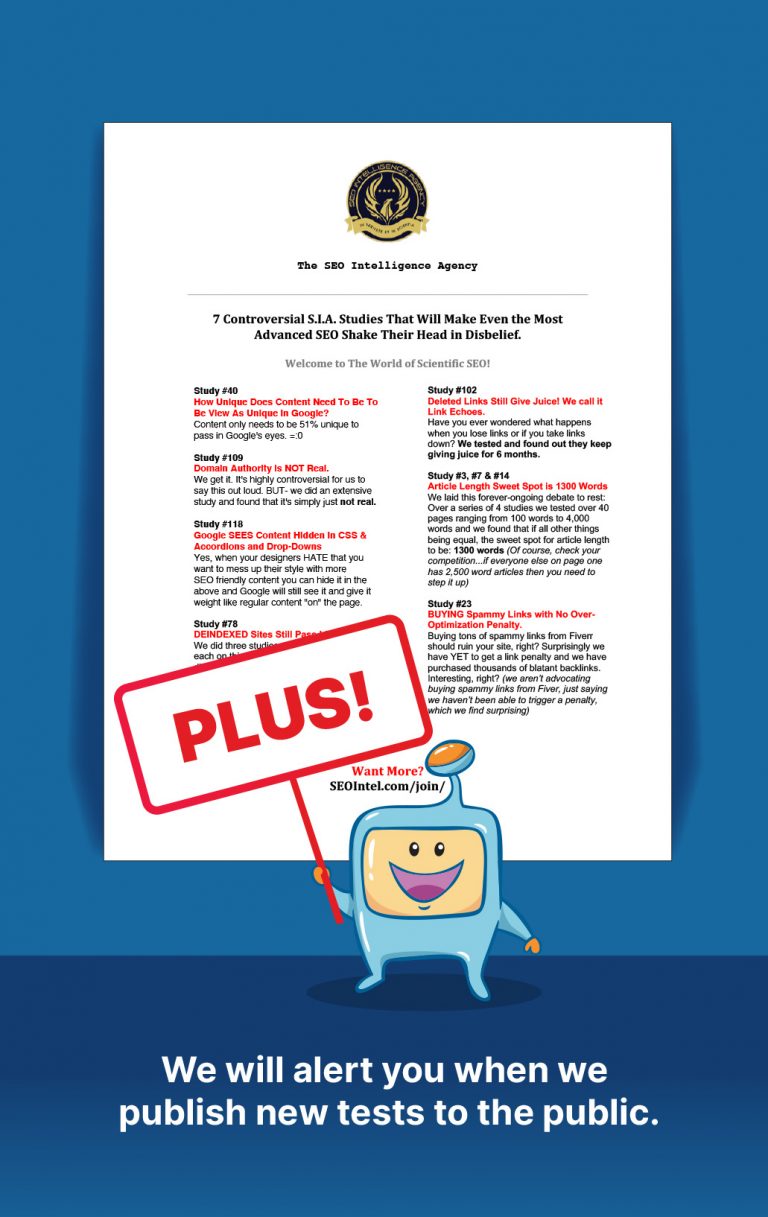
Get Our Most 7 Controversial S.I.A. Studies That Will Make Even the Most Advanced SEO Shake Their Head in Disbelief.
Plus we will alert you when we publish new tests to the public.
Obtenga nuestros 7 estudios S.I.A. más controvertidos que harán que incluso el SEO más avanzado sacuda la cabeza con incredulidad.
Además, le avisaremos cuando publiquemos nuevas pruebas al público.
Obtenez nos 7 études S.I.A. les plus controversées qui feront trembler la tête même les SEO les plus avancés d’incrédulité.
De plus, nous vous alerterons lorsque nous publierons de nouveaux tests au public.
Before you can receive free updates, link building strategies or SEO tips you need to confirm your email right now.
(It’s easy)
Just go to your inbox, open the confirmation email from the SIA, and click the link.
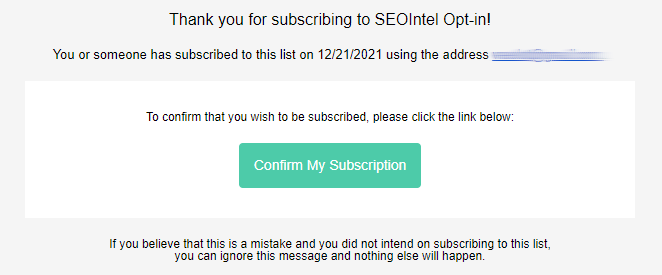
And that’s it!
PS: If you don’t see a confirmation email, please check your spam/junk or promotions folders. Sometimes the confirmation message ends up there by mistake.