This week’s Search news roundup highlights a major shift in how Google wants users to interact with the web in an AI-first environment. Instead of replacing websites entirely, Google is increasingly emphasizing source visibility, clickable references, and deeper web discovery inside AI-powered Search experiences. That direction became clearer through updates around AI-generated answers, evolving Search interfaces, and new conversations happening directly inside Google’s engineering teams.
At the same time, Google also addressed another growing trend: “vibe coding” and AI-assisted software development. While AI tools are accelerating workflows for developers and creators alike, Google’s own engineers made it clear that human oversight, expertise, and critical thinking still matter — both in software development and in content creation. Combined with new insights into how AI is changing Search behavior itself, this week’s updates reinforce a bigger theme emerging across the industry: AI may reshape workflows and discovery, but expertise, usefulness, and real value are becoming even more important.
Check out this week’s notable SEO news below:
Google is making a noticeable shift in how AI-powered search connects users to websites — and the company is now placing far more emphasis on links, sources, publisher visibility, and deeper web exploration inside AI search experiences.
In a new announcement, Google introduced several updates to AI Mode and AI Overviews focused specifically on helping users discover and navigate more content from across the web.
The update comes amid growing criticism from publishers and SEOs who have argued that AI-generated search answers reduce clicks by summarizing content directly inside Google Search.
Now, Google appears to be responding by making sources and links significantly more prominent throughout the AI search experience.
According to Google, AI-generated answers are not meant to replace websites entirely. Instead, the company says AI search should help users “explore the web” more effectively and discover relevant sources faster.
To support that goal, Google is expanding:
The broader theme of the update is clear: Google wants AI search to feel less like a closed-answer system and more like a gateway into the broader web ecosystem.
One of the most important changes is the expansion of inline linking inside AI-generated answers.
Previously, AI Overviews often placed citations in smaller side panels or grouped sources together separately from the generated response itself. Publishers and SEOs criticized this approach because links were less noticeable and users could consume answers without clicking through.
Google is now embedding more links directly into the AI-generated text itself.
This means:
Google says these inline citations are intended to help users “easily click out and learn more.”
For publishers, this could become increasingly important as AI-generated summaries continue expanding across search.
Google is also introducing enhanced source preview cards.
On desktop, users can hover over certain links and citations to preview additional details about the source before clicking.
These preview cards may display:
The goal appears to be improving user confidence and encouraging exploration beyond the AI-generated answer itself.
For SEO and content publishers, this creates another visibility layer inside AI search experiences — particularly for recognizable brands and authoritative sites.
Another major addition is a new “Where to go next” section appearing after AI-generated responses.
Instead of ending the interaction with a summarized answer, Google now recommends:
This creates a more guided browsing experience and gives publishers additional opportunities to appear as recommended next-step resources.
The feature also reflects a broader shift in AI search behavior:
Google increasingly wants AI to act as an organizer and navigator of web information — not simply an endpoint.
Google also confirmed that AI search experiences will surface more:
The company says these additions are designed to help users discover authentic voices and real-world insights beyond generalized summaries.
This is particularly important given the growing emphasis Google has placed on:
throughout recent search and spam-related discussions.
For SEOs, the update reinforces the idea that generic “commodity content” may continue losing visibility while unique perspectives gain more prominence in AI-driven search results.
Google also announced support for surfacing content from publishers users already subscribe to.
If a user has an active subscription to a news publication or premium content provider, Google may prioritize or better highlight that source inside AI search experiences.
According to Google, early tests showed users were more likely to engage with sources they already recognized or subscribed to.
This could become increasingly valuable for:
that rely on recurring audiences and trust-based engagement.
Google’s latest AI search updates suggest the company is actively trying to balance two competing goals:
The increased emphasis on:
shows Google recognizes that users still need pathways into the web beyond summarized AI responses.
For publishers and SEOs, this may signal that visibility inside AI search will increasingly depend on:
rather than purely informational pages built to answer simple queries.
Google’s Search Relations team recently explored one of the fastest-growing trends in web development: “vibe coding” — the process of building websites, apps, and tools using AI prompts instead of manually writing every line of code.
In the latest episode of the Search Off the Record podcast, Martin Splitt and John Mueller discussed their real-world experiences using AI-assisted coding tools, where these systems already shine, and where developers and SEOs still need to stay heavily involved.
The conversation offered an interesting look at how Google itself views AI-generated websites and development workflows. Rather than positioning AI coding as a replacement for technical knowledge, the discussion repeatedly emphasized that AI is currently best used as an accelerator — especially for repetitive setup work, prototyping, automation, and testing.
Mueller described vibe coding as interacting with AI systems through natural language instead of traditional programming syntax. Rather than manually writing JavaScript or configuring frameworks step-by-step, users describe what they want, and the AI generates the structure, files, and code.
For example, someone might ask AI to:
The AI then attempts to handle the technical implementation automatically.
Splitt explained that when he experimented with AI Studio, the system was able to quickly generate a functional Next.js-based web application that looked surprisingly clean and readable.
However, the conversation also showed that AI coding systems can become stubborn or inconsistent when users try to override decisions the AI has already made. Splitt described getting stuck in a loop where the AI repeatedly ignored his instructions to use a specific library and instead continued generating its own custom implementation.
That experience highlighted one of the recurring themes of the episode:
AI can generate working code quickly, but developers still need enough technical understanding to guide the process effectively.
One of the more important insights from the discussion was that AI coding tools automatically make architectural decisions unless users explicitly define their preferences.
Mueller explained that if someone simply requests “a website,” the AI might decide to use:
depending on what the model assumes is appropriate.
The issue is that inexperienced users may not fully understand the consequences of those decisions.
Framework choices directly affect:
Mueller repeatedly emphasized that understanding at least the fundamentals of web architecture still matters, even when AI handles most of the coding work.
One of the strongest SEO-related points in the episode came when Mueller discussed the common idea of “adding SEO later.”
He explained that telling AI to “add SEO” at the end of development is similar to giving a vague instruction to a developer without defining actual requirements.
Instead, SEO considerations need to be built into the project from the start.
Mueller specifically mentioned the importance of guiding AI systems to properly handle:
The conversation reinforced an increasingly important idea for SEOs:
AI-generated websites are not automatically SEO-friendly simply because AI created them.
Technical SEO knowledge remains critical for ensuring that AI-generated projects are structured correctly for search engines.
Although the podcast highlighted several limitations, both Splitt and Mueller were clearly enthusiastic about how much repetitive work AI can already eliminate.
Mueller explained how he uses AI tools for:
Splitt also noted that AI becomes especially useful for projects developers simply do not want to spend hours manually building.
This appears to be one of the biggest practical use cases emerging from AI-assisted development:
reducing the amount of time spent on repetitive infrastructure and setup work.
For agencies, developers, and SEO professionals, that could significantly speed up:
Another major topic in the episode was AI-assisted browser automation.
Mueller described how modern AI systems can now remotely control browsers like Chromium using natural language instructions instead of requiring rigid manual scripting.
Instead of coding every click and interaction manually, users can instruct AI to:
using conversational prompts.
This dramatically lowers the barrier for browser automation and testing, particularly for users who are not experienced developers.
Mueller even described using AI to automate interactions with a complicated rental portal website by simply instructing the system what actions to perform.
While AI can generate functional code quickly, both speakers raised concerns about maintainability and long-term code quality.
Splitt noted that AI systems often continue layering fixes on top of existing code instead of properly refactoring the project structure.
Mueller added that AI tools frequently:
This creates the risk of rapidly accumulating technical debt, particularly for larger projects that need to scale or remain maintainable over time.
The discussion suggested that while AI can dramatically accelerate development speed, experienced oversight is still necessary to ensure long-term code quality.
The podcast briefly shifted into AI-generated content as well.
Splitt questioned the value of AI-written website content, arguing that if users can simply ask AI directly, there may be little reason to visit low-value AI-generated pages.
Later in the discussion, Mueller mentioned that using AI systems to automatically generate articles from sources like Google Trends “feels like spam.”
Those comments align closely with Google’s broader messaging around:
which have become recurring themes across recent Search Central updates and discussions.
Watch the full episode below:
Artificial intelligence is no longer just an experimental layer inside Google Search. According to Google engineers, it is actively reshaping how Search works, how users search, and how site owners should think about visibility moving forward.
In a recent episode of the Search Off the Record podcast, Martin Splitt spoke with Nikola Todorovic about the evolution of AI inside Google Search, the rise of AI Overviews and AI Mode, and the growing shift toward more conversational and complex queries.
The discussion offered one of the clearest explanations yet of how Google internally approaches AI-powered Search experiences and how these systems are being integrated into the existing Search infrastructure.
Rather than presenting AI as a complete replacement for traditional Search, the conversation repeatedly framed it as an evolution of systems Google has already been building for years.
One of the biggest points Todorovic emphasized early in the episode is that AI has been part of Google Search long before the recent wave of generative AI products appeared publicly.
He explained that systems like:
have already been improving Search quality behind the scenes for years.
According to Todorovic, many of the technologies powering today’s AI experiences were originally introduced incrementally through isolated ranking and quality systems before becoming more visible in products like AI Overviews and AI Mode.
This is important context because it reinforces that Google’s current AI push is not a sudden pivot. Instead, Google sees generative AI as the next major step in a much longer evolution of Search intelligence.
One of the most interesting insights from the podcast was Google’s confirmation that user behavior is already changing because of AI-powered Search features.
Todorovic explained that Google is seeing:
as users realize Search can now handle more nuanced requests.
Instead of entering short keyword phrases like:
“vegetarian restaurant Zurich”
users are increasingly typing full contextual requests such as:
The discussion suggests Google believes Search is moving away from “keyword translation” and toward understanding actual human intent more naturally.
This aligns closely with trends SEOs have already been noticing:
queries are becoming less mechanical and more conversational as users grow more comfortable interacting with AI systems.
While AI features feel radically different from older Search experiences, Todorovic made it clear that AI Overviews still rely heavily on Google’s existing Search infrastructure.
He explained that AI Overviews work by combining:
into a unified AI-generated response.
One especially important concept discussed was “fan out queries.”
According to Todorovic, Google may take a complex search query and automatically break it into multiple related searches running in parallel. Those results are then combined into a summarized AI response.
This allows Google to answer broader or more ambiguous questions without requiring users to manually refine their searches multiple times.
The explanation helps clarify why AI Overviews often feel capable of handling broader context compared to older search interfaces.
The podcast also explored why Google introduced AI Mode as a more dedicated conversational Search experience.
Todorovic explained that users increasingly expect:
because they are already using systems like Gemini and other AI assistants.
AI Mode is designed to support that behavior while still leveraging Google’s Search systems underneath.
Importantly, Todorovic confirmed that AI Mode still uses:
rather than functioning as a completely isolated chatbot.
That distinction matters for SEOs because it suggests Search visibility still plays a role in AI-powered responses.
Another standout part of the episode was Todorovic’s explanation of how Google evaluates Search changes internally.
He described Google Search as a system with:
According to Todorovic, engineers create experimental versions of Search and compare them directly against production systems using real search queries. Human quality raters then evaluate whether the experimental results are genuinely better.
Even if an experiment improves overall metrics, Google may still reject or revise it if specific quality issues appear.
The discussion reinforces how heavily Google relies on:
before shipping major Search changes.
One of the biggest concerns discussed was the future of the broader web ecosystem as AI becomes more integrated into Search.
Todorovic acknowledged that many publishers and SEOs are worried about how AI Overviews and AI Mode may affect traffic and visibility.
Rather than offering tactical SEO advice, he repeatedly emphasized a broader principle:
site owners must continue providing genuine value to users.
According to Todorovic, websites that:
will continue to matter, even as Search evolves.
He also warned against using AI purely to mass-produce low-value content.
Instead, he suggested AI should be used to:
rather than simply generating large volumes of content with minimal originality.
One of the more memorable moments in the episode came from Martin Splitt himself.
He described how many websites gradually shifted from offering genuine expertise to simply rewriting product specifications into slightly more conversational content.
Using an example involving computer hardware reviews, Splitt explained that users do not necessarily need articles that simply repeat technical specs already printed on a product box.
What users actually value are:
The point strongly connects to Google’s recent messaging around:
and reinforces the idea that human insight remains increasingly important in an AI-driven web.
Watch the full episode below –
The direction of Search continues to evolve quickly, but one message keeps surfacing across Google’s recent updates: AI is not eliminating the web — it’s changing how users interact with it. Whether through expanded source links in AI-powered Search, more conversational search behavior, or discussions around AI-assisted development, Google appears focused on balancing automation with human expertise and trustworthy information.
For SEOs, publishers, and site owners, the takeaway remains consistent. Visibility opportunities still exist, but generic content and low-value production are becoming easier to overlook. The sites, creators, and brands that continue providing real expertise, unique perspectives, and useful experiences are likely to remain the ones that stand out as Search becomes more AI-driven.
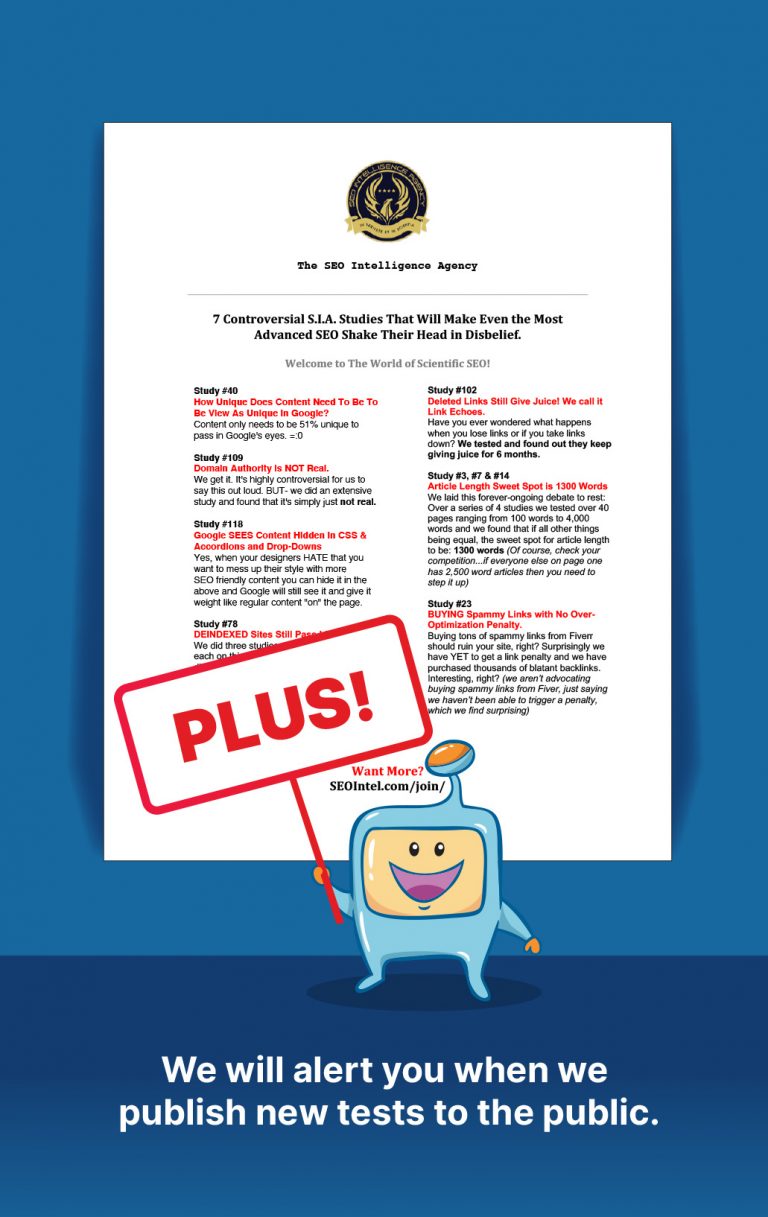
Get Our Most 7 Controversial S.I.A. Studies That Will Make Even the Most Advanced SEO Shake Their Head in Disbelief.
Plus we will alert you when we publish new tests to the public.
Obtenga nuestros 7 estudios S.I.A. más controvertidos que harán que incluso el SEO más avanzado sacuda la cabeza con incredulidad.
Además, le avisaremos cuando publiquemos nuevas pruebas al público.
Obtenez nos 7 études S.I.A. les plus controversées qui feront trembler la tête même les SEO les plus avancés d’incrédulité.
De plus, nous vous alerterons lorsque nous publierons de nouveaux tests au public.
Before you can receive free updates, link building strategies or SEO tips you need to confirm your email right now.
(It’s easy)
Just go to your inbox, open the confirmation email from the SIA, and click the link.

And that’s it!
PS: If you don’t see a confirmation email, please check your spam/junk or promotions folders. Sometimes the confirmation message ends up there by mistake.