This week’s SEO news points to a bigger shift happening across Google Search: Google is not just adding more AI into the search experience, it is also clarifying how existing Search rules, features, and reporting systems apply in this new environment.
Google updated its spam policies to make it clear that manipulative tactics are not only a problem for traditional rankings, but also for generative AI responses in Search, including AI Overviews and AI Mode. At the same time, Google is officially deprecating FAQ rich results, removing a long-running structured data feature from Search visibility and reporting. And on the analytics side, GA4 now has a dedicated AI Assistant channel, giving marketers a clearer way to measure traffic coming from tools like ChatGPT, Gemini, and Claude.
Together, these updates show how SEO is becoming more complex, but also more measurable. Search visibility is no longer just about blue links, rich results, or organic rankings. It now includes how content appears in AI-generated responses, how Google enforces quality across those experiences, and how marketers track traffic from AI assistants once users click through.
Google has updated its search documentation to clarify that its spam policies do not only apply to traditional organic search results. They also apply to generative AI responses in Google Search, including AI Overviews, AI Mode, and other AI-generated Search experiences. The update is small in wording, but important in meaning: Google is making it clear that attempts to manipulate AI-generated answers are also considered part of Search spam.
The clarification comes at a time when SEOs, publishers, and marketers are paying closer attention to how content appears not only in blue links, but also in AI-generated summaries, citations, and answers. As Google continues integrating generative AI deeper into Search, the line between “ranking in Search” and “being surfaced in an AI response” is becoming more connected. This update reinforces that Google’s spam systems and policies are meant to protect the entire Search experience, not just the traditional search results page.
What Google Changed
Google updated the opening language of its spam policies documentation to clarify that spam includes techniques used to deceive users or manipulate Google’s Search systems into featuring content prominently. The updated wording specifically mentions attempts to manipulate generative AI responses in Google Search.
Search Engine Land reported that Google made the change to clarify that its spam policies apply across all of Google Search, including generative AI responses. SERoundtable also noted that the change applies to AI Overviews, AI Mode, and other AI-generated Search features.
This means that Google is not treating AI responses as a separate space where different rules apply. If a tactic is designed to deceive users, manipulate Search systems, or artificially influence how content is featured, it may fall under Google’s spam policies whether the content appears in traditional rankings or in an AI-generated answer.
Why This Matters for AI Search Optimization
As AI search grows, a new category of optimization has emerged around getting brands, websites, products, and content mentioned in AI-generated answers. Some of this is legitimate: improving content quality, strengthening authority, making information easier to understand, and ensuring pages are accessible to search engines. But some tactics are more manipulative, such as trying to influence AI systems through mass-produced content, misleading signals, or content designed mainly to be picked up by AI summaries.
Google’s clarification appears to be aimed at that second category. The message is that optimizing for AI visibility does not create a loophole around Search spam policies. If the goal is to manipulate AI responses rather than provide useful, reliable, people-first content, Google may treat that as spam.
This is consistent with Google’s earlier guidance on AI-generated content. Google has said that using automation, including AI, to generate content primarily for manipulating search rankings violates its spam policies. At the same time, Google has also said that AI can be useful when used to support original, helpful, and valuable content creation. The issue is not simply whether AI was used, but why and how it was used.
AI Responses Are Becoming Part of the Search Spam Conversation
This update is also important because AI responses are now a major part of the Search experience. Google has expanded AI Overviews and continues to test and roll out AI Mode and other generative Search features. As these features become more visible, it makes sense that attempts to manipulate them would become a larger concern.
Recent research has also shown that AI Overviews and generative search experiences can select and present sources differently from traditional organic rankings. One 2026 study found that AI Overview citations do not always mirror first-page organic results, suggesting that visibility in AI responses may operate differently from traditional ranking visibility. Another study found that generative search systems can vary in source selection and citation behavior, raising broader questions about visibility, trust, and information exposure.
That context makes Google’s clarification more significant. If AI responses are becoming their own visibility surface, then Google also needs to define what manipulation looks like in that environment. The update suggests that Google is preparing for more attempts to influence AI-generated answers and wants to make clear that these tactics are still governed by Search spam rules.
What Could Count as Manipulating AI Responses?
Google did not provide a long list of AI-response-specific spam examples in this update. However, based on its existing spam policies and AI content guidance, risky tactics may include scaled content created mainly to influence Search visibility, misleading content designed to deceive users or systems, abuse of site reputation, expired domain abuse, and other manipulative practices already covered by Google’s spam documentation.
For AI Search specifically, this could also include attempts to create content that exists mainly to feed or influence generative answers without offering real value to users. For example, publishing large volumes of generic pages, creating misleading entity associations, or producing content that appears authoritative but lacks real expertise could become more problematic as Google evaluates how AI-generated Search responses are influenced.
This connects with Google’s broader message around non-commodity content. In its guidance on succeeding in AI Search, Google has encouraged site owners to focus on unique, helpful, satisfying content rather than generic content created only to match what people think Google wants.
What SEOs Should Take From This
The main takeaway is that AI visibility should not be treated as a separate game from Search quality. Google is signaling that the same principles still apply: content should be useful, reliable, original, and created for people rather than primarily for manipulating systems.
For SEOs, this means AI Search optimization should focus on strengthening the substance of a site rather than chasing shortcuts. Clear expertise, accurate information, strong sourcing, unique insights, and helpful page experiences are likely to matter more than trying to engineer content specifically for AI extraction.
It also means that brands should be careful with “GEO” or AI search optimization tactics that promise visibility through manipulative methods. As AI responses become more important, there will likely be more attempts to game them. Google’s documentation update makes clear that those attempts can fall under spam policies when they are designed to deceive or manipulate.
The Bigger Picture
This clarification is another sign that Google is adapting its Search policies for an AI-first Search environment. Traditional rankings, AI Overviews, AI Mode, snippets, citations, and other Search features are increasingly part of one broader ecosystem. Google’s spam policies are now being framed to cover that full ecosystem.
For publishers and SEOs, the direction is clear. The future of Search visibility is not just about ranking pages. It is also about whether content is trustworthy and useful enough to be surfaced, cited, summarized, or referenced across Google’s evolving Search experiences.
As Google brings generative AI deeper into Search, attempts to manipulate those AI responses are likely to receive more scrutiny. The safest long-term approach remains the same: create content that helps users, demonstrates real value, and can stand on its own whether it appears as a traditional search result or as a source within an AI-generated answer.
Key Takeaways
Google has officially ended support for FAQ rich results in Search, marking the final stage of a feature that had already been heavily reduced over the past few years. As of May 7, 2026, FAQ rich results are no longer appearing in Google Search. Google also confirmed that related Search Console reporting and testing support will be removed in phases over the next few months.
The update may not create a major visible change for many sites because Google had already limited FAQ rich results in 2023 to well-known, authoritative government and health websites. However, the latest change makes the deprecation official and complete. FAQ rich results are no longer supported as a Search feature, and the tools connected to that feature are also being phased out.
What Changed
Google added a deprecation notice to its FAQ structured data documentation stating that FAQ rich results are no longer appearing in Google Search as of May 7, 2026. The company also said it will drop the FAQ search appearance, the FAQ rich result report, and support for FAQ in the Rich Results Test in June 2026. To give developers time to adjust API calls, support for the FAQ rich result in the Search Console API will be removed in August 2026.
This means site owners should no longer expect FAQPage structured data to generate expandable FAQ-style results in Google Search. Even if the markup is valid, it will not produce the former FAQ rich result treatment in the SERPs.
The removal also affects reporting. Once the Search Console changes roll out, SEOs will lose the FAQ search appearance filter and the dedicated FAQ rich result report. The Rich Results Test will also stop supporting FAQ rich result eligibility checks, and API-based workflows that pull FAQ rich result data will need to be updated before August 2026.
A Feature That Had Already Been Reduced
FAQ rich results were once widely used by publishers, ecommerce sites, service businesses, and SEO teams to expand their search listings with question-and-answer dropdowns. For a time, FAQ schema became a common way to gain more SERP real estate, increase visibility, and make listings more prominent.
That changed in August 2023, when Google announced that FAQ rich results would only be shown for well-known, authoritative government and health websites. At the same time, Google also reduced support for HowTo rich results as part of its effort to simplify Search results. By September 2023, HowTo rich results were no longer shown on desktop either, effectively making that result type deprecated as well.
Because of those earlier changes, many commercial and publisher sites had already stopped seeing FAQ rich results long before this latest update. The May 2026 change simply closes the remaining gap by removing the feature entirely from Google Search and winding down its associated Search Console tools.
Should You Remove FAQ Schema?
In most cases, there is no urgent need to remove FAQPage structured data simply because FAQ rich results are gone. The important distinction is that Google has deprecated the FAQ rich result feature, not the Schema.org FAQPage type itself. Structured data that no longer produces a rich result generally does not need to be removed unless it creates maintenance issues, errors, or confusion in your workflow.
However, SEOs should update expectations around what FAQ schema can do. It should no longer be treated as a way to earn enhanced FAQ dropdowns in Google Search. If teams are still adding FAQ markup mainly for the purpose of getting rich results, that strategy is now outdated.
That does not mean FAQ content itself is useless. Clear question-and-answer content can still help users, improve page structure, support topical relevance, and answer long-tail search needs. The difference is that the benefit now comes from the usefulness of the content itself, not from a special rich result display.
What This Means for SEO Reporting
The biggest operational impact may be on reporting and technical SEO workflows. If you monitor FAQ rich results in Search Console, those reports will be removed in June 2026. If you use the Search Console API to pull FAQ rich result data into dashboards, client reports, Looker Studio reports, or internal tracking systems, those API calls should be reviewed before support is removed in August 2026.
SEO teams should also prepare clients or stakeholders for changes in historical reporting. Once FAQ-related reports disappear, teams may no longer be able to rely on those Search Console views for ongoing structured data monitoring. If FAQ rich result data is still needed for historical reference, it may be worth exporting relevant data before the reporting tools are removed.
For most sites, though, this change is unlikely to cause a sudden traffic drop because the visual FAQ result had already been unavailable to most non-government and non-health sites since 2023. Any impact is more likely to appear in reporting cleanup than in major ranking or click changes.
Why Google May Be Removing More Rich Result Features
Google did not provide a detailed explanation for the FAQ rich result removal, but the move fits a broader pattern. Over the past few years, Google has been simplifying some structured data-driven Search features while expanding AI-powered Search experiences, snippets, and other dynamic result formats. Search Engine Journal noted that Google did not publish a separate blog post explaining the reason for the removal.
This shift suggests that Google may be less interested in maintaining older rich result formats that added visual SERP enhancements without always improving the search experience. FAQ rich results, in particular, became heavily used by SEOs because they could expand a listing and occupy more space. Once a feature becomes widely used as a visibility tactic, Google may reassess whether it still adds enough value for users.
At the same time, Google is moving further into AI-generated answers, AI Overviews, AI Mode, and more flexible Search interfaces. Recent research into generative search found that AI Overviews can retrieve and present sources differently from traditional organic results, which reinforces how visibility is shifting beyond classic blue links and older rich result formats.
What SEOs Should Do Next
The first step is to update your structured data strategy. FAQ schema should no longer be sold, reported, or prioritized as a way to earn FAQ rich results in Google Search. If your site already has valid FAQ markup and it is easy to maintain, you can usually leave it in place. But if it adds unnecessary complexity, creates validation noise, or requires ongoing development resources, it may be worth reconsidering.
Second, review reporting systems. Any dashboard, automated report, or API integration that depends on FAQ rich result data should be updated before Google removes API support in August 2026. This is especially important for agencies and enterprise SEO teams that have structured data reports built into recurring client deliverables.
Third, focus less on rich result shortcuts and more on content usefulness. FAQ sections can still be valuable when they answer real customer questions, clarify buying decisions, explain services, or address objections. But they should be written for users first, not added as thin Q&A blocks purely for markup opportunities.
Finally, watch how FAQ-style content performs in AI search experiences. While FAQ rich results are gone, clear answers, well-structured information, and helpful explanatory content may still matter as Google and other AI systems summarize, cite, and surface information in new ways. The opportunity is shifting from “How do we get the FAQ dropdown?” to “How do we become a useful source worth referencing?”
The Bigger Picture
The end of FAQ rich results is another reminder that Google’s Search features are not permanent. Structured data can help Google understand content, but not every supported markup type will continue producing a visible enhancement in Search.
For SEOs, this change should be viewed less as a sudden loss and more as part of a longer transition. Google had already reduced FAQ rich results in 2023, and now the feature is being fully retired. The future of visibility is moving away from simply adding markup for SERP real estate and toward creating content that is genuinely useful, clear, trustworthy, and worth surfacing across traditional and AI-powered Search experiences.
FAQ content can still have a place in SEO. But FAQ rich results, as a Google Search feature, are now officially over.
Key Takeaways
Google Analytics has added a new way to measure traffic from AI assistants, giving site owners and marketers a clearer view of how users are discovering their websites through tools such as ChatGPT, Gemini, and Claude. The update was added to Google’s Analytics release notes on May 13, 2026, and introduces a dedicated “AI Assistant” channel in GA4’s Default Channel Group reports.
This is an important update because AI assistants are becoming a growing discovery layer. Users are no longer only finding websites through traditional Google Search results, social platforms, or referral links. They may now ask an AI assistant for recommendations, explanations, comparisons, sources, or next steps — and then click through to a website from that AI-generated response. Until now, that traffic could be harder to isolate clearly in standard GA4 reports.
What Google Added to GA4
According to Google’s Analytics update, GA4 now provides a dedicated way to measure and analyze traffic originating from popular AI assistants. Google specifically mentioned chatbots like ChatGPT, Gemini, and Claude as examples of sources that can now be identified through the new AI Assistant channel.
The update introduces changes to three traffic source dimensions. When the referrer matches a recognized AI assistant, GA4 can automatically assign the medium value “ai-assistant.” These visits are then categorized under the “AI Assistant” channel in Default Channel Group reports. Google also said traffic from these sources will use the campaign name “(ai-assistant).”
In practical terms, this means marketers can now more easily see AI assistant traffic inside standard GA4 reporting, rather than relying only on custom channel groups, manual filters, or regex-based workarounds. Search Engine Land noted that the update should help site owners compare AI assistant traffic against other channels and understand whether users from tools like ChatGPT, Claude, or Gemini behave and convert differently.
Why This Update Matters
This update matters because AI-driven discovery is becoming more measurable. For the past year, many SEOs and analytics teams have been trying to understand how much traffic comes from AI tools, but the data was often fragmented. Some AI assistant visits could appear as referral traffic, some as direct traffic, and some could be difficult to classify depending on the source, referrer behavior, and analytics setup.
With the new AI Assistant channel, GA4 is acknowledging that traffic from AI tools is distinct enough to deserve its own reporting category. That is a meaningful shift. It suggests AI assistants are no longer just experimental tools users occasionally visit. They are becoming part of the discovery journey, and marketers need a way to measure their impact.
For SEO teams, this gives another layer of visibility beyond rankings and organic clicks. A page may not only bring in traffic from traditional search results. It may also be surfaced by an AI assistant, cited in an answer, or recommended as a source. If the user clicks through, that visit can now be easier to identify in GA4.
What You Can Track With the New AI Assistant Channel
Google said the feature can help site owners monitor how generative AI impacts their business by tracking user clicks, trending AI sources, and how this traffic compares to traditional channels like organic search. This gives marketers a more direct way to evaluate whether AI assistants are becoming a meaningful source of traffic.
Some of the most useful questions to track include:
These questions matter because AI assistant traffic may behave differently from traditional organic traffic. A user who clicks from an AI assistant may already be more informed, because the assistant may have summarized information, compared options, or helped narrow the user’s intent before the click. That could affect engagement, conversion rates, and the role of content in the customer journey.
AI Traffic Was Already Being Tracked Manually
Before this GA4 update, many analytics practitioners were already building custom ways to identify AI referral traffic. Analytics Mania, for example, published guidance earlier this year on how to track AI traffic in GA4 because standard reports often categorized visits from AI platforms as general referral traffic.
That manual approach usually required creating custom channel groups or filtering traffic from known AI-related referrers. While useful, it also meant that AI traffic tracking depended heavily on how each analytics team configured GA4. Different teams could classify the same type of traffic differently, making reporting less consistent.
Google’s new AI Assistant channel simplifies that process. Instead of forcing every team to create its own workaround, GA4 now has a native category for recognized AI assistant traffic. This should make AI traffic easier to monitor for businesses that do not have advanced analytics setups.
Why This Is Important for SEO Strategy
For SEOs, this update is another sign that search visibility is expanding beyond traditional rankings. The old model focused heavily on where a page ranked in Google’s search results and how many clicks it received from organic search. That still matters, but it is no longer the full picture.
Users may now discover content through AI Overviews, AI Mode, ChatGPT, Gemini, Claude, Perplexity, and other AI-driven tools. Some of these experiences may summarize answers without a click. Others may cite sources, recommend brands, or send users to websites. GA4’s new AI Assistant channel helps measure at least part of that journey: the clicks that come from recognized AI assistants.
This also supports the growing idea that SEO is becoming less about rankings alone and more about broader recognition. Search Engine Land recently discussed how visibility in 2026 increasingly depends on authority, citations, entity clarity, and brand presence across the broader web, not just SERP position.
That shift makes AI assistant traffic especially important. If AI tools are recommending or citing certain brands and pages, marketers need to know whether those mentions are translating into visits and conversions.
What This Means for Content Teams
Content teams should pay close attention to which pages receive AI assistant traffic. If certain articles, guides, product pages, or service pages are being discovered through AI tools, that can provide useful clues about what type of content AI assistants are surfacing.
For example, AI assistants may send users to pages that provide clear explanations, strong definitions, useful comparisons, original data, expert commentary, or detailed answers to specific questions. If those pages perform well, content teams can use that insight to improve future content planning.
This does not mean creating content only for AI assistants. It means creating content that is useful enough to be referenced, recommended, or clicked from different discovery surfaces. Clear structure, accurate information, strong topical coverage, and unique value may become even more important as AI systems help users navigate the web.
What This Means for Reporting
The new AI Assistant channel should also change how marketers think about reporting. Organic search traffic is no longer the only search-adjacent discovery metric worth watching. AI assistant traffic should now be monitored alongside organic search, direct, referral, paid search, social, and email.
For agencies and in-house teams, this may require updating recurring reports. If AI assistant traffic is visible in GA4, it may be worth adding a dedicated section that tracks:
This can help stakeholders understand whether AI-driven discovery is becoming meaningful for the business. It can also help avoid underreporting the value of content that may be influencing users through AI tools.
Limitations to Keep in Mind
While this update is useful, it does not measure everything happening in AI search or AI discovery. GA4 can only track users who actually click through to a website and arrive with recognizable referral data. If an AI assistant summarizes a page without sending a click, that influence may not appear in GA4.
It also depends on which AI assistants Google recognizes and how referral data is passed. Google named ChatGPT, Gemini, and Claude as examples, but it has not necessarily provided a full public list of every recognized AI assistant source.
This means the AI Assistant channel is helpful, but it should not be treated as a complete measure of AI visibility. It captures measurable visits, not every mention, citation, impression, or influence event across AI platforms.
That distinction matters. Recent research into Google AI Overviews found that AI-generated search experiences can select and cite sources differently from traditional organic rankings. The study also noted that some cited domains do not appear in the co-displayed first-page results, suggesting AI visibility may follow different patterns from classic ranking visibility.
The Bigger Picture
Google’s new AI Assistant channel arrives at a time when marketers are trying to understand how AI is changing discovery, attribution, and user behavior. AI assistants are not replacing every traditional channel, but they are adding another layer to how users find information and decide what to click.
For years, SEO reporting focused on rankings, impressions, clicks, and organic sessions. Those metrics still matter. But as AI assistants become part of the discovery journey, marketers also need to understand how AI-driven referrals contribute to traffic, leads, sales, and brand visibility.
The new GA4 channel does not answer every question about AI search. It does, however, give marketers a more practical starting point. Instead of guessing how much traffic AI assistants are sending, site owners can begin measuring it directly inside GA4.
What SEOs Should Do Next
SEOs and analytics teams should first check whether the AI Assistant channel is appearing in their GA4 acquisition reports. If it is available, they should monitor traffic volume, top landing pages, engagement, and conversions from this channel.
Next, teams should compare AI Assistant traffic against organic search. This can help determine whether AI tools are sending meaningful visits or whether the channel is still small. Even if the numbers are currently low, tracking the trend over time will be important.
It may also be useful to create segments or custom reports focused on AI Assistant traffic. This can help identify which content types are being discovered through AI tools and whether those users behave differently from other visitors.
Finally, SEOs should avoid treating this as just another reporting novelty. The presence of a native AI Assistant channel in GA4 is a signal that AI-driven discovery is becoming important enough to measure as its own acquisition category.
Key Takeaways
This week’s updates are a reminder that SEO is still evolving quickly as Google brings AI deeper into Search. Spam policies now explicitly apply to AI-generated Search responses, FAQ rich results are being phased out, and GA4 is beginning to separate AI assistant traffic from other channels.
For site owners, this means it is a good time to review both strategy and reporting. Structured data should still be used where it helps Google understand content, but FAQ markup should no longer be treated as a visibility tactic. Content should be built for usefulness and trust, not for manipulating AI responses. And analytics reports should begin tracking AI Assistant traffic as its own discovery path, especially as users increasingly move between search engines, AI tools, and websites.
The bigger takeaway is that Google is drawing clearer lines around the AI search ecosystem. Visibility still matters, but the ways it is earned, displayed, and measured are changing.
Get Our Most 7 Controversial S.I.A. Studies That Will Make Even the Most Advanced SEO Shake Their Head in Disbelief.
Plus we will alert you when we publish new tests to the public.
Obtenga nuestros 7 estudios S.I.A. más controvertidos que harán que incluso el SEO más avanzado sacuda la cabeza con incredulidad.
Además, le avisaremos cuando publiquemos nuevas pruebas al público.
Obtenez nos 7 études S.I.A. les plus controversées qui feront trembler la tête même les SEO les plus avancés d’incrédulité.
De plus, nous vous alerterons lorsque nous publierons de nouveaux tests au public.
Before you can receive free updates, link building strategies or SEO tips you need to confirm your email right now.
(It’s easy)
Just go to your inbox, open the confirmation email from the SIA, and click the link.
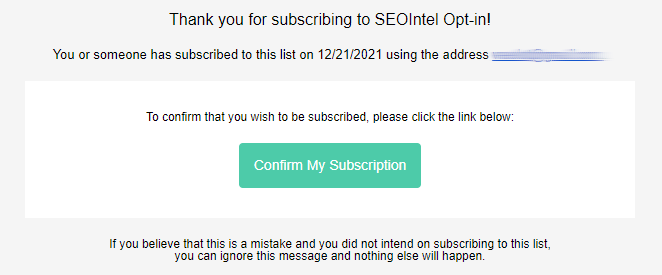
And that’s it!
PS: If you don’t see a confirmation email, please check your spam/junk or promotions folders. Sometimes the confirmation message ends up there by mistake.