
This week’s SEO updates aren’t about new features—they’re about understanding what’s already happening under the hood.
The March 2026 core update is now underway, and early signals show a slower rollout with mixed reactions across sites. At the same time, Google is doubling down on fundamentals—clarifying how crawling actually works and why page weight still matters more than many realize.
If there’s a theme this week, it’s this:
efficiency matters—in how your site is built, how it’s crawled, and how it performs in an increasingly complex search environment.
Google’s March 2026 core update began rolling out on March 27, 2026, at around 5:14 a.m. ET, and Google said the rollout could take up to two weeks to complete. The company described it as a regular broad core update meant to better surface “relevant, satisfying content” across all types of sites.
Because the update is still ongoing, it is too early to make confident claims about winners, losers, or permanent patterns. But early reactions across industry sites, forums, Reddit, and social posts do show a few consistent themes: the rollout appears to have started more slowly than many expected, volatility is building unevenly, and site owners are already reporting both sharp drops and noticeable recoveries.
A Slower Start Than Many Expected
One of the more interesting early observations is that this core update did not appear to hit full force immediately. Glenn Gabe noted in a public post that there had been a “slow start” and that while he was beginning to see clearer surges and drops, the impact was still not yet at the level of a typical broad core update.
That lines up with broader industry discussion around staged rollouts. Search Engine Journal, covering Google’s explanation of why core updates can roll out in phases, suggested the timing of the March spam update just before the core update may not have been accidental and may reflect how different systems are layered or prepared before broader ranking changes fully land.
What Site Owners Are Reporting So Far
The early chatter is mixed, which is typical for a core update. Some site owners are already seeing gains, while others are reporting drops or renewed instability on top of the volatility they were already experiencing earlier in March. Search Engine Land noted that significant volatility is common during core updates, and that some sites can see declines in rankings and organic traffic while others improve.
On Reddit, the reaction is less organized but still revealing. In one SEO thread, commenters immediately connected the update to the lingering frustrations many had with the December 2025 core update, hoping this rollout would correct some of what they viewed as poor search results. In another thread, at least one publisher reported that their site had not dropped and had actually gained rankings and keywords, attributing that stability to original, helpful content, stronger E-E-A-T signals, and closer alignment with user intent. Those are anecdotal reports, but they reflect the kind of mixed response often seen in the early days of a broad update.
On WebmasterWorld and in other long-running SEO communities, sentiment has also been tense. Early discussion has included frustration about continued ranking instability and concern that the March core update is landing on top of already-heated search volatility from earlier in the month.
Why Attribution Is Messy Right Now
One reason the early effects are hard to interpret is timing. The March 2026 spam update rolled out just before the core update, and that overlap is making attribution difficult. Several SEO publications have pointed out that short, sharp changes around March 24–25 are more likely tied to the spam update, while broader movement from March 27 onward is more likely tied to the core update. Even then, because the rollout is still in progress, rankings may continue to move multiple times before settling.
That matters because a site owner who sees a decline right now may be dealing with one of three things: the spam update, the core update, or ordinary volatility that was already building before either announcement. Barry Schwartz also noted that Google had seen heated volatility earlier in March before confirming the core update, which adds another layer of uncertainty.
Early Patterns the Industry Is Watching
Although the rollout is still too early for hard conclusions, the SEO community is already watching several recurring themes.
The first is whether this update continues Google’s shift toward credibility-first results. Some early commentary suggests stronger emphasis on content that demonstrates real expertise and useful depth rather than broad, generic coverage. That interpretation is still provisional, but it aligns with how many SEOs are framing the current movement.
The second is whether some previously impacted sites are seeing reversals. Glenn Gabe said he was reviewing visibility across sites that had been hit by major updates before and was already seeing clear movement for several of them. That does not mean a full recovery pattern is confirmed, but it does suggest Google may be reshuffling some established losers and winners from prior updates.
The third is whether the update is rewarding sites with stronger editorial discipline. In community discussion, the clearest self-reported gains are coming from publishers emphasizing original writing, stronger author signals, and content written around real user intent instead of broad keyword targeting. Again, that is anecdotal, not a confirmed Google statement, but it is one of the more consistent narratives emerging from early reactions.
What Site Owners Should Do While the Rollout Is Still Running
Right now, the best approach is restraint. Because the March 2026 core update is still ongoing, any diagnosis made too early risks confusing temporary turbulence with lasting change. Google’s public guidance on core updates has long been to wait until the rollout finishes before drawing conclusions or making large reactive changes. Search industry coverage is echoing that advice now.
That does not mean doing nothing. It means watching the right things:
The Bigger Picture
The early story of the March 2026 core update is not one of instant chaos, but of gradual pressure building across the SERPs. The rollout appears to have started more slowly than some previous core updates, but credible industry observers are now seeing clearer surges and drops. Community reaction is mixed, with some sites reporting gains, others reporting losses, and many still waiting for the update to fully land.
For now, the safest conclusion is this: the March 2026 core update is active, its effects are becoming more visible, and the final picture is not here yet. What site owners are experiencing so far is real, but still incomplete. Until the rollout finishes, the smartest move is to monitor carefully, avoid panic edits, and look for the broader pattern rather than reacting to a single bad day.
In a recent Search Off the Record episode, Google’s Martin Splitt and Gary Illyes tackle a growing issue on the web: pages are getting heavier—and it matters more than many developers think.
The discussion goes beyond simple page speed advice. It explains how page weight, HTML size, and crawling limits actually work inside Google, and why bloated pages can impact not just user experience, but also how efficiently Google crawls and processes your site.
If you’ve been treating page size as a secondary concern, this episode is a strong reminder that it’s still a critical part of technical SEO.
Web Pages Are Getting Bigger—Fast
One of the key data points discussed is how dramatically page sizes have increased:
Even with faster internet speeds, this growth creates real problems:
Google’s message is clear: just because bandwidth has improved doesn’t mean page weight no longer matters.
What “Page Weight” Actually Means
A common misconception is that page size = HTML size.
The podcast clarifies that page weight includes everything loaded, such as:
This matters because developers often focus on optimizing HTML while ignoring the total payload being delivered to users.
Googlebot Isn’t Unlimited—There Are Real Crawl Limits
One of the most important insights from the episode is that Googlebot has practical limits when crawling pages.
1. Default Fetch Limit (~15 MB)
2. Search-Specific HTML Limit (~2 MB)
3. Different Limits for Different Content Types
This means that extremely large pages may not be fully understood—even if they technically load.
HTML Bloat Is a Growing Problem
Another key topic is HTML bloat, which is becoming more common due to:
In some cases, pages include massive amounts of markup that provide little additional value.
Google’s systems may:
In short, bigger HTML doesn’t mean better SEO—it can actually hurt clarity and crawl efficiency.
Google’s Crawling Infrastructure Is Designed to Protect the Web
The episode also reinforces an important concept:
Google’s crawling system is designed to avoid overwhelming websites
This includes:
This means crawling isn’t just about Google—it’s about maintaining internet stability at scale.
Faster Internet Doesn’t Solve Everything
A key misconception addressed in the podcast:
“If connections are faster, page size doesn’t matter anymore.”
Google disagrees.
Even with faster networks:
Page weight continues to directly impact real-world usability, especially outside high-speed environments.
Key Takeaways
Here are the most important insights from the episode:
The Bigger Picture
This episode reinforces a broader shift in SEO:
It’s no longer just about content and keywords—it’s about efficiency, structure, and deliverability.
As websites continue to grow more complex, those that remain lean, fast, and easy to process will have a clear advantage—not just for users, but for search engines as well.
In a world where AI is changing how content is generated and consumed, one thing remains constant:
If your pages are too heavy, they become harder to use—and harder to understand.
Watch the full episode here:
Google has released a new blog post and documentation update that pulls back the curtain on one of the most misunderstood parts of search: how crawling actually works at scale.
Instead of introducing new ranking factors or features, this update focuses on something more foundational—clarifying how Google’s crawling systems operate, what they prioritize, and what site owners should (and shouldn’t) worry about.
And the biggest takeaway?
Much of what SEOs assume about crawling is either oversimplified—or outright wrong.
This Isn’t Just About Googlebot Anymore
One of the most important clarifications in the update is that Googlebot is not a single crawler.
Google explains that its crawling system is shared across multiple products—not just Search. That includes:
This is why Google moved crawling documentation to a dedicated “crawling infrastructure” section, emphasizing that crawling is now a shared system across the entire Google ecosystem, not just Search.
In practical terms:
Your site isn’t just being crawled for rankings—it’s being accessed for multiple use cases across Google.
A New “Big Picture” View of Crawling
The March 2026 update introduces a new overview page designed to answer common questions Google has received over decades of crawling the web.
According to summaries of the update, Google breaks crawling down into a few core processes:
This may sound basic, but Google’s goal here is to simplify how developers think about crawling, especially as systems become more complex.
Crawling Is Not Unlimited (And Never Has Been)
One subtle but important message in the update:
Google does not crawl everything, all the time.
Even though not explicitly framed as a “limit,” Google reinforces that crawling is:
This aligns with long-standing concepts like crawl budget, but the update reframes it in a more practical way:
Crawling decisions are based on:
In other words, crawling is not just a technical process—it’s a resource allocation decision.
Why Google Keeps Emphasizing “Not Breaking the Internet”
A recurring theme in Google’s crawling guidance is restraint.
Google’s systems are designed to:
This is why things like:
can indirectly affect how often (and how deeply) your site is crawled.
The goal isn’t maximum crawling—it’s sustainable crawling at internet scale.
Documentation Is Expanding—Because Crawling Is Getting More Complex
Another key takeaway from this update is why Google is publishing more detailed crawling documentation now.
Google explicitly notes that these updates are based on years of recurring questions from site owners and developers.
At the same time, crawling is becoming more complex due to:
This means Google is trying to:
What This Means for SEO (Right Now)
This update doesn’t introduce new ranking signals—but it does reinforce what matters.
1. Crawlability Is Still Foundational
If Google can’t efficiently crawl your site, nothing else matters:
2. Performance Impacts Crawling More Than You Think
Slow or unstable sites:
3. Crawling Is Now Multi-Purpose
Your content is no longer just for search results.
It may also be used for:
4. Simplicity Wins
The more complex your site architecture:
Key Takeaways
The Bigger Picture
This update may look like a simple documentation refresh—but it reflects something bigger:
Google is preparing for a more complex web.
As AI, dynamic content, and multi-surface search evolve, crawling is no longer just about indexing pages—it’s about efficiently understanding the entire web ecosystem.
And for site owners, the message is clear:
If your site is difficult to crawl, it will be difficult to compete—no matter how good your content is.
Taken together, this week’s updates point to a clear direction.
Google isn’t just refining rankings—it’s reinforcing the importance of how websites are built and delivered. From crawl efficiency to page weight to how systems process content, the technical foundation of your site is becoming just as important as the content itself.
As the core update continues to roll out, the focus shouldn’t just be on rankings—but on whether your site is fast, efficient, and easy for both users and search engines to understand.
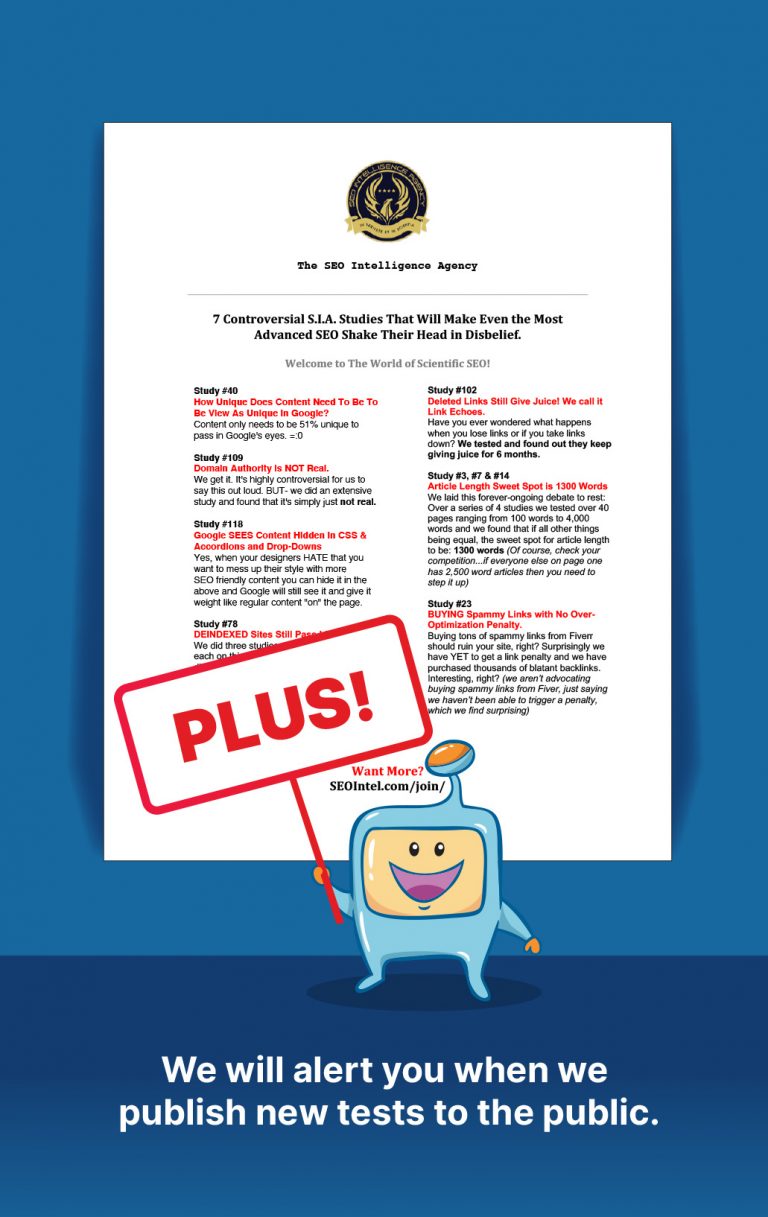
Get Our Most 7 Controversial S.I.A. Studies That Will Make Even the Most Advanced SEO Shake Their Head in Disbelief.
Plus we will alert you when we publish new tests to the public.
Obtenga nuestros 7 estudios S.I.A. más controvertidos que harán que incluso el SEO más avanzado sacuda la cabeza con incredulidad.
Además, le avisaremos cuando publiquemos nuevas pruebas al público.
Obtenez nos 7 études S.I.A. les plus controversées qui feront trembler la tête même les SEO les plus avancés d’incrédulité.
De plus, nous vous alerterons lorsque nous publierons de nouveaux tests au public.
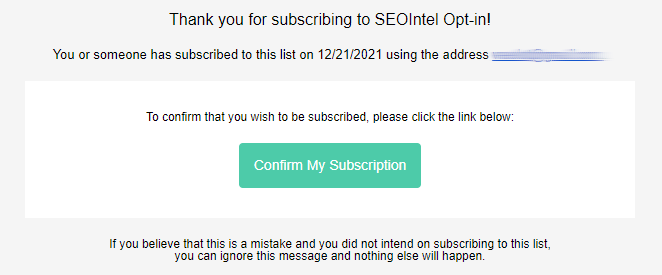
Before you can receive free updates, link building strategies or SEO tips you need to confirm your email right now.
(It’s easy)
Just go to your inbox, open the confirmation email from the SIA, and click the link.
And that’s it!
PS: If you don’t see a confirmation email, please check your spam/junk or promotions folders. Sometimes the confirmation message ends up there by mistake.