The last month of 2025 rolls in, and with it is another big week in search and AI — with changes rolling out across both tools and the underlying landscape. Google Search Console is testing a new AI-Powered Configuration tool to build custom reports with natural-language prompts, while globally Gemini 3 and Nano Banana Pro are expanding in AI Mode.
At the same time, OpenAI has sounded the alarm with a full “code red” for ChatGPT as new rivals surge, signaling a turning point in the generative-AI race.
Then there’s a fresh study showing how small and mid-sized businesses are reshaping their website and traffic strategies in response to AI and social changes — plus a handy primer on using Search Console Insights for content performance.
And with the recent surge of Google ranking volatility shaking up SERPs again (is another core update looming, to end the year with a bang?), this feels like one of those pivot-points for search.
Get this week’s SEO news round-up below:
Google recently rolled out a new experimental feature — AI-Powered Configuration — in the Search Console Performance report. This tool allows you to describe the data you want using natural language, and Search Console will automatically build the report for you with the correct filters, metrics, and comparisons.
What the New Feature Does
With the AI-Powered Configuration, you can generate custom Performance reports by typing instructions like:
Instead of manually selecting metrics, filters, and date ranges, Google will interpret your prompt and instantly “configure” the report. That means metric selection (Clicks, Impressions, CTR, Position), filters (query, page, country, device, date range, search appearance), and even comparisons — all handled in one simple step.
Why It Matters: Faster, Smarter Reporting for SEOs
Important Limitations & Things to Know
What You Should Do Now
Why This Reflects a Broader Trend
This launch echoes a larger shift in how search and website analytics tools are evolving in the AI era. Just as search engines are becoming more conversational and context-aware, analytics tools are getting smarter, more intuitive and more accessible. For SEO professionals and site owners, tools like this reinforce the importance of data literacy, quick experimentation, and constant monitoring.
Google has rolled out its most advanced AI search model, Gemini 3, to AI Mode in Search across about 120 countries and territories worldwide (for English-language queries), marking one of the broadest expansions of AI-powered search features yet.
Alongside Gemini 3, the enhanced image generation and editing model Nano Banana Pro is also being made available in the same territories — giving users new options for rich, generative visuals within search and AI workflows.
What’s New & What’s Possible
Why It Matters for SEO, Content & Marketers
What to Do Now
With Gemini 3 and Nano Banana Pro rolling out to 120 countries, Google has taken a big step toward making AI-powered search a global standard — not just a U.S. or experimental feature. For search professionals, content creators, and marketers, this expansion means the rules of visibility are shifting. It’s no longer just about ranking for keywords — it’s about being structured, visual, and AI-ready. Adapt now, and you might just ride the wave of this next generation of search.
Robby Stein — VP of Product for Google Search — officially announced on X that Google is beginning global tests to merge AI Mode directly into AI Overviews on mobile.
Under the new flow, when users tap the “Show more” button on an AI Overview, they’ll be taken into AI Mode where they can ask follow-up questions, continue the conversation, and get deeper, dynamic responses without leaving the results page.
In essence, what had been two separate experiences — a static AI-generated summary (AI Overview) and a full chatbot-style AI Mode — are merging into one seamless, end-to-end AI search experience. On mobile search results, this test promises to make AI Mode feel like the natural next step whenever someone wants more depth than a brief summary.
From Snapshot to Conversation
AI Overviews were designed to give a quick, static summary of results, often enough for simple queries. With this new update:
Global, Mobile-First Test
The change is rolling out globally — at least for mobile users — and is meant to simplify the search experience across languages and devices.
More Pressure on Click-throughs & Publishers
Because follow-ups and deeper answers now happen within Google’s AI interface, there’s a strong possibility that fewer users will click through to websites. As one source puts it: “This brings AI Mode more directly into Google Search and sadly, will likely result in fewer clicks to websites.”
With the announcement, Google is nudging search — and SEO — into a more tightly integrated AI-first paradigm. The line between summary and conversation is blurring, and websites will need to evolve from simply ranking to being AI-trustworthy reference points. For content creators, marketers and SEO pros: the test is now, your content’s readiness will determine whether you ride the next wave — or get left behind.
In early December 2025, OpenAI CEO Sam Altman triggered a company-wide “code red,” ordering all hands on deck to overhaul ChatGPT’s core — putting new features and ad plans on hold to prioritize reliability, speed, personalization, and broad-coverage reasoning.
The move comes amid mounting pressure from competitors — particularly Gemini 3 — which recently leapt ahead of ChatGPT on key benchmarks and is being aggressively rolled out across Google’s search and AI offerings.
According to internal communications, OpenAI is doubling down on improving several aspects of ChatGPT: faster response times, broader reasoning capabilities, better personalization, and more reliable output.
As a result, other planned initiatives are being deferred or suspended, including:
In short — the message is clear: ChatGPT must become stronger before chasing new features or monetization.
There are a few strong drivers behind this move:
Rising Competition
Gemini 3 (and other newer models) have posted stronger benchmark scores, prompting concern that ChatGPT is losing competitive edge. For example, Gemini 3 is being rolled out aggressively across Google’s platforms and is seeing strong user momentum.
User & Market Expectations
With AI adoption accelerating and people expecting near-human reasoning, small lapses in correctness, personalization, or speed can quickly erode confidence. The code-red signal suggests OpenAI sees this as an existential moment for ChatGPT.
Monetization Trade-offs
OpenAI reportedly planned to introduce ads and specialized agents as revenue sources — but prioritizing quality over income for now suggests long-term thinking.
By declaring a code red, OpenAI acknowledges what many observers already sense: the foundation of generative AI competition is shifting from novelty to maturity. It’s no longer enough to be first — now you have to be stable, capable, and responsive. For developers, marketers, and creators, this moment demands balance: between experimenting with new AI tools and building resilience in case the tools run into trouble. The next few months will be critical — not just for ChatGPT, but for the future of AI-powered search, content, and discovery.
The recent “SMB Website Trends Report 2026” from WordStream offers one of the clearest snapshots in recent years of how small and mid-sized businesses (SMBs) are adapting their web, SEO, and marketing strategies in a rapidly shifting digital landscape. The report is based on a survey of over 300 small businesses from dozens of industries — evaluating how they get traffic, generate leads, handle SEO (and emerging generative-search visibility), and plan for future growth.
Key Findings from the Report
According to the report:
What This Means for SMBs & Digital Marketers
1. Website is still non-negotiable — but not sufficient alone.
Even now, a website remains essential for credibility, lead capture, and direct sales. But given how often SMBs find social media and marketplaces delivering traffic — sometimes even more than SEO — relying solely on search ranking is risky. Diversification across channels is increasingly necessary.
2. Conversion and UX matter as much as traffic.
Since many SMBs highlight conversion — not just traffic volume — as their biggest challenge, it’s clear that a high-traffic site won’t deliver results unless the user experience, CTAs, lead flows, and trust signals are optimized.
3. SEO remains relevant — but must adapt.
It’s encouraging that a majority of SMBs still find SEO effective. However, with traffic losses linked to AI-driven search changes, businesses should broaden their SEO strategy: focus on content quality, structured data, brand authority, and multichannel presence (social, directories, marketplaces) rather than just classic ranking metrics.
4. Embrace AI / generative search early — but wisely.
For businesses that want future-proof visibility, the rise of generative search (sometimes called GEO) cannot be ignored. Though still nascent, optimizing for AI citations and mentions — not just traditional SERPs — might become a key differentiation for SMBs going forward.
5. Be agile and channel-diverse.
Given how fragmented traffic sources and search behavior have become (social, marketplaces, AI search, traditional SEO), flexibility is critical. Companies that rely on a single channel risk volatility. A balanced presence across website, social, local listings, marketplaces — and now AI-search — offers more resilience.
What to Do If You Run or Work With SMBs
If you manage SEO or marketing for a small to mid-sized business, here are some practical takeaways based on the report:
In Conclusion
The WordStream “SMB Website Trends Report 2026” reinforces what many small businesses already know: the digital landscape is more fragmented than ever, and success requires adaptability, diversity, and focus on both visibility and conversion. For SMBs willing to invest in quality websites, diversified channels, and emerging search trends — including generative AI — there’s still a strong opportunity to compete, grow, and thrive.
Read the full report here.
If you’re new to Search Console — or you want a faster way to understand how your site is performing — this short training video is the perfect place to start. Google’s Daniel Waisberg walks through Search Console Insights, a high-level dashboard that shows your top-performing content, rising and declining pages, trending queries, and where your search traffic is coming from. You’ll learn how to interpret clicks, impressions, branded vs. non-branded queries, and how to jump into deeper performance reports when needed. It’s a quick, practical primer that helps you spot wins, uncover opportunities, and monitor content performance — all in just a few clicks.
What’s clear is this: the ground under “search” is shifting fast — not just how content gets found, but how visibility, discovery, and ranking are being redefined. With AI-powered tools reshaping what gets surfaced and how users interact, and Search Console and analytics tools evolving to match — staying on top means being adaptive, data-aware, and ready to test new workflows. As volatility comes and goes, the brands and sites that stay visible and relevant will be those that embrace flexibility, build for AI-readiness, and treat performance as more than just rankings.
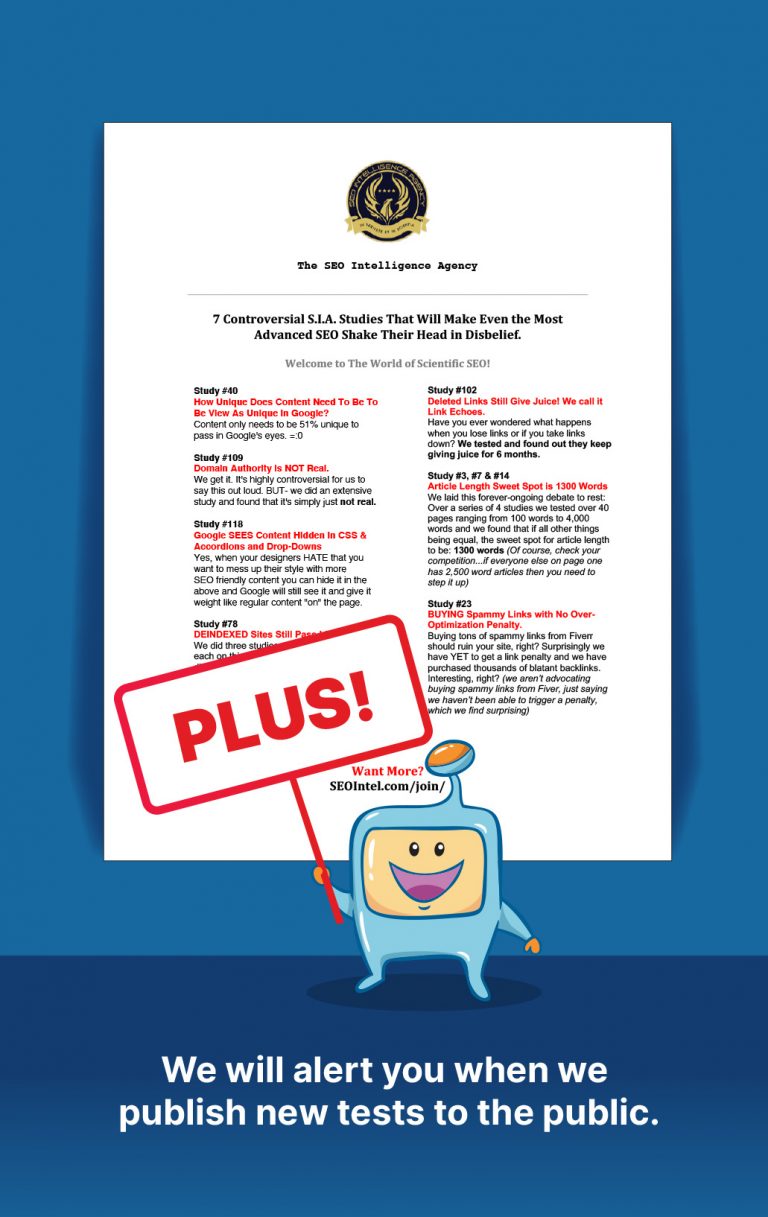
Get Our Most 7 Controversial S.I.A. Studies That Will Make Even the Most Advanced SEO Shake Their Head in Disbelief.
Plus we will alert you when we publish new tests to the public.
Obtenga nuestros 7 estudios S.I.A. más controvertidos que harán que incluso el SEO más avanzado sacuda la cabeza con incredulidad.
Además, le avisaremos cuando publiquemos nuevas pruebas al público.
Obtenez nos 7 études S.I.A. les plus controversées qui feront trembler la tête même les SEO les plus avancés d’incrédulité.
De plus, nous vous alerterons lorsque nous publierons de nouveaux tests au public.
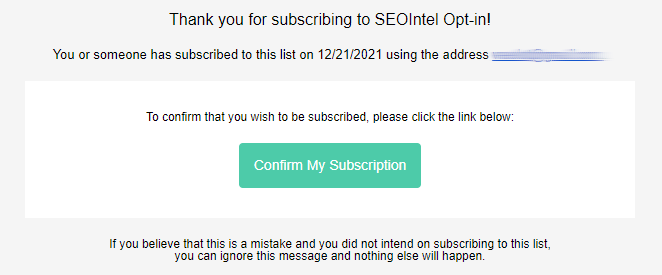
Before you can receive free updates, link building strategies or SEO tips you need to confirm your email right now.
(It’s easy)
Just go to your inbox, open the confirmation email from the SIA, and click the link.
And that’s it!
PS: If you don’t see a confirmation email, please check your spam/junk or promotions folders. Sometimes the confirmation message ends up there by mistake.