This week’s roundup centers on one thing many site owners and SEOs are feeling right now: adjustment. With the December 2025 Core Update officially wrapped up, Google continuing to clarify its stance on SEO versus newer AI-driven acronyms, and the SEO Rockstars 2026 conference just around the corner, it’s clear we’re in a moment where fundamentals are being tested—and reaffirmed.
Rather than chasing noise, this week’s stories focus on what’s actually changing, what’s staying the same, and how to move forward with clarity as search and AI continue to evolve side by side.
In a recent episode of Google’s Search Off The Record, John Mueller and Danny Sullivan tackled one of the most confusing topics in modern search: how SEO fits into a world increasingly shaped by AI, large language models (LLMs), and new acronyms like AEO and GEO.
Rather than introducing new tactics or secret optimizations, the conversation focused on something far more important — resetting expectations. As AI-powered search evolves, Google’s message remains consistent: the fundamentals of SEO still apply, and chasing machine-specific shortcuts often leads site owners in the wrong direction.
This article breaks down the most important themes from the podcast and explains what they mean for site owners, marketers, and businesses navigating search in the AI era.
One of the first clarifications made in the podcast is that terms like AEO (Answer Engine Optimization) or GEO (Generative Engine Optimization) are not separate disciplines in Google’s eyes.
From Google’s perspective, these are simply subsets of SEO.
People are still searching — just sometimes through different interfaces, such as conversational AI, AI Overviews, or other AI-powered formats. Because these systems still rely on search, discovery, and relevance, the same foundational principles apply.
Rebranding SEO with new acronyms doesn’t change the underlying goal:
Create content that helps people find what they’re looking for.
A recurring theme throughout the episode is that great content written for people remains the bedrock of search success — even as AI becomes more prominent.
Google explicitly discourages:
While some site owners report short-term gains from formatting content into highly bite-sized or machine-friendly chunks, Google warns that this approach is fragile. Search systems evolve, and optimizations aimed at exploiting temporary behaviors often don’t hold up over time.
The long-term direction is clear:
Google aims to reward content created to genuinely help users, not content engineered for ranking systems.
One of the strongest warnings in the discussion is against chasing LLM-specific tactics.
Some tools and consultants currently claim that:
Google’s response is straightforward: this is not a strategy they want site owners to pursue.
Even if such tactics appear to work temporarily, they are:
The effort required to retool content for machines may ultimately be wasted once systems improve — which they are designed to do.
The podcast also addresses a sensitive but important topic: SEO tools and service providers.
Google’s position is nuanced:
This distinction matters because many tools present proprietary scores — such as domain ratings or spam scores — as if they directly reflect Google’s systems. They do not.
Google does not reduce websites to a single score, nor does it use third-party metrics for ranking.
Danny Sullivan emphasizes that site owners should think critically about SEO recommendations — especially those tied to AI.
Key questions to ask:
Claims are just that — claims. No one can guarantee rankings, traffic, or long-term performance, especially in a changing search landscape.
Google acknowledges that not everyone wants — or needs — to become an SEO expert. However, having basic foundational knowledge makes it far easier to:
Understanding Google’s own documentation, tools like Search Console, and official guidance provides guardrails — not limitations.
A particularly practical point raised in the podcast is how this applies to small and local businesses.
Most businesses don’t need:
They benefit far more from:
Chasing trends rarely outperforms serving users well.
Search is evolving, but the direction remains consistent. In times of rapid change, it’s easy to feel like you’re missing out or falling behind. Google’s message in this podcast is intentionally grounding: you’re not missing the train if you stay focused on users.
AI may change how people search, but it doesn’t change why they search — and that’s where sustainable SEO still lives.
Watch the full podcast here:
Google’s December 2025 Core Update, the third major broad algorithm refresh of the year, officially began on December 11 and completed on December 29 (US/Pacific), according to the official Google Search Status Dashboard. This 18-day rollout brought with it some of the most significant ranking volatility and redistribution of visibility in months, affecting sites across verticals, SERP features, Discover traffic, and global regions.
Unlike targeted spam or feature-specific releases, broad core updates adjust the way Google’s systems evaluate content quality and relevance at scale, with the goal of better surfacing content that satisfies user intent.
Google confirmed the update on its Search Status Dashboard as an “incident affecting ranking,” noting the update could take up to three weeks to fully deploy. After an 18-day rollout, the update was marked complete on December 29, 2025.
Broad core updates are not penalties, but systemic recalibrations that can affect visibility without any wrongdoing by the site. Google has consistently advised site owners that pages which lose rankings aren’t necessarily in violation of guidelines — rather, they have been reassessed in relation to all other available content.
Across industry tracking tools and third-party volatility sensors, the update displayed a multi-phase pattern rather than a single disruption:
These dual peaks suggest Google may have fine-tuned or layered algorithmic adjustments mid-rollout, a pattern not uncommon in larger core updates.
Industry analyses and community observations indicate that the December core update was broad in scope, but with notable trends in impact:
Finance, health, legal, and other YMYL (Your Money or Your Life) verticals experienced heavy volatility, often early in the rollout. These categories saw substantial swings in visibility as Google’s systems reassessed expertise, experience, and trust factors.
Many news publishers — including some major UK outlets — saw significant drops in search visibility over the update period. In some cases, Discover traffic also plummeted, with publishers reporting near-zero impressions after years of stability.
Data from SEMrush and other tracking sources showed affiliate and e-commerce sites were heavily impacted, with many reporting negative visibility changes. A broad sample of ~847 sites found affiliate content saw rates of impact exceeding 70%, while e-commerce and health sites experienced 52% and 67% impact rates respectively.
Rather than uniform position changes, mid-ranking pages (positions 6–20) displayed the greatest volatility, indicating a reordering rather than wholesale removal of content. Pages with thin intent relevance or minimal differentiation tended to be pushed down in favor of richer, more comprehensive content.
Recalibration of Quality Signals
This update didn’t introduce novel ranking penalties, but it sharpened how existing signals like expertise, context depth, and user satisfaction are weighted across queries.
E-E-A-T Everywhere
Where once strong Experience-Expertise-Authoritativeness-Trustworthiness (E-E-A-T) signals were most critical in YMYL contexts, December’s update applied these standards more broadly, influencing competitive niches such as product comparisons, SaaS content, and how-to guides.
Technical & User Experience Still in Play
Metrics tied to Core Web Vitals (page speed, stability, responsiveness) carried increased weight. Sites with slower loading or poorer interactivity tended to lose more ground relative to faster competitors with similar content quality.
Relative Reassessment, Not Penalties
Many SEO experts emphasize that ranking losses often reflect other sites scoring better against intent or topic comprehensiveness, not “punishment” of the affected domains. This is consistent with how core updates function: relative reassessment of content quality over time and against all other options.
Post-Rollout Aftershocks & Continued Volatility
Although the official rollout concluded on December 29, many site owners continued reporting re-ranking and turbulence into early January 2026 — a common occurrence after major core changes as Google’s systems settle.
Some of this late volatility has been framed as “aftershocks” related to the December core update rather than a new confirmed release. Industry tracking tools and community discussions suggest that smaller, unannounced adjustments may fine-tune outcomes in the weeks following a broad rollout.
Across forums, industry blogs, and analytics discussions, several recurring themes have emerged post-update:
A few factors contributed to the perceived intensity of this update:
Google’s long-standing recovery guidance still applies:
With the December 2025 core update now complete, it’s clear that Google is continuing to refine how quality, relevance, and user satisfaction define search visibility. While volatility may have calmed, the effects of this update will shape search performance for months — and the way content is created and evaluated continues to evolve. As ever, focusing on depth, value, and user intent remains the most reliable strategy for long-term search success.
The SEORockstars Conference 2026 is just around the corner — taking place January 16–18, 2026, in Dallas, Texas — and it remains one of the most respected and practical events on the SEO calendar. Built on 14 years of real-world results, this conference brings together advanced practitioners, agency leaders, and in-house marketing teams to share tested, no-fluff strategies that are working right now in SEO and AI-powered search.
Unlike large marketing spectacles with thousands of attendees, SEO Rockstars intentionally limits attendance to around 150 people, ensuring meaningful connections, small-group interactions, and plenty of access to speakers and peers.
Real Strategies Backed by Tests, Not Theory
SEO Rockstars is designed around practical, battle-tested tactics rather than high-level theory. Sessions focus on real experiments and outcomes across:
Speakers include seasoned professionals from large agencies, successful consultants, and subject-matter experts who have built and scaled strategies that produce measurable results — not just slide decks.
For those attending live in Dallas, the schedule is packed with high-impact learning and networking:
Attendees receive lunch each day, access to presentations, transcriptions, and networking events — all designed to help you leave with a concrete action plan you can implement immediately.
Understanding that not everyone can travel to Dallas next week, SEO Rockstars offers a Virtual Experience that brings the core value of the conference to remote participants.
For those unable to attend in person, the Virtual Experience includes:
The virtual option provides a nearly identical information experience to the live event — without the travel cost or time commitment — at a significantly lower price point.
This makes it especially practical for international teams, remote workers, or professionals with packed schedules who still want to tap into cutting-edge SEO and AI strategy discussions.
SEO Rockstars is geared toward intermediate to advanced SEO professionals, including:
While not positioned as a beginner’s event, even those newer to SEO can benefit from the recordings and materials included with the virtual option — allowing them to absorb content at their own pace.
In a world where SEO and AI are moving quickly — and where strategies can become obsolete almost as fast as they’re adopted — SEO Rockstars has carved out a reputation for longevity and relevance. Attendees and past alumni consistently cite the practical nature of the content and the community strength as reasons they return year after year.
This year’s focus on AI-powered workflows, automation, and real-world case studies makes it especially timely, as search algorithms and user behavior continue to shift.
Whether you’re walking the venue halls in Dallas or tuning in from your home office, the conference is structured to help you walk away with strategies you can apply Monday morning — not concepts that sound good but lack implementation clarity.
If you’re serious about leveling up your SEO and search strategy in 2026 — with insights that bridge old-school fundamentals and modern AI-driven practices — SEO Rockstars remains one of the best opportunities to learn from top practitioners and to build lasting connections. And with the virtual access option, you don’t have to miss out just because you can’t make the flight to Dallas.
Get your ticket, either in person or virtual at https://www.rockstarsconference.com/
As the dust settles from the December core update and conversations around AI optimization grow louder, the common thread across all of this week’s updates is balance. Google’s guidance, real-world ranking impacts, and community discussions all point back to the same core idea: sustainable visibility still comes from focusing on users, quality, and long-term thinking. Whether you’re reassessing performance post-update, rethinking how AI fits into your SEO strategy, or planning to learn from peers at SEO Rockstars—either in person or virtually—now is a good time to step back, refocus, and make informed decisions grounded in reality rather than reaction.
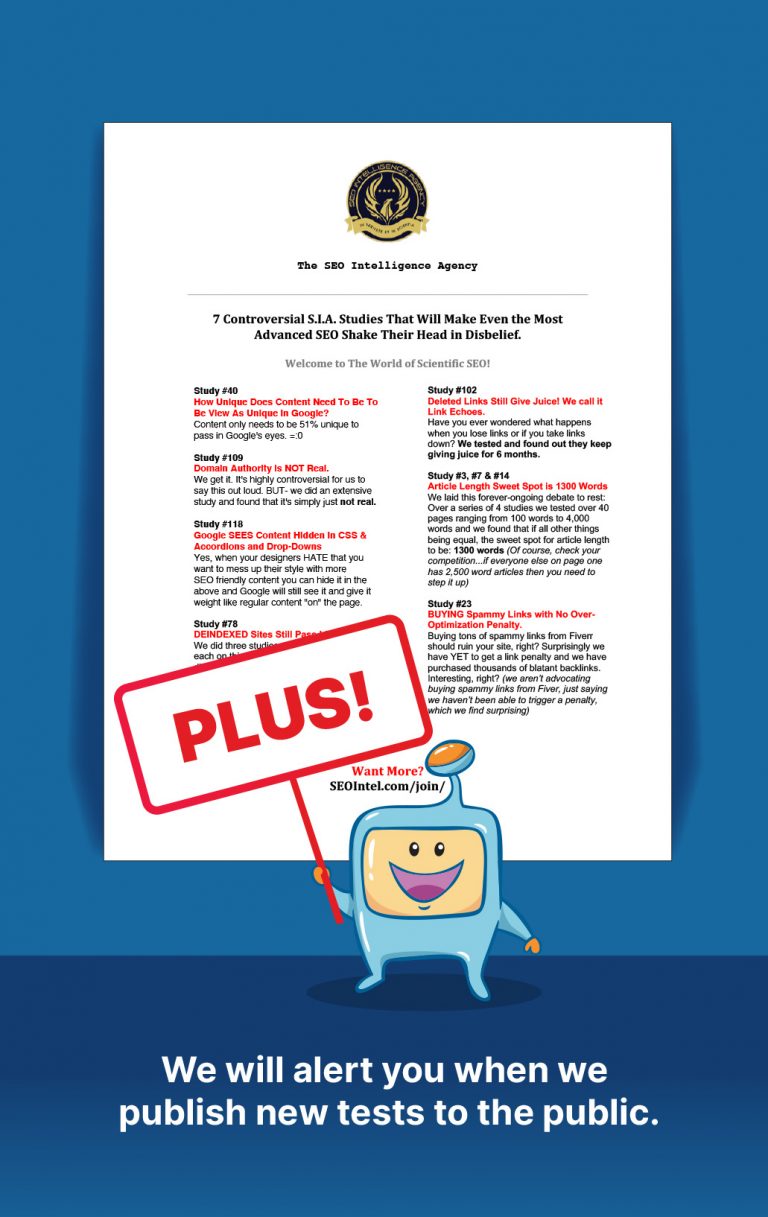
Get Our Most 7 Controversial S.I.A. Studies That Will Make Even the Most Advanced SEO Shake Their Head in Disbelief.
Plus we will alert you when we publish new tests to the public.
Obtenga nuestros 7 estudios S.I.A. más controvertidos que harán que incluso el SEO más avanzado sacuda la cabeza con incredulidad.
Además, le avisaremos cuando publiquemos nuevas pruebas al público.
Obtenez nos 7 études S.I.A. les plus controversées qui feront trembler la tête même les SEO les plus avancés d’incrédulité.
De plus, nous vous alerterons lorsque nous publierons de nouveaux tests au public.
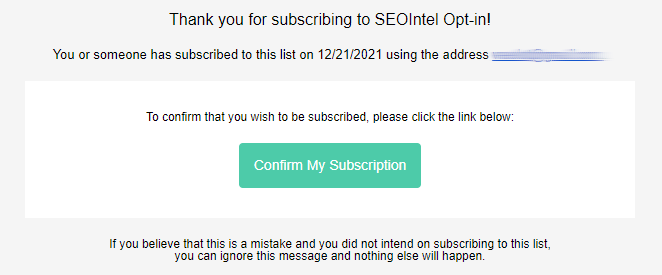
Before you can receive free updates, link building strategies or SEO tips you need to confirm your email right now.
(It’s easy)
Just go to your inbox, open the confirmation email from the SIA, and click the link.
And that’s it!
PS: If you don’t see a confirmation email, please check your spam/junk or promotions folders. Sometimes the confirmation message ends up there by mistake.