It’s been a full and eventful week on our end. After wrapping up last week’s SEORockstars event — which went incredibly well — we’ve been knee-deep behind the scenes, working through session recordings and post-event deliverables. Huge thanks again to everyone who attended, spoke, and contributed to making it such a strong few days of learning and discussion. Keep an eye out — the recordings are on the way, and we’ll be sharing updates soon.
Despite the busy post-event momentum, the search and AI space didn’t slow down. This week’s news touches on some big themes we’re seeing more clearly now: deeper personalization in search, growing clarity (and complexity) around AI-driven visibility and reporting, shifting monetization models in AI platforms, and continued legal pressure on dominant players shaping the future of search and advertising.
Google is expanding how personalized search works with the introduction of Personal Intelligence, a new capability that brings deeper personal context into AI-powered Search experiences. Initially launched within the Gemini app, Personal Intelligence is now rolling out to AI Mode in Google Search, allowing users to receive responses shaped by their own data—if they choose to enable it.
This marks a shift from traditional personalized search, which primarily relied on signals like location, search history, and language settings. With Personal Intelligence, Google’s AI can optionally draw from first-party Google services such as Gmail and Google Photos to provide answers that are more situational and context-aware.
How Personal Intelligence Works in Search
Personal Intelligence is opt-in only and is designed to give users control over how much personal data is used in AI Mode. When enabled, users can connect specific Google apps to Search, allowing the AI to reference relevant information when responding to queries.
According to Google, the feature currently supports:
For example, a user searching for travel ideas may receive suggestions that align with previous trips found in Photos or upcoming bookings visible in Gmail. Similarly, shopping or planning-related queries could reflect past preferences or experiences stored across connected services.
Importantly, Google emphasizes that Personal Intelligence does not permanently train AI models on personal content. Instead, the data is accessed at query time to tailor responses, and users can disconnect apps or disable the feature at any time.
Availability and Rollout
At launch, Personal Intelligence in AI Mode is limited in scope. Google is introducing it as an experimental feature through Search Labs, available in English and currently restricted to users in the United States who subscribe to Google AI Pro or AI Ultra plans.
Google has indicated that broader access, including additional regions and potentially free users, may follow as the experiment evolves. However, no specific timeline has been announced.
Industry Context and Early Observations
Industry watchers note that Personal Intelligence first appeared in the Gemini app, where it expanded personalization across multiple Google products, including Search, YouTube, Gmail, and Photos. Early reports highlight that users are given granular controls, including the ability to exclude certain data sources or provide direct feedback on responses.
This move aligns with Google’s broader strategy to position Search as a more conversational, assistant-like experience—particularly within AI Mode—while attempting to balance personalization with privacy concerns.
Why This Matters for Search and SEO
Personal Intelligence represents a deeper layer of personalization than previously seen in Google Search. By allowing AI Mode to incorporate user-specific context, responses may become more tailored and less generic, especially for informational and planning-based queries.
For publishers and SEO professionals, this raises important considerations:
As AI Mode continues to evolve, Personal Intelligence may play a growing role in how users interact with Search—and how information is surfaced, summarized, or personalized at scale.
Google has confirmed an important detail about how Google Search Console measures impressions when a page appears in both AI Overviews and traditional organic “blue links” on the same search results page. This clarification helps SEOs and website owners make better sense of performance data as AI-driven features become more common.
Single Impression Per URL, Even With Multiple Appearances
According to Search Engine Land, Google’s John Mueller confirmed that when a single URL shows up in both an AI Overview and the classic list of organic results, Search Console counts it as one impression, not two. This confirmation was shared publicly after Mark Williams-Cook (Director at SEO agency Candour and founder of AlsoAsked) highlighted a LinkedIn discussion with Mueller on the topic.
The key takeaway is that Google treats the same URL on a single Search Engine Results Page (SERP) as one potential view, even if it appears multiple times across different result features. This helps avoid inflating impression counts simply because a link appears more than once — for example, as a citation in an AI Overview and again as a classic search result.
Why This Matters for Performance Tracking
This approach aligns with Google’s broader definition of an impression: a user seeing — or potentially seeing — a link in a particular set of results. Multiple placements of the same URL on one SERP are aggregated rather than counted separately.
Context from the SEO Community
The LinkedIn post shared by Mark Williams-Cook helped spark broader discussion as SEOs navigated the emerging reality of AI-powered search features. In the LinkedIn thread, practitioners noted that:
Mark’s original LinkedIn post helped draw attention to this nuance, emphasizing that AI Overviews are reshaping how visibility metrics should be interpreted and that simple impression counts no longer tell the full story.
What This Means for SEO Strategy
As Google’s AI Overviews — generative summaries that appear atop many search results — continue to expand, this clarification matters because:
Overall, this clarification removes one piece of uncertainty in interpreting performance data in the evolving AI-enhanced search landscape — even as analysis becomes more complex
OpenAI has officially started moving beyond a pure subscription model by planning advertising inside ChatGPT—initially as a pay-per-impression (PPM) placement that prioritizes revenue certainty over traditional click-based performance metrics. This represents a major shift in how the company funds access to AI while attempting to maintain user trust and privacy.
Advertising Coming to ChatGPT: What’s Planned
OpenAI will soon begin testing ads within ChatGPT for logged-in adult users in the U.S. who are on:
The ads will appear below the AI’s response, clearly labeled and separate from the answer itself, and will only show up when a relevant sponsored product or service fits the conversation context. OpenAI has stressed that these placements will not influence ChatGPT’s outputs, and user conversations won’t be shared with advertisers.
This rollout is part of a broader strategy to make powerful AI more accessible: ads help subsidize usage limits for free users and keep costs down while preserving ad-free experiences for paying subscribers. OpenAI describes its approach with principles focused on answer independence, conversation privacy, user control, and alignment with its mission to benefit humanity — not just to generate revenue.
Impression-Based Charging — Not Clicks
One of the most distinctive developments is how OpenAI plans to charge advertisers during early tests. According to recent reporting, OpenAI is preparing to sell ads on a pay-per-impression basis (PPM) rather than the traditional pay-per-click (CPC) model familiar in search and social advertising. This means that advertisers are billed for views of an ad — not clicks — giving OpenAI revenue certainty even if users don’t interact directly with the ads.
Early trials reportedly involve commitment amounts near $1 million from participating advertisers, with no self-serve buying platform yet available. Because impressions alone don’t measure direct engagement, traditional performance analytics will be more challenging, pushing marketers to think differently about ROI in a conversational ad context.
Industry & Community Reaction
The Search Engine Roundtable has highlighted both the rollout of these tests and the PPM model as noteworthy developments in the search and AI ecosystem. It specifically underscored that OpenAI will charge based on views rather than clicks, signaling a departure from performance-centric ad norms.
SEO and marketing professionals are discussing how this change could reshape strategy. Early commentary suggests that:
Why This Matters
This move signals a new era of monetization for AI products:
Overall, ads in ChatGPT represent a major inflection point in how AI interfaces are monetized — straddling the line between conversational utility and commercial relevance, and forcing brands and marketers to adapt to a fundamentally different advertising surface than search or social.
Google has publicly ruled out placing advertisements in its Gemini AI assistant, in stark contrast to competitors like OpenAI, which recently began testing ads inside ChatGPT’s free and low-cost tiers. This stance was reaffirmed by Google DeepMind CEO Demis Hassabis during remarks at the World Economic Forum in Davos, Switzerland, where he stated that Google has “no plans” to introduce ads in Gemini at the moment.
Hassabis emphasized that Gemini’s development is focused on building a trusted, helpful AI assistant rather than on monetization through advertising. By keeping the experience ad-free, Google aims to preserve user trust and avoid mixing commercial incentives with the core AI experience. He suggested that advertisements in assistants raise unique challenges — particularly around maintaining unbiased, genuinely useful recommendations — and that the company wants to prioritize the core technology and user experience before exploring monetization.
This isn’t the first time Google leadership has reiterated the stance. Statements from Google’s vice president of global ads earlier in 2025 also made it clear that ads would not be coming to Gemini in 2026, signaling internal alignment across the company on this policy.
A Clear Contrast With OpenAI’s Advertising Strategy
Google’s comments come just as OpenAI has started testing ads within ChatGPT — placing clearly labeled sponsored content below the assistant’s responses for some free and low-cost users. Unlike ChatGPT’s new approach to advertising, Google appears intent on keeping Gemini free of ads for the time being, even though the company’s broader ecosystem (e.g., Search, YouTube) is deeply intertwined with ad-driven revenue.
Observers see this as a strategic divergence in how major AI platforms are approaching monetization:
What “No Plans” Really Means
Importantly, Google’s language — “no plans at the moment” — does not rule out ads forever. Analysts and industry watchers note that companies can revise priorities based on competitive dynamics, user expectations, or monetization pressures. However, for now, Google is choosing to differentiate Gemini from ad-supported AI experiences like ChatGPT, underscoring a belief that assistant-style AI should remain primarily helpful and non-commercial.
This approach suggests that AI monetization strategies may diverge significantly across platforms, with Google’s assistant guided by trust and utility first, and others leaning more quickly into ad-driven revenue models.
Google has introduced a significant update to ad spend controls by rolling out Campaign Total Budgets for Search, Performance Max (PMax), and Shopping campaigns in open beta. Until now, advertisers largely relied on average daily budgets, which require ongoing manual management and can lead to unpredictable pacing. The new total budget option lets marketers set a fixed total spend amount over the lifetime of a campaign, aligning spend more closely with business objectives like promotions, sales periods, or seasonal pushes.
What Campaign Total Budgets Are
Campaign Total Budgets give advertisers the ability to define a total spend cap for a campaign over a specific timeframe — typically anywhere from 3 days up to 90 days in beta for Search, PMax, and Shopping. Instead of specifying how much you want to spend each day, you agree to a single total amount and let Google’s systems optimize pace and delivery to make the most of that budget.
This is particularly useful for short-term, time-bound campaigns such as:
How It Differs From Traditional Daily Budgets
Under the traditional average daily budget model, Google sets a daily spend target and may go up to roughly twice that amount on a single day (due to overdelivery), while still keeping within overall monthly thresholds. This system works well for always-on campaigns but can create challenges when you want predictable total spend over a defined period.
By contrast, total campaign budgets:
Because of this, total budgets can reduce administrative overhead and help marketers spend more strategically — especially during high-competition windows where demand fluctuates.
What Campaign Types Support Total Budgets
According to Google’s announcement and help documentation, the feature is now available in open beta for:
All of these campaign types can now be set up with a total budget at creation. Importantly, once a campaign is created with a total budget, you cannot switch it back to a daily budget — you would need to create a new campaign instead.
How It Works in Practice
When setting up a campaign with a total budget:
This approach is ideal when strict spend limits matter most, such as for short promotional windows or when aligning spend with other marketing investments.
Why This Update Matters
For advertisers and agencies, this is one of the most meaningful budgeting changes in Google Ads in years. Rather than breaking a known campaign budget into daily targets (which often required workarounds or frequent edits), marketers can now set a single spending plan tied to business outcomes.
Key practical implications:
This rollout aligns with broader trends in digital advertising toward flighted, outcome-focused budgeting, and reflects advertiser demand for more reliable control over total investment. As total budgets continue to evolve, they may also influence how performance teams think about pacing, bidding strategies, and reporting tied to fixed campaign windows.
Google has officially filed a notice of appeal in response to a U.S. federal court ruling that found the company maintains an illegal monopoly in online search and search advertising. The appeal centers on both the court’s underlying findings and the remedies imposed — particularly those that would require Google to share data and syndicate services with competitors.
In an official company statement, Google said the original August 2024 ruling “ignored the reality that people use Google because they want to, not because they’re forced to,” emphasizing intense competition from established players and emerging alternatives. The company also cited testimony from partners like Apple and Mozilla, which argued they choose to feature Google because of product quality, not exclusionary contracts.
Why Google Is Appealing
Google’s appeal goes beyond simply contesting the liability finding. A major focus is on the remedies the court has mandated, which are aimed at opening up the search ecosystem to rivals. These include provisions that would force Google to share certain search data, search index access, and offer syndication services — essentially allowing qualified competitors to deliver search results and ads using Google’s infrastructure. The company is asking the court to pause these remedies while the appeal proceeds, arguing that such requirements could expose proprietary systems, risk user privacy, and discourage rivals from building their own products.
This request to defer remedies reflects broader concerns from Google that forced data and service sharing could permanently expose sensitive parts of its search and ad systems — including models and infrastructure that underpin its competitive advantage. Although some reporting notes this exposure risk could go beyond technical data to deeper system-level mechanics, Google says this would have negative implications for users and the wider innovation ecosystem.
What the Court Ruling Found
The search ruling traces back to a Department of Justice lawsuit filed in October 2020, alleging that Google unlawfully maintained dominance in the U.S. general search engine services market and the related search advertising market. In August 2024, U.S. District Judge Amit Mehta agreed, finding Google’s practices — particularly its distribution agreements with browser and device partners — violated Sherman Act antitrust law. The ruling was affirmed in subsequent remedies decisions throughout 2025, which set terms for how Google must open its search distribution channels and data access.
Among the remedies the court ordered:
Google contends that participating in syndication and data sharing at that level could compromise user privacy and put critical technology into the hands of competitors, ultimately reducing incentives to innovate. Those arguments are central to its appeal.
Broader Legal Context
The search appeal comes amid other federal antitrust actions targeting Google — including a separate 2025 ruling that found Google illegally monopolized portions of the digital advertising technology market, and ongoing litigation over remedies there. Together, these cases represent some of the most consequential legal challenges to Big Tech dominance in decades.
Legal experts expect the appeal to extend the timeline of this litigation for several years, potentially reaching higher courts. In the meantime, Google is seeking a stay on certain remedy requirements while it argues that the original ruling overstated the anticompetitive effects of its search distribution practices.
Why It Matters
For regulators, competitors, and the broader industry, Google’s appeal highlights the tension between antitrust enforcement and concerns about innovation, data security, and product quality. If the appeal succeeds, it could limit how far courts can compel dominant platforms to share search data and services with rivals. If it fails, the remedies could reshape how search technology is distributed and monetized in the U.S. — with downstream effects on AI search, browser defaults, advertising ecosystems, and competitive dynamics in tech.
As Google continues its appeal of a landmark federal antitrust ruling that found the company illegally monopolized the U.S. online search market, newly filed court documents — including an affidavit from Elizabeth Reid, Google’s Vice President and Head of Search — reveal the company’s legal strategy for challenging the remedies ordered by the court.
The appeal stems from the August 2024 decision in United States v. Google LLC, a case brought by the U.S. Department of Justice (DOJ) and a coalition of states under Section 2 of the Sherman Act. The original trial court — presided over by Judge Amit Mehta — found that Google had maintained its search dominance through exclusionary agreements with browser makers, device manufacturers, and carriers that locked up distribution and made it nearly impossible for rivals to scale. The remedies adopted in the September 2025 remedies ruling, which reject structural break-ups in favor of behavioral requirements, include prohibitions on exclusive search contracts and orders for data sharing and syndication access for qualified competitors.
What Google Is Arguing on Appeal
The new legal filings aim to block key parts of the remedies while the appeal proceeds. At the heart of Google’s argument is the claim that the court-ordered requirements for search index disclosure and syndication would irreparably harm the company — both competitively and in terms of user privacy.
In her affidavit, Reid specifically challenges the portions of the remedies that would compel Google to disclose critical elements of its search infrastructure, including:
Reid asserts that handing over this information would expose proprietary technology developed over decades, including Google’s crawling processes, quality assessments, and ranking insights. According to the affidavit, this would give competitors an immediate and unfair advantage, allowing them to bypass the costly and time-intensive work of building their own indexing systems. She further warns that such disclosures could enable bad actors to reverse-engineer components of Google’s ecosystem and harm user trust if sensitive signals were leaked or misused.
Google’s Broader Appeal Strategy
This affidavit complements a separate filing in which Google asked a federal court to stay enforcement of the data-sharing requirements during the appeal. The company argues that implementing these remedies now, before final appellate resolution, would risk irreversible exposure of trade secrets with no mechanism to “claw back” that information if the ruling is ultimately reversed. Under this request, Google is willing to comply with portions of the remedies it views as less harmful — such as limiting the duration of exclusive pre-installation contracts — while challenging the more intrusive requirements.
Legal and Competitive Stakes
The legal basis for the appeal ties back to the initial United States v. Google LLC liability findings. In that 2024 ruling, Judge Mehta concluded that Google’s distribution deals effectively kept competitors from scaling because the financial incentives tied to default search placement were so large that device partners had little economic reason to choose alternatives. This judgment echoed broader concerns that Google’s dominant market share and entrenched access points — particularly default placements on mobile and desktop systems — foreclosed meaningful competition.
What makes this appeal especially significant is that the remedies ordered by the court represent one of the most direct attempts by a U.S. antitrust court to force a dominant tech company to open its internal systems and data to competitors. Those remedies stop short of structural divestitures (such as breaking up Chrome or forcing sale of Android, both advocated by DOJ arguments earlier in the case) but still envision behavioral changes and data access mandates that Google says would shift the competitive landscape dramatically if executed.
What Comes Next
The appeal process is expected to take months or even years, potentially reaching the U.S. Court of Appeals and, ultimately, the Supreme Court. Meanwhile, Google’s push to stay specific enforcement elements could delay meaningful changes for rivals hoping to gain ground against the search giant. The government (DOJ) has a statutory window to appeal the judge’s refusal to impose more drastic remedies, and that decision will influence the timing and scope of any compliance requirements.
Taken together, this week’s updates point to a search ecosystem that’s becoming more personalized, more automated, and more closely scrutinized — both technically and legally. From AI Overviews changing how visibility is measured, to advertisers adjusting to impression-based models inside AI interfaces, to regulators pushing harder on data access and competition, the rules of engagement continue to evolve.
As always, we’ll keep tracking how these changes affect site owners, SEOs, and marketers in practice — not just in theory. And if you were not able to attend SEORockstars, stay tuned: we’re currently finalizing the recordings and will be sharing details soon. More insights ahead.
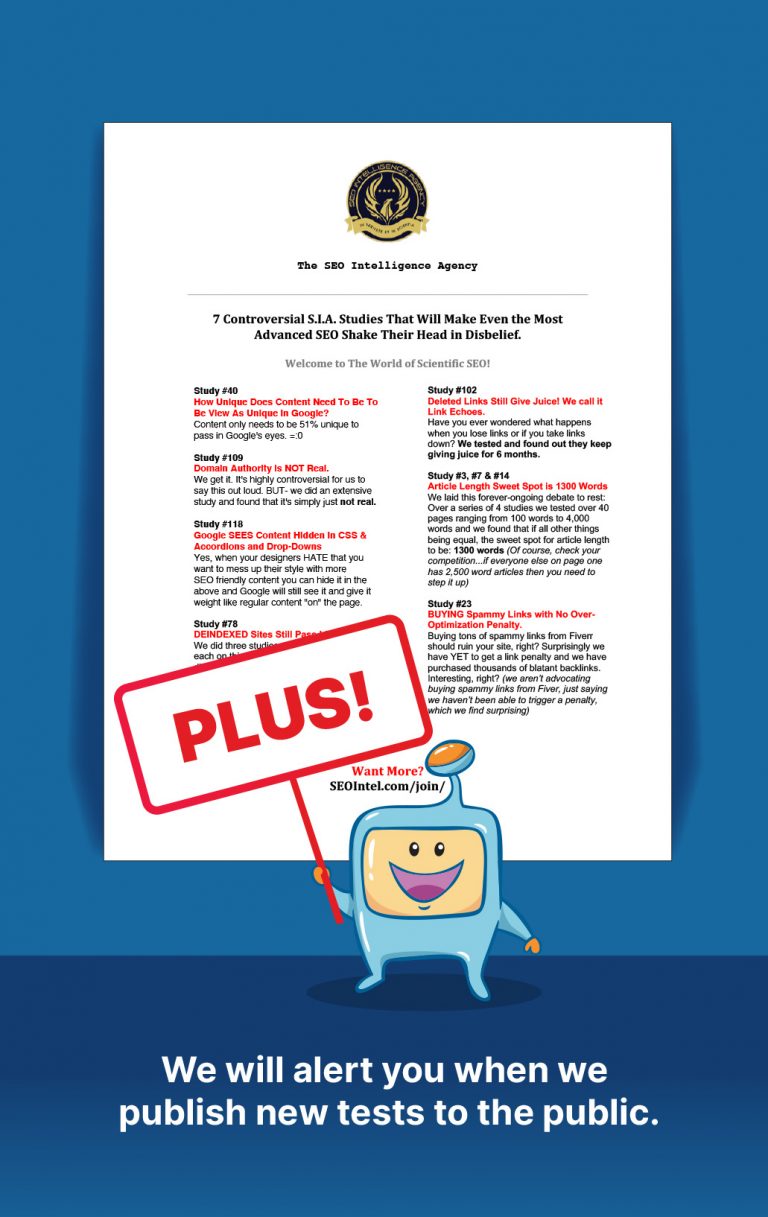
Get Our Most 7 Controversial S.I.A. Studies That Will Make Even the Most Advanced SEO Shake Their Head in Disbelief.
Plus we will alert you when we publish new tests to the public.
Obtenga nuestros 7 estudios S.I.A. más controvertidos que harán que incluso el SEO más avanzado sacuda la cabeza con incredulidad.
Además, le avisaremos cuando publiquemos nuevas pruebas al público.
Obtenez nos 7 études S.I.A. les plus controversées qui feront trembler la tête même les SEO les plus avancés d’incrédulité.
De plus, nous vous alerterons lorsque nous publierons de nouveaux tests au public.
Before you can receive free updates, link building strategies or SEO tips you need to confirm your email right now.
(It’s easy)
Just go to your inbox, open the confirmation email from the SIA, and click the link.
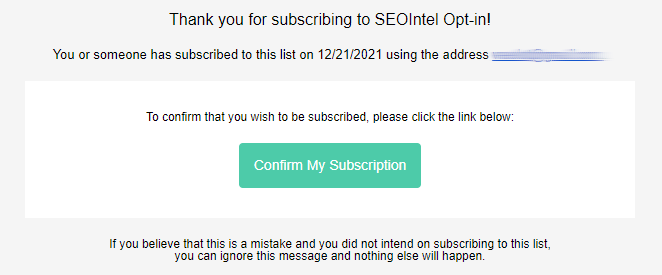
And that’s it!
PS: If you don’t see a confirmation email, please check your spam/junk or promotions folders. Sometimes the confirmation message ends up there by mistake.