SEOIntel Weekly News Round-up (Third Week of November 2025)
This week in search has been anything but quiet. Google rolled out major enhancements across Search and Search Console — from Gemini 3’s debut inside AI Mode to new travel-planning features that push agentic workflows even further. Site owners also get two valuable reporting upgrades in Search Console: a Branded Queries filter and Custom Chart […]
This week in search has been anything but quiet. Google rolled out major enhancements across Search and Search Console — from Gemini 3’s debut inside AI Mode to new travel-planning features that push agentic workflows even further.
Site owners also get two valuable reporting upgrades in Search Console: a Branded Queries filter and Custom Chart Annotations, both aimed at giving SEOs clearer visibility into user intent and performance patterns.
And in industry news, Adobe shocked the search world with its $1.9B acquisition of Semrush, signaling a major shift in how AI, analytics, and content workflows may soon converge.
Here’s everything you need to stay ahead.
Google Brings Gemini 3 to Search
Google has introducedGemini 3, calling it its most intelligent model to date, built for state-of-the-art reasoning, deep multimodal understanding, and powerful “agentic” behavior.
Gemini 3 isn’t a single model, but a family, with Gemini 3 Pro as the first release:
Google describes Gemini 3 Pro as its best model for multimodal understanding and its most powerful agentic and coding model so far.
It can handle very long context windows—up to around 1 million tokens—and work across text, images, video, audio, PDFs and even whole code repositories, which makes it suitable for complex research, analysis and development tasks.
It’s being deployed widely across Google’s ecosystem:
Gemini app for end users
Google AI Studio and the Gemini API for developers
Vertex AI and Gemini Enterprise for businesses/enterprise teams
Gemini Code Assist and the new Antigravity coding environment for developers who want agent-style workflows inside their IDE.
Google positions Gemini 3 as a step toward turning its products—from Search to productivity tools and developer platforms—into “thought partners” that can help users plan, reason, and complete multi-step tasks, not just answer one-off questions.
Google Search with Gemini 3: A New AI Mode Experience
At the same time as the Gemini 3 launch, Google rolled out the model directly into Google Search’s AI Mode, marking the first time a new Gemini flagship model ships into Search on day one.
Smarter Query Fan-Out and Deeper Reasoning
Search already uses a “query fan-out” technique—where AI issues multiple related queries behind the scenes and then synthesizes results. With Gemini 3, Google says this system gets a major upgrade:
Gemini 3 performs more, and more intelligent, sub-queries, because it better understands the nuance and intent of complex searches.
That lets Search surface new, highly relevant content it might previously have missed, and pull in more credible sources for difficult questions.
In practice, this means that for multi-step, messy, or highly specific questions, AI Mode can tap into a wider and more finely curated set of web pages before composing an answer.
Generative UI: Dynamic Layouts, Tools and Simulations
One of the biggest changes comes from what Google calls “Generative UI”—interactive layouts that Gemini 3 builds on the fly:
Instead of only text answers, AI Mode can generate custom response layouts tailored to your query.
Examples include:
Interactive simulations (e.g., a kaleidoscope or physics visual)
Dynamic tables or calculators for comparisons (such as mortgages, loan options, or plans)
Rich visual explanations that combine charts, images and structured data
These interfaces are powered by Gemini 3 Pro’s reasoning and tool-use abilities plus a dedicated generative-UI system described in Google’s research.
For users, Search becomes less like “10 blue links + a paragraph” and more like a custom mini-app built around their question.
Smarter Model Routing in AI Mode and AI Overviews
Google also plans to upgrade automatic model selection inside Search:
Complex, challenging questions in AI Mode and AI Overviews will be routed to Gemini 3 as a “frontier model.”
Simpler tasks will still be handled by faster, lighter models for responsiveness.
This type of routing matters because it effectively creates two tiers of search behavior:
A “fast answer” tier for straightforward queries
A “deep reasoning” tier for complex questions, planning, or multi-step tasks
Knowing which kind of intent your content serves can influence how often it’s pulled into Gemini 3-powered responses.
Availability and Access
According to Google, the first rollout looks like this:
Gemini 3 Pro is available in AI Mode’s model drop-down under “Thinking” for Google AI Pro and Ultra subscribers in the U.S.
Gemini 3 in AI Mode will expand to more U.S. users over time, with higher limits for paying subscribers.
Beyond Search, Gemini 3 Pro is also available via the Gemini app, Gemini API, Vertex AI, Gemini Enterprise, and developer tools like Gemini CLI, Jules, Code Assist and Antigravity.
Why Gemini 3 Matters for SEOs, Content Teams and Marketers
Visibility Is Now About Being Used, Not Just Ranked
With Gemini 3 driving AI Mode, search visibility isn’t only about traditional rankings anymore:
AI Mode pulls together multiple sources to build a single response. If your content is used as a cited source or underlying reference, you gain exposure—even if the user doesn’t start by clicking your link.
The quality, clarity, and structure of your content will influence how likely Gemini 3 is to use it when reasoning across many inputs.
Think of it this way:
Your content now needs to be something an AI system trusts enough to quote, not just something a ranking algorithm thinks deserves position #1.
Multimodal and Interactive Content Gains Importance
Because Gemini 3 and the Generative UI can handle images, video, and tools: \
Visual assets, demos, diagrams, and videos that clearly explain a concept may have more value as ingredients for AI responses.
Interactive tools—calculators, configurators, visualizers—can complement Google’s own generative layouts or be referenced by them.
This doesn’t mean every page needs a custom app—but it does suggest that richer, well-structured experiences have more routes into AI-driven answers.
Intent Complexity and “Thinking” Queries
Because Gemini 3 is reserved for more complex questions in AI Mode and AI Overviews, it’s worth thinking about intent complexity:
Simple “what is X” queries may still hit lighter models and traditional SERP layouts.
Multi-step, conditional, or planning queries (“help me plan…”, “compare… with constraints…”, “walk me through…”) are more likely to trigger Gemini 3’s deeper reasoning.
If your content addresses in-depth guides, planning workflows, comparisons, and decision support, it’s directly aligned with the type of queries that Gemini 3 is designed to handle.
What You Can Do Right Now
Here are practical steps to align with this new Gemini 3 + Search reality:
1. Strengthen Structure and Clarity
Use clear headings, logical sections, and strong internal linking so AI systems can parse and reuse your content effectively.
Implement schema/structured data where relevant (FAQ, HowTo, Product, Article, Review, etc.) to make relationships explicit.
2. Create “AI-Usable” Depth
Go beyond surface-level answers; provide step-by-step explanations, worked examples, comparisons, and decision frameworks.
Think about whether your page could reasonably be the “source material” an AI uses to walk someone through a problem.
3. Invest in Multimodal and Interactive Assets
Add supporting images, diagrams, short videos or snippets that genuinely explain complex parts of your topic.
Where it makes sense, consider tools or calculators that help users take action (e.g., cost estimators, planners, visual configurators).
4. Watch for AI-Influenced Behavior in Your Analytics
Expect some queries to shift from classic “click a result” behavior toward AI-assisted discovery.
Monitor patterns like:
Changes in impressions without corresponding clicks
Shifts in query types (longer, more conversational search terms)
Traffic coming from new surfaces or features tied to AI experiences
Over time, SEOs may need to treat AI citations and mentions as a new layer of visibility metric, alongside rankings and organic sessions.
Gemini 3 is more than just another model release—it’s Google’s attempt to fuse deep reasoning, multimodal understanding, and agent-style behavior directly into Search. For SEOs and marketers, that means the rules of visibility are expanding: your content must not only rank, but also be understandable, reusable, and trustworthy to an AI system that’s assembling answers on the fly. The sooner you adapt your strategy—focusing on rich structure, genuine depth, and assets that AI can work with—the better positioned you’ll be in this next era of search.
Google AI Mode Expands Travel Planning: Canvas, Flight Deals & Agentic Bookings
Google recently announced major travel-oriented upgrades to Google AI Mode: a new Canvas workspace for trip planning, expanded Flight Deals, and agentic booking capabilities (for restaurants now, and hotels/flights coming soon).
Canvas: Build Your Trip in-Search
The Canvas tool—already part of Google AI Mode—now supports full travel planning. Users in the U.S. desktop experiment can say something like:
“I want a 5-day trip to Barcelona in April, beach during day, good food at night.”
Then select “Create Canvas”, and Google will pull into a side-panel itinerary: flight and hotel options, Google Maps photos and reviews, suggestions for restaurants and activities based on your criteria (budget, walking distance, etc.).
Users can further refine via follow-up questions, trade-offs (e.g., cheaper hotel vs proximity to restaurant), and return to the plan via history.
Flight Deals: Expanded Global Reach
Google’s AI-powered Flight Deals tool (inside Google Flights) is now rolling out to 200+ countries and territories, supporting 60+ languages. Users can ask in natural language — e.g., “family-friendly beach vacation under $1,200 in June”—and receive tailored destination suggestions.
Agentic Booking: From Research to Reservation
Google is also enhancing agentic booking in AI Mode:
Restaurant booking via platforms like OpenTable, Resy, Tock is now rolling out to all U.S. users.
Event tickets and local appointments (beauty, wellness) are available in the Labs version.
Looking ahead: direct booking for flights and hotels is in development, via partnerships (Booking.com, Expedia, Marriott, Wyndham). Users will be able to compare options then complete booking with partner of choice.
Why These Changes Matter for Search & Marketers
Search becomes planning + booking, not just lookup. With AI Mode offering one-stop trip workflows inside Search, the user path shifts from “search → browse → book somewhere else” to “search → plan → book inside the assistant.”
Visibility expands beyond blue links. If your hotel, tour company or destination shows up inside Canvas suggestions, you may benefit even without a click. Structured data, photos, reviews and integrations matter more.
Competitor dynamics shift. Travel platforms (Expedia, Kayak) face pressure because Google is absorbing more of the planning funnel. Marketing strategies and SEO for travel brands must adapt.
Prompt & intent matter. Users are describing trips as if talking to a human. Keywords alone won’t suffice; content should anticipate natural-language requests and trade-offs (“close to beach vs price”, “kid-friendly vs nightlife”).
Local & global rollout: While Canvas and bookings start in U.S. desktop Labs, Flight Deals already spans 200+ territories: travel brands in many markets should prepare early.
What You Should Do Now
Audit: Ensure your accommodation, attraction, or service pages include complete structured data, clear photos, well-written reviews and geographic/contextual cues (neighborhood, food, kids-friendly, etc.).
Create: Consider building tools or interactive content that highlight trade-offs (price vs location, amenities vs distance) which align with how AI Mode structures Canvas suggestions.
Monitor: Watch for referral patterns and impression types that don’t map to classic SEO — e.g., appearing in travel-planning surfaces, visual panels, AI suggestions.
Prepare booking integration: If you’re a partner or work with one, make sure your APIs, inventory, and linking to booking platforms are optimized for downstream agentic flows.
Google’s travel-planning upgrades mark a clear evolution in how search works—moving from simple retrieval to task execution, planning and booking. For travel brands, destination marketers and local businesses, the window to adapt is now: visibility won’t just depend on ranking or content, but on how you integrate into AI-powered workflows, structured data surfaces, and assistant-driven booking flows.
Google Search Console Launches Branded Queries Filter
Google Search Console is rolling out a new filter called the Branded Queries Filter, designed to help site owners separate traffic that comes from brand-related searches from traffic driven by discovery or non-brand queries. This update is part of Google’s push to give more nuance to how performance data is segmented and analysed.
What the Filter Does
Under the Performance report in Search Console, you’ll be able to filter queries by “Branded” or “Non-Branded” traffic.
Google defines a branded query as one that includes the brand name (including variations or misspellings), or brand-related products/services (even if the brand name isn’t explicitly included).
The filter supports all search types — Web, Image, Video, News — and shows metrics like clicks, impressions, CTR and average position for each segment.
Google says the rollout is gradual, and it may not appear for all properties immediately. Eligibility depends on volume and property type (top-level domain properties only, not subdomains or path-level properties).
Why It Matters for SEO & Measurement
Better Brand vs Discovery Insight
Understanding the difference between branded and non-branded traffic is critical:
Branded traffic typically represents users already familiar with your brand (searching your brand name, product names).
Non-branded traffic indicates discovery — people finding you without existing brand awareness. Having this split helps you assess whether growth is from deeper brand recognition or new audience acquisition.
Removes Manual Complexity
Until now many teams used large custom regex filters or external tools to segment brand vs non-brand queries. With this native filter:
You no longer need to manage long lists of brand terms, misspellings or product names.
The filter handles variations and recognition for you because Google uses internal AI to classify queries.
Impacts Reporting, Dashboards and Strategy
SEO dashboards should now consider separate KPIs for branded vs non-branded traffic.
You’ll be able to better attribute which part of your traffic is brand pull vs content/SEO discovery.
Leadership and cross-team reporting will benefit — brand teams can focus on branded query growth, SEO can focus on non-brand discovery.
Limitations & Considerations
The feature is only rolling out gradually — you might not see it yet if your site has low query volume or uses a subdomain property.
Classification is done algorithmically — there may be mis-classifications (queries might flip from non-brand to brand or vice versa).
This is analytics/segmentation only — it does not change how Google ranks or indexes pages. The filter is for data access and reporting, not ranking outcomes.
What to Do Right Now
Benchmark your current branded vs non-branded query performance. Even before the filter arrives, export your query data and estimate what share is brand-related.
Clean up your dashboards: identify where you mix brand and non-brand traffic today; plan separate charts or metrics.
Communicate the change: let stakeholders know a new filter is coming, and that comparisons over time may show shifts due to classification, not performance changes.
Review your brand tracking logic: while Google handles classification, still keep an internal list of brand names, product names and misspellings which you can compare to Google’s filter once live.
The Branded Queries Filter in Search Console may appear modest at first glance, but it offers major implications for how we understand search performance. By giving native access to brand-vs-non-brand segmentation, Google is helping SEO, content and brand teams align more clearly around what’s driving traffic and awareness. As this rolls out, the better prepared teams will be those that have already benchmarked, structured their data, and can act on insights — not just clicks.
Google Search Console Adds Custom Annotations for Performance Reports
Google Search Console has introduced a long-awaited feature: Custom Annotations in the Performance report. These annotations allow users to add notes and markers directly to the performance graphs, making it easier to correlate changes in clicks, impressions, CTR and position with external events such as site migrations, algorithm updates or marketing campaigns.
What the Feature Offers
Under the Performance tab in Search Console, users can now click to “Add Annotation” on the chart and input descriptive text, date/time, and optional tags.
The annotation appears as a small marker on the timeline, and when you hover over it, it shows the note — helping you remember and share context for spikes or drops in metrics.
You can add multiple annotations, filter the view to show/hide them, and export them via CSV along with your performance data.
Google says the rollout is gradual and should appear for all eligible property types over the coming weeks.
Why This Matters for SEO and Analytics
For marketers, SEOs and web teams, the addition of annotations in Search Console offers several enhancements:
Improved narrative context: You can tie metric changes to real-world events (e.g., “May 15 – launched new FAQs page”), making it easier to report and analyse.
Less reliance on external tools: Previously many teams tracked key events in spreadsheets or BI platforms; now this context lives inside Search Console.
Better collaboration: Different team members (content, dev, marketing) can add notes, creating a shared timeline for performance shifts.
Testing and insights: When running experiments (e.g., UX changes, schema markup updates), you can mark those directly on the chart and evaluate impact more clearly.
Important Considerations
The annotations do not affect ranking or indexing — they are purely a reporting tool.
Because rollout is gradual, you may not see it immediately; there are no logs yet to edit or delete annotations—so plan annotation strategy carefully.
Annotations are tied to the specific Search Console property (domain or prefix) and may not cross domains or subdomains automatically.
What to Do Right Now
Identify your key events for the past 12-24 months (migrations, major launches, UX redesigns, algorithm updates) and plan to document them with annotations once the feature is available.
Create standard annotation naming conventions (e.g., “UX Miguel campaign start”, “Schema FAQ live”, “Backlink purge”) so future users understand them at a glance.
Train your team to use annotations: make it part of your monthly or quarterly performance review process.
Export historical performance data now, and keep a parallel spreadsheet of your events so when the annotation feature goes live you can backfill content.
The addition of Custom Annotations to Search Console marks a useful step forward in search visibility tracking: performance data meets context, and what was once just spikes & dips now has narrative. For teams serious about insights, this is a chance to integrate measurement, collaboration and event-tracking directly within Google’s toolset — and to ensure that when your metrics change, you know not just that they changed, but why.
Adobe Acquires Semrush in $1.9B Deal
Adobe announced it will acquire Semrush Holdings, Inc. in an all-cash deal valued at approximately $1.9 billion, paying $12 per share. Pending regulatory and shareholder approval, the deal is expected to close in the first half of 2026.
Adobe frames the acquisition as part of its strategy to expand visibility, analytics, and AI-driven marketing capabilities across both traditional search engines and emerging AI surfaces.
What Is Semrush?
Semrush is one of the most widely used SEO, competitive intelligence, and digital visibility platforms in the world. Founded in 2008, it has grown from a simple keyword-research tool into a multifaceted suite used by 10+ million marketers, agencies, and brands.
Semrush’s core capabilities include:
Keyword and topic research (search volume, difficulty, SERP features)
Content optimization, SEO writing assistant and topic clustering
Position tracking for SERP and featured snippet visibility
Local SEO tools for listings and review management
Social media analytics
AI visibility tracking (brand presence inside AI-generated responses across major LLMs)
Semrush has long been considered a “critical tool” in SEO workflows—used by teams ranging from small agencies to global brands. Its blend of search data, competitor intelligence and now AI search visibility metrics is a major reason Adobe sees strategic value in the acquisition.
Why Adobe Bought Semrush
Adobe says the acquisition will create a unified platform where marketers can understand how users discover their brand across search engines, generative AI assistants, and the web.
Key motivations include:
Expanding Adobe’s AI marketing stack—pairing Semrush’s search and AI visibility data with Adobe’s content, analytics, and personalization capabilities.
Strengthening Adobe Experience Cloud by integrating SEO, competitive intelligence, and LLM-visibility insights.
Meeting the needs of the “agentic AI era”, where discoverability inside AI systems, chatbots, and assistants becomes as critical as ranking in Google Search.
Enhancing cross-channel attribution by merging web analytics with search/AI visibility signals.
According to Adobe, brands will be able to see a more complete picture of their visibility:
from traditional organic search → to paid media → to social → to how they appear inside AI-generated answers.
What This Means for SEO Teams & Marketers
1. Visibility Now Extends Into AI Systems
Semrush has been expanding its AI visibility index, measuring how often brands are cited in responses from tools like ChatGPT, Gemini, Claude, etc. With Adobe’s resources, this dataset could grow dramatically.
2. Marketing Stacks Are Consolidating
SEO will increasingly sit beside:
analytics
content creation
personalization
paid media
customer data
AI assistants
Adobe will likely try to create “one interface” for marketers to manage all of it.
3. A New Tool Landscape May Emerge
If Semrush becomes more enterprise-focused under Adobe, smaller businesses could move toward Ahrefs or emerging lightweight SEO tools—rebalancing the market.
4. AI Search Demands Unified Dashboards
Teams want a single view showing:
organic search rankings
paid search data
AI answer citations
competitor visibility
brand equity signals
SERP feature wins/losses
topical authority
Adobe + Semrush likely aims to offer exactly this.
What to Watch Next
Integration speed — Does Semrush stay standalone or fold deeply into Adobe Experience Cloud?
Pricing & packaging — Will existing Semrush subscriptions change?
Product direction — Will SEO tools evolve faster with Adobe’s AI infrastructure?
Regulatory scrutiny — Adobe’s large acquisitions have historically drawn attention.
Adobe’s $1.9B acquisition of Semrush is more than a corporate deal—it’s a signal that SEO, competitive intelligence and AI visibility are now central pillars of modern marketing. As AI-driven discovery reshapes how users find brands, the tools that track visibility across Google, LLMs and agentic systems are becoming mission-critical. Whether this acquisition unlocks powerful new capabilities or tightens access behind enterprise walls will depend on how Adobe handles the transition—but one thing is clear: the future of search visibility just became even more integrated with the broader marketing ecosystem.
As AI continues reshaping discovery, rankings, and reporting, Google’s latest updates show exactly where search is headed — more personalized, more assistant-driven, and increasingly centered on multimodal intelligence. Meanwhile, Adobe’s acquisition of Semrush reinforces a fast-evolving landscape where SEO tools, creative platforms, and AI ecosystems are beginning to merge. Staying informed is no longer optional; it’s essential for future-proofing your strategy. We’ll continue tracking the shifts, testing what matters, and breaking everything down for you each week.
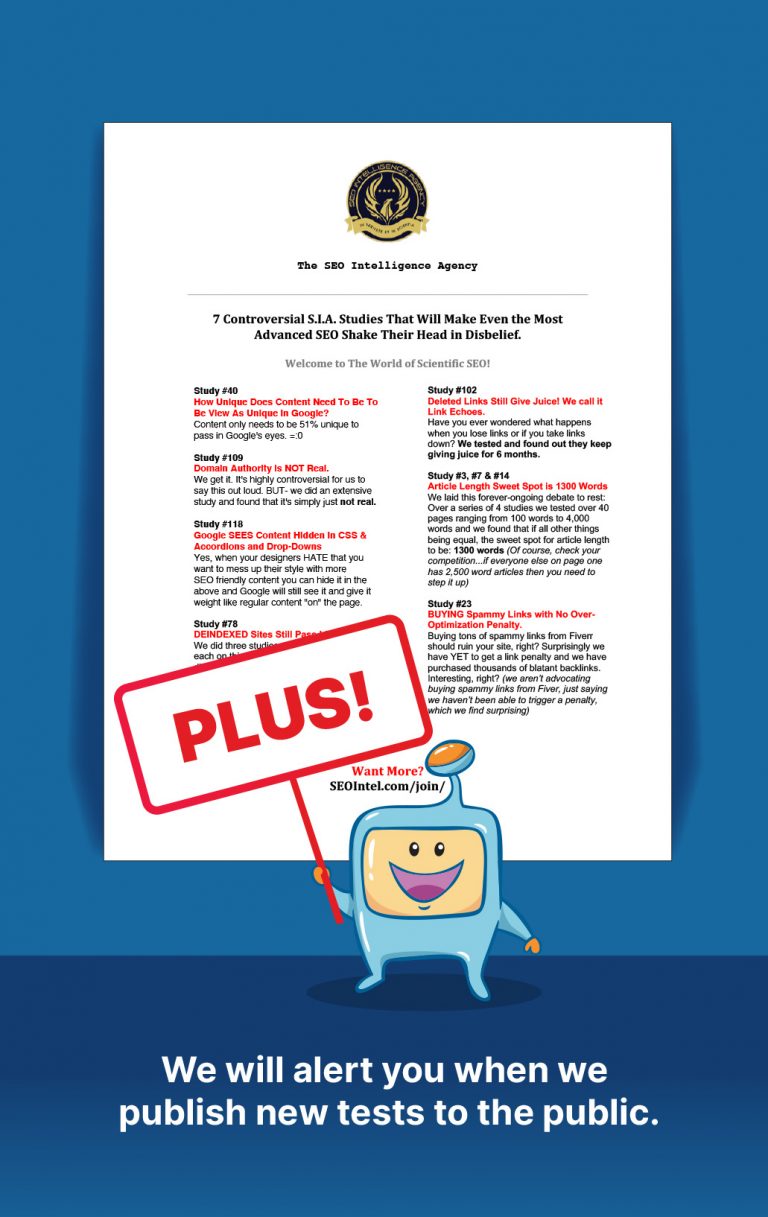
Get Our Most 7 Controversial S.I.A. Studies That Will Make Even the Most Advanced SEO Shake Their Head in Disbelief.
Plus we will alert you when we publish new tests to the public.
Obtenga nuestros 7 estudios S.I.A. más controvertidos que harán que incluso el SEO más avanzado sacuda la cabeza con incredulidad.
Además, le avisaremos cuando publiquemos nuevas pruebas al público.
Obtenez nos 7 études S.I.A. les plus controversées qui feront trembler la tête même les SEO les plus avancés d’incrédulité.
De plus, nous vous alerterons lorsque nous publierons de nouveaux tests au public.
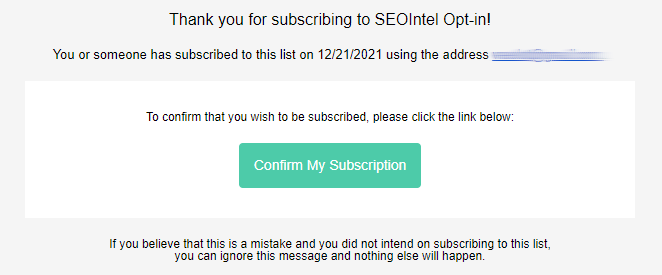
Before you can receive free updates, link building strategies or SEO tips you need to confirm your email right now.
(It’s easy)
Just go to your inbox, open the confirmation email from the SIA, and click the link.
And that’s it!
PS: If you don’t see a confirmation email, please check your spam/junk or promotions folders. Sometimes the confirmation message ends up there by mistake.